
Iran says it sent six drones at a U.S. military base in Bahrain early Sunday, its second attack on the small Gulf kingdom in three days. Iran’s Revolutionary Guards said the target was “The US air defence radar system at the Al-Riffa helicopter base,” according to AFP. Bahrain’s military says its air defenses shot down the incoming attacks, and there’s been no confirmation that anything was hit or anyone was hurt.
People in Bahrain woke to it. An AFP journalist heard blasts around 4 a.m. local time and another round around 6:30. The Interior Ministry twice told residents “to remain calm, proceed to the nearest safe location, and follow news through official channels.” It was the country’s first nationwide alert since September, The National reported.
What happened in Bahrain on Friday and Sunday?
On Friday, the Guards said they went after a U.S. early-warning radar in Bahrain. U.S. Central Command said it shot down two Iranian drones aimed at the island, with no casualties or damage. AFP called it Iran’s first strike on a Gulf country since early September. Then came Sunday’s six-drone claim. Bahrain’s defense force said it “intercepted and destroyed a number of Iranian aerial attacks” but didn’t give a number. As of Sunday afternoon, neither the Pentagon nor the White House had said anything public about the Sunday attack in the reports we reviewed.

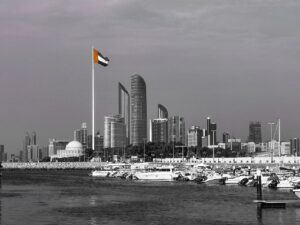
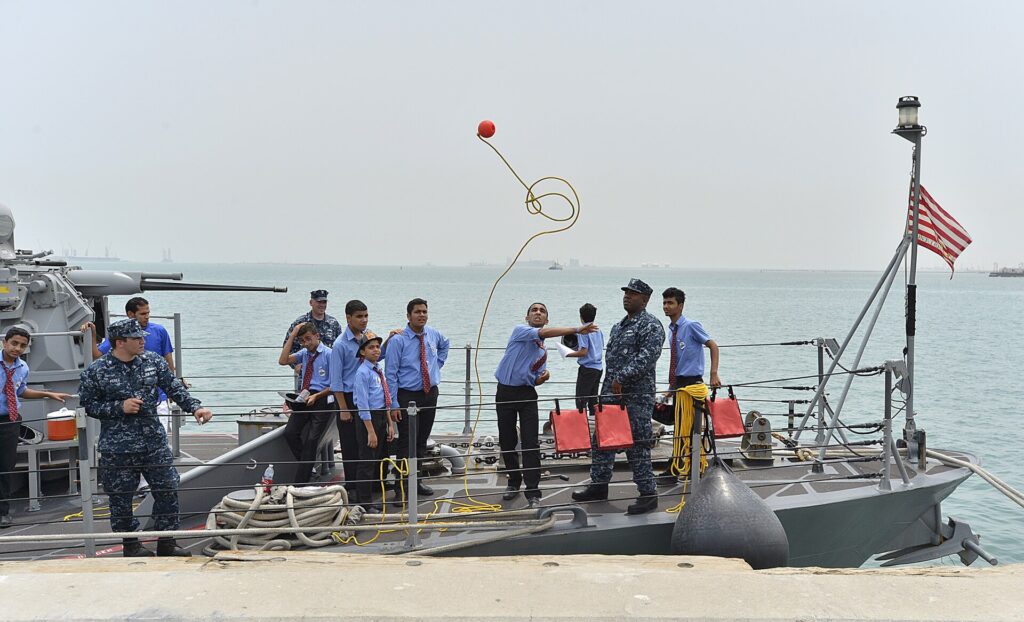
Bahrain is not a random target. It hosts the headquarters of the U.S. Navy’s Fifth Fleet, the force that patrols the Gulf and the Strait of Hormuz. Thousands of American service members are based there.

Why is Iran attacking again now?
Iran calls it payback. The Guards’ statement, carried by Iranian media, warned that “any aggression by the American enemy will be met with an even harsher and more forceful response,” and Iran’s foreign ministry spokesman Esmail Baghaei said Sunday that Tehran would keep responding, UPI reported. Iran didn’t name a specific U.S. action. Earlier this month Trump said the U.S. had hit Iran again with what he called ‘minor’ strikes, and his administration has turned down Iran’s offer to end the war.
This war started Feb. 28, when U.S. and Israeli strikes killed Iran’s supreme leader. The fighting has slowed for weeks, and talks haven’t produced a deal. UPI says Trump called the war “effectively over” last week. Two drone attacks in three days say Iran doesn’t agree. Bahrain’s foreign ministry said it holds Iran “fully responsible” and “rejects turning its territory into an arena for settling scores.” Saudi Arabia also condemned the attacks.
What does the Bahrain attack mean for gas prices?
Watch the strait, not the drones. Iran says the Strait of Hormuz is closed to “unauthorised” traffic, and on Saturday night its navy claimed two tankers hit mines and caught fire south of the strait. No shipping authority has confirmed that, and Iran didn’t name the ships. But every claim like that raises insurance costs for tankers, and you end up paying part of that at the pump. Gas only just fell below $4 a gallon last week. A real flare-up in the Gulf could undo that fast.
It also lands days before Trump is set to meet China’s Xi Jinping and Russia’s Vladimir Putin in Shenzhen, where a U.S. official said he plans to bring up Iran. Both countries have ties to Tehran, and both will be in the room.
The BeezLoop Take
Calling a war “effectively over” doesn’t end it. Iran is telling Washington, and the Gulf states that host U.S. troops, that it can still reach them when it wants to. The air defenses held this time. That’s luck and good equipment, not a peace plan.
The administration owes Americans a straight answer about what the plan is. Thousands of U.S. service members in Bahrain just spent another night under sirens, and their families deserve more than a victory lap.
The open question: does the White House answer these strikes with more strikes, or use the Shenzhen meeting to push Iran back toward a deal before the Gulf heats up again?
Sources: The National · France 24 / AFP · UPI · France 24 (video)