

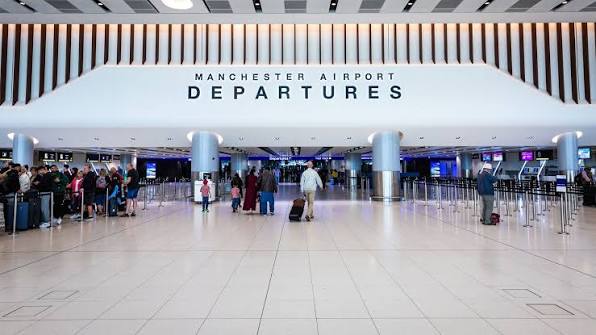
A cyberattack on Manchester Airports Group exposed personal data belonging to about 8.7 million customers across Manchester, East Midlands, and London Stansted airports. No payment details were taken, and flight operations were unaffected, but the data that did leak is more useful to criminals than the “no bank details” framing suggests.
What was actually taken
The breach hit systems tied to fast-track bookings, car parking, lounge access, and airport Wi-Fi registrations, exposing email addresses, phone numbers, postcodes, and vehicle registration numbers. MAG has said the affected systems did not hold bank or payment card data, and that neither passenger safety nor aviation security was compromised. Attackers have reportedly demanded a ransom.
Why this combination matters even without card numbers
Stolen card numbers are a bounded problem: banks reissue them and fraudulent charges get reversed. This dataset is different, because none of it can be changed. A postcode paired with a vehicle registration and a phone number is a strong identity-verification package, and it is drawn from airport parking and fast-track records, meaning it also implies travel. That makes it well suited to targeted phishing, where a message referencing a real trip, a real car, and a real airport is far more convincing than generic spam. Anyone who books airport parking should treat unexpected messages about bookings or refunds with particular suspicion.

This is not the Collins Aerospace attack
These get conflated, and they’re separate incidents. The Collins Aerospace ransomware attack in September 2025 hit check-in and boarding systems, disrupting operations and causing cancellations at Heathrow, Brussels, Berlin, Dublin, and Cork. That one degraded the machinery of flying. This one did not touch operations at all and was confined to customer data and related digital services. Different target, different company, different consequence.
What travelers should do
Since no passwords or payment credentials were reported taken, there is no password to rotate for most people. The practical steps are narrower: be skeptical of emails or texts about airport parking bookings, lounge access, or refunds, especially any that arrive unprompted and ask you to confirm details or click through to pay; verify directly with the airport or booking provider rather than through links in a message; and watch for calls that open by citing details about you that feel too specific to be a cold call.
Related from BeezLoop: Hackers Say They Have the Home Addresses of Almost Every FBI Agent, Why Ethical Hardware Can't Save You from Fragile Software and Britain Filed Its Full Extradition Case Against the Tate Brothers.






[…] systems keep getting hit through the least glamorous door available. A cyberattack on UK airports exposed 8.7 million customers in August through a third-party vendor. Google has now patched seven actively exploited Chrome […]