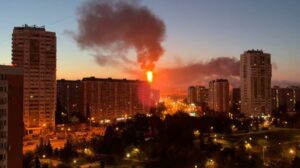

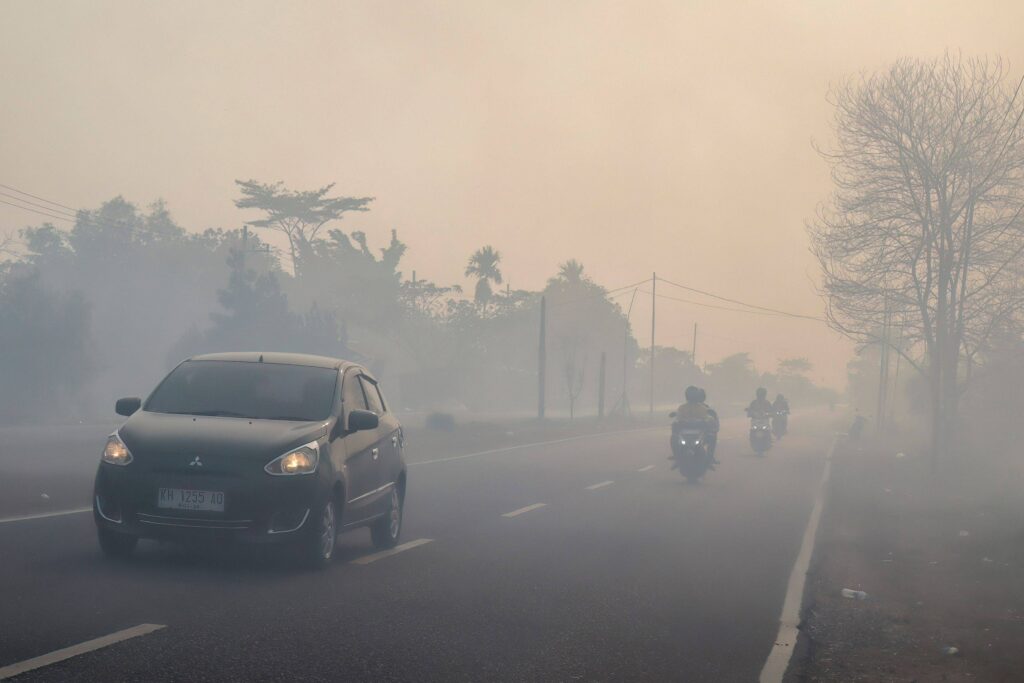
Toxic smoke from more than 5,000 wildfire hot spots on the Indonesian side of Borneo has pushed air quality across neighboring Malaysia to unhealthy levels, forcing Sarawak state to close 591 schools, affecting roughly 197,000 students, and cutting visibility in parts of Indonesia’s Kalimantan region to as little as one meter. Indonesia’s Forestry Ministry recorded 11,908 active hot spots nationwide in a single 24-hour period this week, nearly double the count from the day before. Central Kalimantan’s police chief said investigators have detained 12 suspects over the past week in connection with alleged arson and illegal land clearing, and Indonesia’s forestry minister, Raja Juli Antoni, vowed strict legal action against anyone found responsible, “big or small, without exception.”
Authorities have pointed to an intensifying El Niño pattern and a prolonged dry season as accelerants, conditions that make land already cleared by fire far more likely to spread uncontrolled.
The Established Pattern Behind the Smoke
Southeast Asia’s seasonal haze crisis has a well-documented economic driver: burning cleared forest is dramatically cheaper than mechanically clearing it, and Indonesia’s palm oil and pulpwood industries have repeatedly been linked to fires set for exactly that reason in past haze events, some resulting in corporate prosecutions and fines. That doesn’t mean every one of this year’s 5,000-plus hot spots traces back to a plantation company; smallholder farmers using traditional slash-and-burn methods, and fires that escape control regardless of who set them, are also part of the picture, and this year’s specific fires haven’t all been attributed yet. What is consistent across nearly every past haze season is that the underlying economics favoring fire over mechanical clearing haven’t meaningfully changed, regardless of how many summits address the smoke after the fact.

What 197,000 Kids Losing School Days Actually Costs
A smoke event severe enough to close nearly 600 schools isn’t a minor seasonal inconvenience. Sustained exposure to wildfire haze is linked to respiratory illness, particularly in children, and school closures during a haze crisis create the same ripple effect seen in any extended disruption: missed instructional time, working parents needing childcare on short notice, and a public health burden that falls hardest on families without the option to simply relocate indoors with air filtration until the smoke clears. Indonesia’s arrests and Malaysia’s school closures are both real responses. Neither one addresses the cost calculation that keeps making fire the cheapest way to clear land in the first place.
What do you think? Should companies whose supply chains touch land cleared by fire face liability even when they didn’t set the blaze themselves, or does that go too far given how hard it is to trace responsibility? Let us know your thoughts in the comments on BeezLoop.com!
Related from BeezLoop: Anak Krakatau Eruption Shuts Eight Indonesian Airports, Strands More Than 270,000 Travelers, Indonesia Earthquake Death Toll Rises to 68 After 7.7 Magnitude Quake (Updated) and Belgium's Largest Wildfire on Record Burns 3,000 Hectares of High Fens Reserve.