

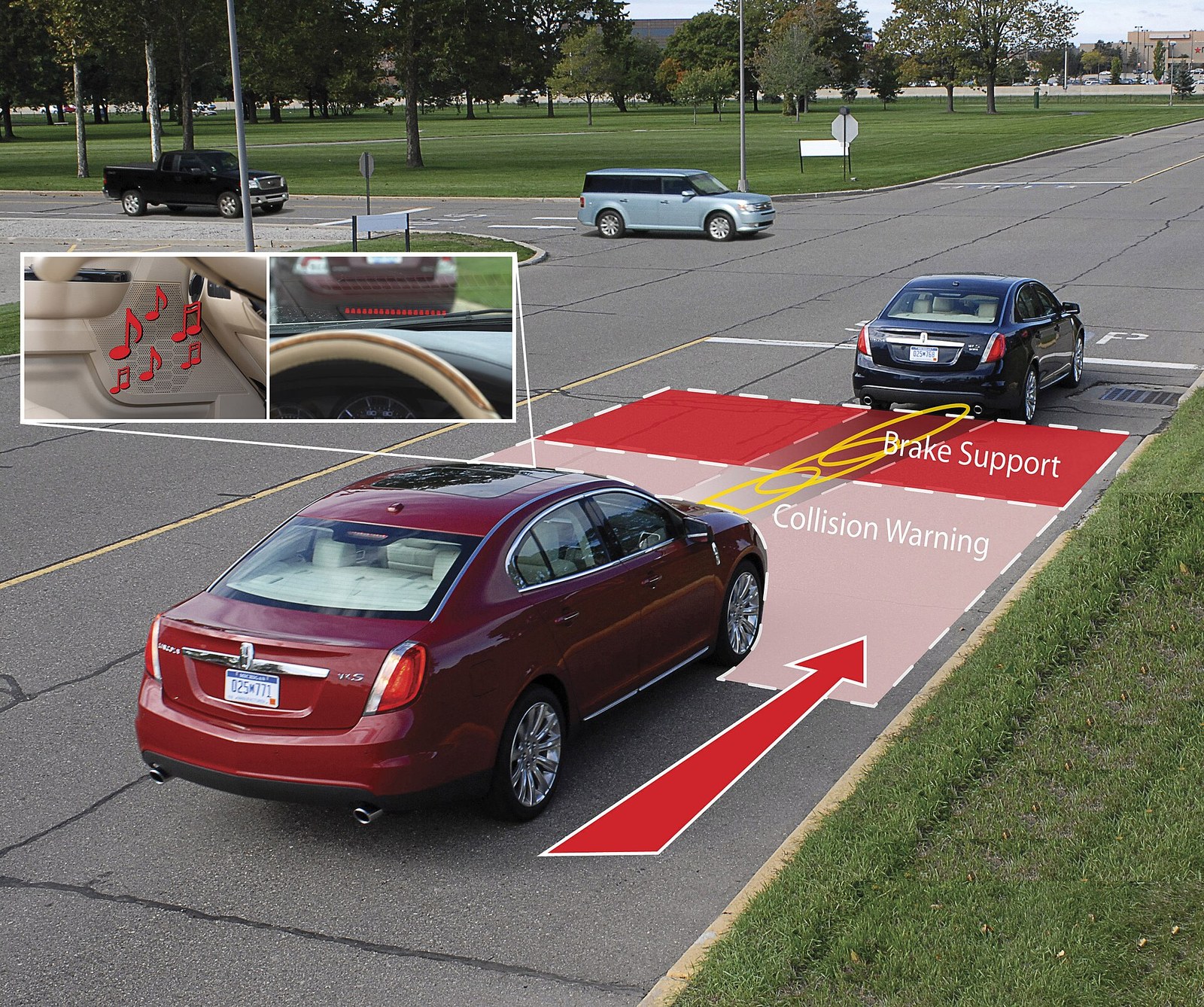
The federal government wants to give automakers two more years to meet a tougher standard for automatic emergency braking, the feature that hits the brakes when you’re about to rear-end someone or hit a pedestrian. The National Highway Traffic Safety Administration’s proposal, published in the Federal Register on Friday, would push the deadline from Sept. 1, 2029, to Sept. 1, 2031, per the notice. You can weigh in until Jan. 26, 2027.
Here’s what changes, what doesn’t, and what it means for your next car.
Does my car already have automatic emergency braking?
Probably, if it’s recent. Twenty automakers making up 99% of U.S. sales met a voluntary pledge to put the feature on nearly all their light vehicles, the Insurance Institute for Highway Safety said in 2023. Forward collision warning plus autobrake “cut rear-end crashes in half,” and pedestrian autobrake “cut pedestrian crashes by 27%,” IIHS says.

But the systems on the road today don’t have to meet the stricter federal standard written in 2024. That rule requires cars to avoid hitting a vehicle ahead in tests at speeds up to 62 mph and to brake for pedestrians in both daylight and darkness. It’s the tougher standard that’s being delayed, not the basic feature.

Why does NHTSA want to delay the braking rule?
It says the technology isn’t ready. “The technology has not progressed as much as expected, and providing automakers with this additional lead time will ensure that these systems are thoroughly tested, reliable, and trusted by American drivers,” NHTSA Administrator Jonathan Morrison said, in a release. In the notice, the agency says that in its 2023 testing “no vehicle avoided contact in all trials,” and that complaints about the systems, including phantom braking, are among the most common it gets.
The agency also asks whether it should loosen parts of the standard, such as allowing a light bump at very low speed or cutting how many test speeds it uses. Those are questions, not proposals. When the rule was written in 2024, NHTSA estimated it would prevent 362 deaths and 24,321 injuries a year. The notice claims the delay “would result in no loss of safety benefits,” but backs that with a qualitative argument rather than new numbers.
What are safety groups and automakers saying?
They split along the lines you’d expect. “In an era of self-driving and flying cars, this proposed delay defies common sense,” said Daniel Greene of the National Consumers League. Cathy Chase of Advocates for Highway and Auto Safety called it “an unnecessary delay that further imperils the safety of all who use our roadways,” in a statement. The automakers’ trade group, which sued over the 2024 rule, welcomed the extra time. “Without material changes, the current standard will make driving AEB-equipped vehicles in the U.S. unpredictable and erratic,” its CEO, John Bozzella, said, per the Detroit News.
How can I comment on the braking rule?
- Online: go to Regulations.gov, search for docket NHTSA-2026-2476, and click Comment.
- Deadline: comments must be received by Jan. 26, 2027.
- Know it’s public: comments are posted as written, including any personal details, so leave out anything private.
- Be specific: real experiences with phantom braking, or a crash autobrake prevented, carry more weight than a yes or no.
This proposal was one of several filed during Thanksgiving week, which we looked at in what Washington filed over the holiday.
The BeezLoop Take
There’s a fair point buried in NHTSA’s case. A system that slams the brakes for no reason is dangerous too, and drivers who get spooked turn the feature off. But the answer to imperfect technology is a clear standard and real testing, not two more years of model launches with no deadline. The agency’s own 2024 math said hundreds of lives a year are at stake, and it hasn’t put new numbers on the table to show the delay is free. If it wants more time, it should prove what that time costs.
Would you rather have a braking system that sometimes stops for nothing, or one that sometimes doesn’t stop at all?