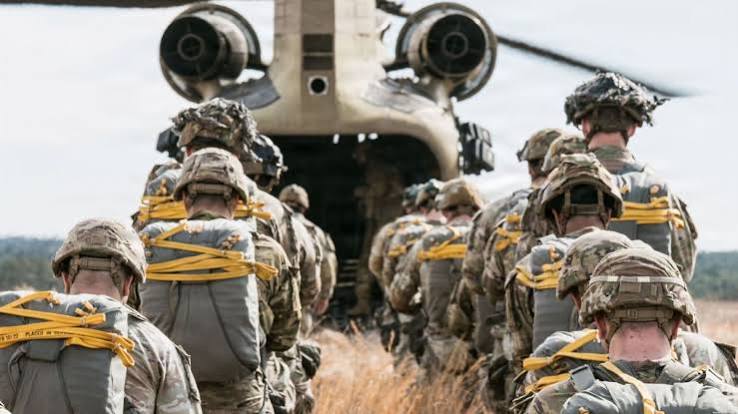
The Army has extended the Middle East deployment of roughly 2,000 82nd Airborne Division soldiers to a full year, pushing their return into 2027. The paratroopers deployed in March as part of a force surge after the war with Iran began, a war now in its seventh month.
Which units are affected
A memo signed Sunday covers a substantial slice of the division: parts of division headquarters, the division artillery, the sustainment brigade, 3rd Battalion of the 4th Air Defense Artillery Regiment, and the 307th Engineer Battalion. Soldiers in the division’s 1st Brigade Combat Team and Combat Aviation Brigade are also now deployed for up to a year.
What a year-long extension means for families
This is the part that gets flattened in most coverage of deployment extensions. A standard deployment length is something families plan an entire year around: childcare arrangements, a spouse’s job, school decisions, medical appointments deferred until the soldier is home, and in many cases a return date that relatives have already booked travel for. Extending a nine-month rotation to twelve doesn’t add three months of separation in the abstract. It invalidates a set of plans built on a specific date, often with little notice and no ability to appeal.

Division commander Maj. Gen. Brandon Tegtmeier acknowledged as much in a letter to families, thanking them for their “quiet strength” and saying he hoped the announcement would at least provide clarity on a deployment that had “presented many unknowns.” The framing is notable: the message being offered is not good news but a firm date, which for families managing an open-ended absence is its own kind of relief.
What the extension signals
Extending a rapid-deployment division rather than rotating in replacements is a meaningful indicator on its own. The 82nd Airborne exists to deploy fast and hand off; keeping its units in place for a full year suggests either that the requirement in Central Command is expected to persist, or that the forces available to replace them are committed elsewhere. The announcement came as the U.S. and Iran resumed exchanging fire, which points toward the first explanation, though the Army has not laid out a replacement timeline.
Related from BeezLoop: The 250-Day Trap: Why Navy Sailors Are Jumping Off the USS Abraham Lincoln, The Squalor of Steel: Food, Water and Hygiene Failures Aboard the USS Abraham Lincoln and Trump Won't Say If US Struck Iranian Ship, Floats Keeping Iran's Oil Like Venezuela.