
When U.S. Central Command took to social media this week to address rumors of a crisis aboard the USS Abraham Lincoln, it leaned on its standard set of statistics: an 84.4% crew reenlistment rate, more than 10,000 aircraft flights, and 1.5 million pounds of ordnance expended over a record-breaking 260 consecutive days at sea supporting operations against Iran.
Those numbers sit awkwardly next to the accounts now emerging from the families of the roughly 5,000 sailors and Marines aboard the carrier, which has spent nine months at sea, far beyond its original seven-month schedule, without a single port call.
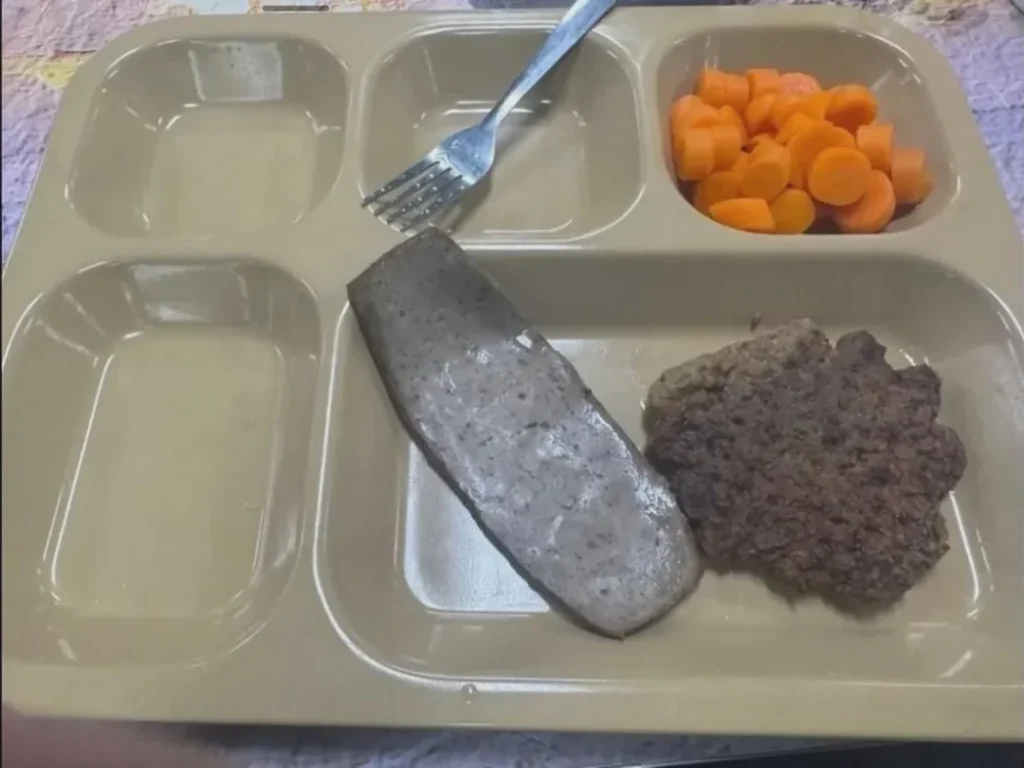
At a town hall meeting in San Diego between Navy leadership and more than 200 worried military families, relatives described conditions that go well beyond ordinary deployment hardship. Meal rations have reportedly been cut sharply, with some sailors describing daily food down to half a cup of rice and two tortillas. The ship’s drinking water lines have suffered repeated contamination. Showers have been affected by mold, toilets have gone unrepaired, and hot water has been unavailable for weeks at a stretch. Families also described shortages of basic hygiene supplies like soap and toothpaste.
“The ship’s own doctor warned that they need to reach port soon or people are going to start losing their minds,” Rep. Mike Levin wrote, calling for a congressional investigation into the carrier’s leadership. Multiple sailors have reportedly attempted to go overboard during the deployment, with at least one confirmed incident this month that the Navy has characterized as a mental health episode; the sailor was recovered within the hour.
The Navy has pushed back on the more dire characterizations of conditions aboard the Lincoln, and the full scope of the reported shortages remains under review. In the meantime, the USS George Washington has been dispatched toward the region, a move expected to eventually allow the Lincoln to end its extended deployment and head home.