
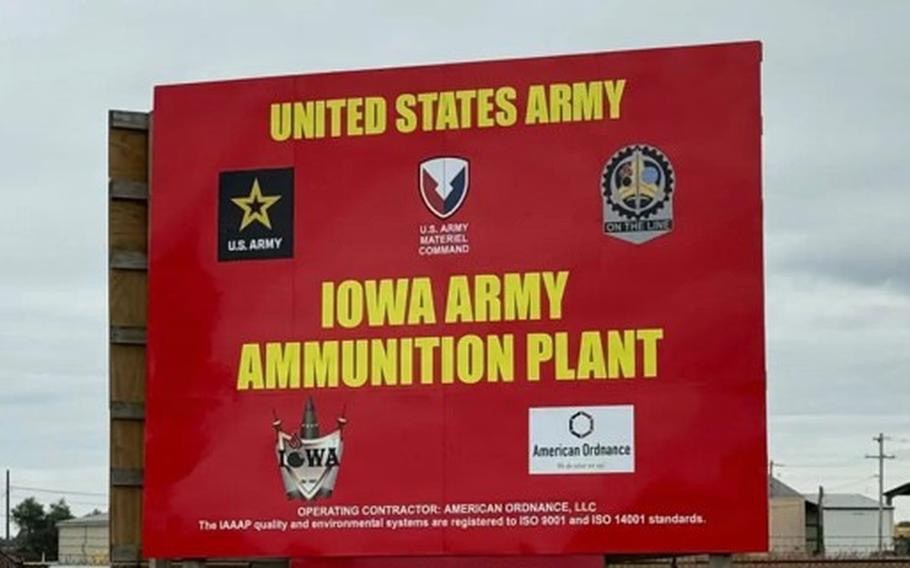
The U.S. Army blew up nearly five tons of unstable lead azide at the Iowa Army Ammunition Plant in Middletown on Wednesday morning, and federal officials say their air monitors haven’t picked up any airborne lead since. The 68 barrels went off in two simultaneous controlled blasts at about 9 a.m. Central time, ABC News reported, after weeks of delays, a court fight and public outcry.
“Real-time air monitors are reporting ZERO detection of airborne lead,” the Environmental Protection Agency posted on X. Soil and surface testing along the plume’s path still has to confirm that.
Why did the Army blow up lead azide in Iowa?
Because it had become too dangerous to move. Lead azide is a sensitive explosive used to set off bigger charges. Inspectors found in March that the stockpile had partially crystallized, which makes it sensitive to friction and cold, and the Army said it could go off on its own as temperatures dropped, the AP reported. The Army said moving the drums or neutralizing the chemical would be riskier than a controlled blast. You can read more about the chemical itself from PBS NewsHour.

Environmental groups sued, arguing the Army hadn’t seriously considered safer options, and a federal appeals court briefly paused the plan before lifting its stay on Monday. The Army moved the date several times, TIME reported.

Is it safe for people near Middletown, Iowa?
Early signs are good, but the testing isn’t finished. Officials asked residents of Middletown and a 5-mile zone southwest of the plant to evacuate, with FEMA paying for hotel stays through Friday, NBC News reported. No all-clear had been announced as of midday. The Army says teams will follow the plume to take soil, water and surface samples, and if a home’s soil tops 200 parts per million of lead, it will clean it up “at complete government expense.” It hasn’t said when results will be out.
Lead has no known safe level of exposure, especially for young children and pregnant women, which is why officials told those groups to leave first. The EPA has told residents they can hose down homes, cars and outdoor surfaces. If you live nearby and have kids under 6, ask your doctor about a blood lead test.
What did officials say after the blast?
“I believe absolutely that we reduced as close to zero as is absolutely humanly possible the risk to the health and safety of the people of Middletown,” said Maj. Gen. Eric Shirley, who led the operation, adding that there were no secondary explosions and “no infrastructure damage.” No injuries were reported.
Iowa Gov.-elect Rob Sand, who takes office in January, said Iowans were safe but wasn’t letting the Army off the hook: “The lead-up to the detonation should never have been so chaotic and unclear,” he posted, according to ABC. “There must be immediate transparency.” Missouri Gov. Mike Kehoe said “the mitigation measures appear to have been successful.” It’s another case of federal agencies making a high-stakes environmental call with little warning to locals, like the emergency orders keeping an Orlando coal plant running.
The BeezLoop Take
The blast appears to have gone as planned, and that’s a relief. But the bigger story is how what the AP called the nation’s entire lead azide stockpile was allowed to degrade to the point where blowing it up next to a town of a few hundred people was the safest option left. Residents found out on short notice, the date kept changing, and they had to go to court to get answers. Sand is right: getting lucky isn’t the same as getting it right.
Who checks the condition of the rest of the military’s aging explosive stockpiles before the next one becomes an emergency?