The U.S. Army sent hundreds more soldiers to Texas’ Rio Grande Valley this month, citing cartel activity and a gunfight on the river. Now it’s inviting reporters to see the result, and what they’re finding is a border that’s mostly quiet. That raises a question the Army can’t really answer: if crossings were already near historic lows, what is the surge for, three weeks before an election?
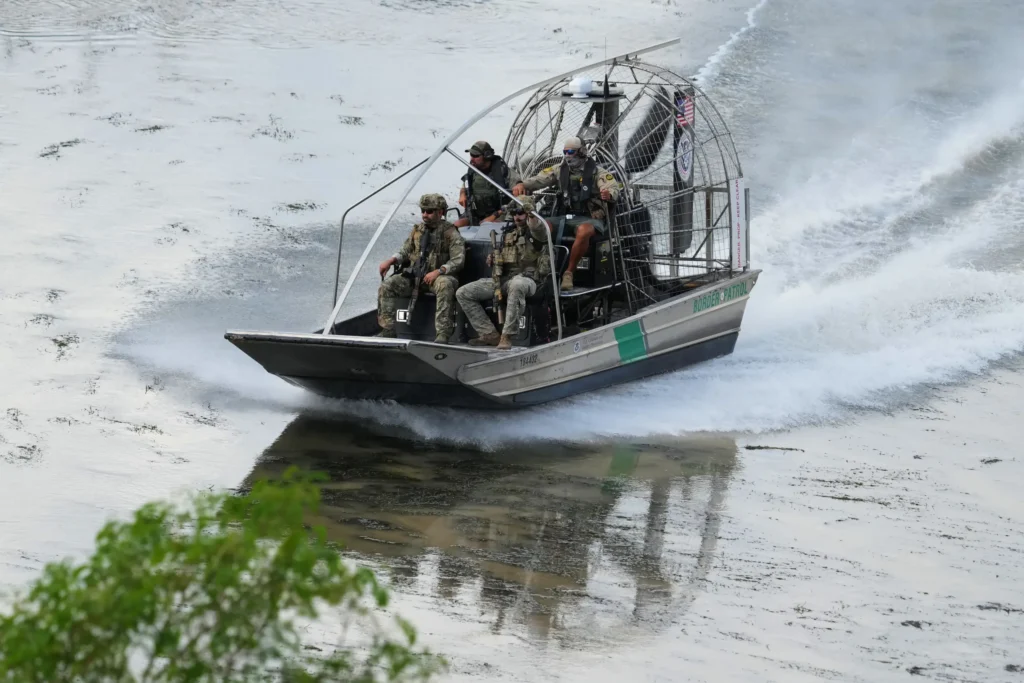
The Army now commands about 8,000 troops along the 2,000-mile southern border, the Associated Press reported Monday, after touring the Rio Grande near Roma, Texas.

Why did the Army send more troops to the Rio Grande Valley?
U.S. Northern Command announced Operation Unified Resolve on Oct. 2 to increase patrols and monitoring in support of Homeland Security and Customs and Border Protection, KRGV reported. On X, the command said it was “rapidly repositioning hundreds of service members” to the Valley. NewsNation put the number at about 500. The soldiers were shifted from units already on the border, not newly called up.

The trigger was a shooting. In late September, a Coast Guard crew stopping a boat on the river near Garceno, Texas, took gunfire from the Mexican side and fired back. Nobody was hurt. DHS said the circumstances “remain under investigation,” Newsweek reported. Mexico has sent 500 National Guard and military officers to its side, in Tamaulipas, in what it calls a coordinated “mirror” operation.
How many people are crossing the border now?
Very few, by any recent measure. Border Patrol arrested 8,870 people between ports of entry along the southwest border in August, according to the Department of Homeland Security. DHS says that’s 94% below the monthly average under President Biden. Crossings fell sharply after Biden’s asylum restrictions in 2024, then dropped further when Trump suspended asylum at the border.
“At any given time, there would be multiple rafts full of people trying to get to this side,” Army Lt. Col. Ray Richards told the AP, pointing at a stretch near Roma that used to be one of the busiest crossing points. Now it’s quiet. Soldiers still see some attempts: one sergeant described three rafts setting out at dusk, and the Army is jamming, capturing or shooting down cartel drones.

Is the troop surge about the midterms?
Some experts think so. Most hard drugs seized at the border come through official checkpoints in cars and trucks, not across the river, said David Shirk, a University of San Diego political scientist. “I don’t dispute there’s some benefit to having personnel in areas at risk for people smuggling and drug trafficking,” he told the AP. “But the vast majority of that is now happening at ports of entry.” Syracuse University’s Dessa Bergen-Cico noted that street prices for cocaine and fentanyl are still low, a sign the supply hasn’t been squeezed.
The Army disagrees. Maj. Gen. Curtis Taylor, who commands the border task force, said the mission is about “dismantling this marketplace of human trafficking,” and that “an awful lot of drugs” move with it. The politics are hard to ignore, though. Border security is one of the few issues where about half of Americans approve of Trump, and it’s an issue where Republican Ken Paxton polls better in a Texas Senate race that Democrat James Talarico narrowly leads, Newsweek reported.
The BeezLoop Take
Taking fire on the Rio Grande is serious, and protecting the Coast Guard crews out there is a legitimate reason to add people. Nobody should wave that away.
But the numbers tell a different story than the helicopters do. The crossings are already down more than 90%, the drugs mostly come through the ports, and the Army is giving media tours of a quiet river weeks before a close Senate race in Texas. Soldiers aren’t props. If the mission is real, it should be measured by drug prices and smuggling cases, not by how good it looks on camera.
The open question: will these troops still be in the Valley after Election Day, and what will the Army say they accomplished?
Also on BeezLoop: a federal judge halted border wall construction in Big Bend, and how Ken Paxton became the GOP’s Senate nominee.
Sources: Associated Press via KSAT · Department of Homeland Security · Newsweek · KRGV · NewsNation (video)