The one concrete thing to come out of the Xi visit so far did not come from the White House podium. It came from the Treasury Secretary on a Fox News hit while the president was standing on a runway.
The US and China have pushed their trade truce back two months, to January 10.

What got extended
The truce is the arrangement that ended last year’s trade war. Both countries agreed to scale back tariffs and to stop adding new trade restrictions.

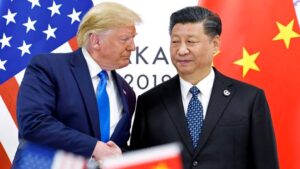
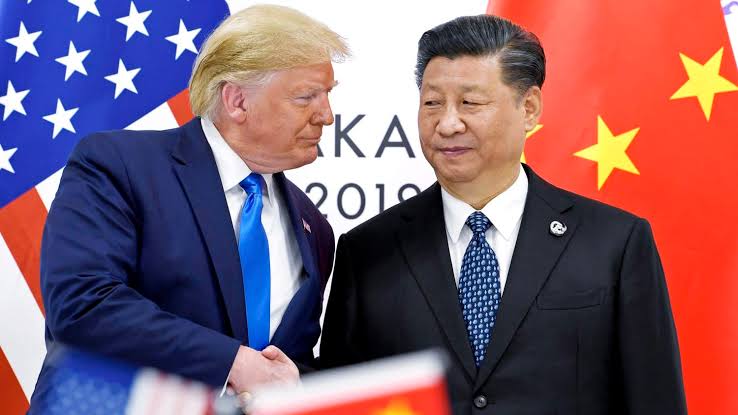
It was set to expire in November. Scott Bessent announced the new date on Fox as Trump greeted Xi at Joint Base Andrews on Wednesday.
Two months. Not a deal, not a settlement. A later expiration date.
The Board of Trade
The other announcement expected this week is something called a US-China Board of Trade.
US Trade Representative Jamieson Greer described it on Fox on Monday. The job of it is to identify what he called a relatively small subset of goods that the two countries agree to protect from trade disputes.
The examples given were low-tech consumer goods and some agricultural products.
So the ambition is a list of things both sides promise not to fight over. That is worth something to a soybean farmer. It is not a trade agreement.
Today at the White House
Wednesday was the arrival. Today is the substance, or the part billed as substance.
- A State Arrival Ceremony on the South Lawn with 479 military personnel.
- A review of troops, then closed-door talks.
- Melania Trump and Peng Liyuan visiting the Smithsonian National Museum of Asian Art while the two presidents meet.
- A state dinner in the East Room tonight.
Expectations out of the meeting itself are low. Reporting ahead of it suggested few concrete results, with both governments mainly trying to keep things stable.
What is actually unresolved
Three things, and none of them got settled by moving a date.
- Taiwan. Xi warned at their May summit that mishandling it would put the relationship in great jeopardy.
- Rare earths and AI chips. China processes the minerals that go into nearly every advanced device the US builds.
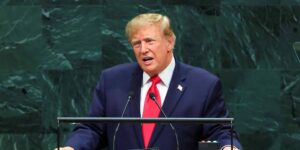
- Iran. China buys Iranian oil, and Trump spent his UN speech asking other countries to squeeze Iran economically.
The BeezLoop Take
Give the extension its due. A truce that was going to lapse in November now lapses in January, which means importers ordering for spring are not pricing in a tariff cliff six weeks from now. For a business planning inventory, two months of certainty is real, and dismissing it as nothing would be posturing.
But look at what this week has cost and what it has bought. A planeside presidential greeting, 479 troops on the South Lawn, a state dinner, the full ceremonial inventory of the United States government. In return, an expiration date moved and a committee that will decide which low-tech consumer goods nobody has to argue about. That is a thin return on the highest honor this country gives a foreign leader.
The fentanyl argument remains the part nobody will address. Trump built the tariffs on the claim that China is poisoning Americans. That claim has not been withdrawn, corrected, or mentioned this week. If it was true, this reception is unearned. If it was leverage, the people sold on it should hear that said out loud.
And the pattern from May is repeating. That summit produced an aircraft order, two governments describing the same agreement differently, and a warning about Taiwan. This one is producing a date change and a board. Both times the ceremony was the deliverable and the substance got deferred to a next meeting.
January 10 is the number to write down. If the truce gets extended again in December, that tells you this is not a negotiation heading anywhere. It is a standoff with a calendar, and each side is paying for quiet in two-month increments.
The question
What does the United States get for a state dinner and a troop review beyond two more months on a clock? And if the fentanyl charge behind the tariffs still stands, how does the same administration justify the red carpet?
Background: why the welcome itself is the story, and Trump’s UN speech threatening to annihilate Iran.
Sources: CNBC · NBC News · PBS NewsHour · Al Jazeera