
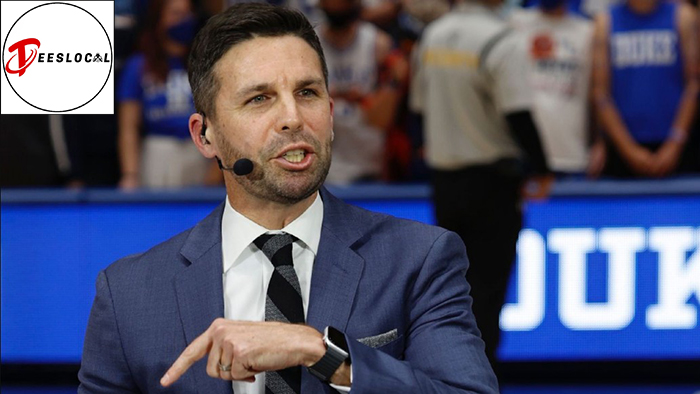
Chris Spatola died unexpectedly Monday at 47. He called college basketball for ESPN, coached at Duke, started four years at point guard for Army, and served as an officer in Iraq. No cause of death has been released.

West Point first
Before any of the television work, he was a soldier.
Spatola started four years at Army from 1998 to 2002 and was named All-Patriot League twice. He went on active duty after graduation and served until 2007, including a deployment during Operation Iraqi Freedom.

That is not a line in a bio that gets mentioned and moved past. He was leading soldiers overseas in his twenties, then came home and started a basketball career most people start at 22.
The Duke years
He joined Mike Krzyzewski’s staff at Duke in 2007 and stayed through 2012. Krzyzewski is also a West Point graduate, and the Army pipeline into that program is not a coincidence.
Spatola was on the bench for the 2010 national championship.
He was married to Krzyzewski’s daughter Jamie. They had three children.
On air
He joined ESPN in 2015 and worked games and studio shows from there.
The thing people who watched him consistently noticed was that he explained the game without making you feel stupid for needing the explanation. He had coached it at the highest level and did not spend his broadcasts reminding you of that.
That skill is rarer than it looks. Plenty of former coaches get a microphone. Most of them talk past the audience.
What has not been said
As of Wednesday morning, no cause of death has been made public.
He was 47, with three kids, and the word every outlet is using is unexpectedly. That is all anyone outside the family knows, and it is worth leaving there.
The BeezLoop Take
There is a reason a sports obituary is landing outside the sports section this week. Spatola was 47. People that age with three children are not supposed to be a headline, and the absence of a cause turns a death into an invitation for strangers to guess. The family has not offered one, which is their right, and the correct response to that silence is to respect it rather than fill it.
What is worth saying out loud is what he actually did with the time. Four years starting at Army. Five years in uniform, including Iraq. Five seasons on a Duke staff that won a title. Eleven years on national television. That is three separate careers, each of which most people would take as the whole thing, and he got them done before 47.
The West Point part deserves more than a mention in paragraph six, too. College basketball is full of people who talk about toughness and accountability as concepts. He had commanded soldiers in a war before he ever coached a practice. When Bill Walton died, people talked about what he brought to a broadcast that had nothing to do with statistics. Same category here.
ESPN will fill the chair. That is what networks do, and it is not a criticism. The people who will actually feel this are a wife, three kids, a father-in-law who is one of the most recognizable coaches in American sports, and a couple of decades of players who were coached by him when nobody was filming.
Remembering him
If you watched college basketball at any point in the last ten years, you heard him. He is part of the same sports week everyone else is arguing about, except this part does not have a debate attached.
Sources: ESPN · ABC11 Raleigh-Durham · WRAL · Yahoo Sports