

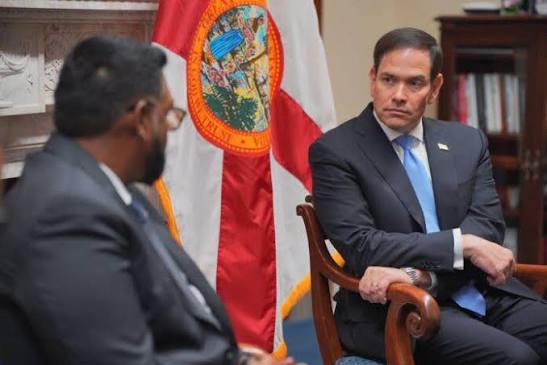
Guyana has become the newest country to accept deportees from the United States who are not its own citizens, joining a growing list of nations quietly absorbing people the Trump administration wants out but cannot send home directly.
Six people, from Cuba and Afghanistan, arrived in Guyana on Friday under what U.S. officials call the Assisted Voluntary Return Program, according to CBS News. Guyana’s Foreign Secretary Robert Persaud said the individuals were vetted and have no criminal records, and that the arrangement followed months of quiet negotiation with Washington. “The U.S. has not made any further requests,” Persaud said, suggesting the numbers involved will stay small for now.
Guyana now sits alongside more than 30 countries that have signed similar deals, including Caribbean neighbors St. Kitts and Nevis, Belize, and St. Lucia. The terms are narrow by design: the agreement runs one year and is not renewable without a fresh round of talks, the U.S. covers all costs, and Guyana takes on no housing or support obligations. The United Nations’ International Organization for Migration is handling the logistics on the ground. Deportees stay in Guyana while their immigration cases play out, after which they either return to their home country or try to relocate somewhere else of their choosing.

So why Guyana?
Guyana’s government has framed the deal as strictly transitional and limited, not resettlement. But the timing lines up with something bigger than migration policy. Guyana has spent the past several years leaning hard on the United States for military backing against Venezuela, which claims roughly two-thirds of Guyanese territory in the oil-rich Essequibo region. That standoff escalated sharply after ExxonMobil’s 2015 discovery of more than 11 billion barrels of crude in waters off Guyana’s coast, some of it in areas Venezuela also claims.
Guyana asked Washington directly for help bolstering its military in 2024, and U.S. officials, including Secretary of State Marco Rubio, have since warned Venezuela against any move on Guyana or on Exxon’s operations there. For a country of roughly 800,000 people facing a much larger neighbor with an active territorial claim, staying useful to Washington on an issue like migration costs little and buys goodwill on the issue that actually matters to Guyana’s survival as a state with its oil intact.
Human rights groups have pushed back hard on third-country deportation deals generally, arguing they violate international law by sending people to places with no connection to their case and, in some instances, back toward the same regions they originally fled. Guyana’s government has not addressed that criticism directly, sticking instead to the language of vetting, limits, and a program that expires in a year unless both sides agree to extend it.
Related from BeezLoop: A Boston Appeals Court Says ICE Has to Tell People Which Country It Is Deporting Them To, Australia Releases Full Terms of Its $2.5 Billion Deportation Agreement With Nauru and The Man ICE Shot in Austin Says There Was No Foot Chase.
Sources: CBS News · CNBC · Demerara Waves






[…] Related: Guyana became the latest country to take migrants deported from the US. […]