

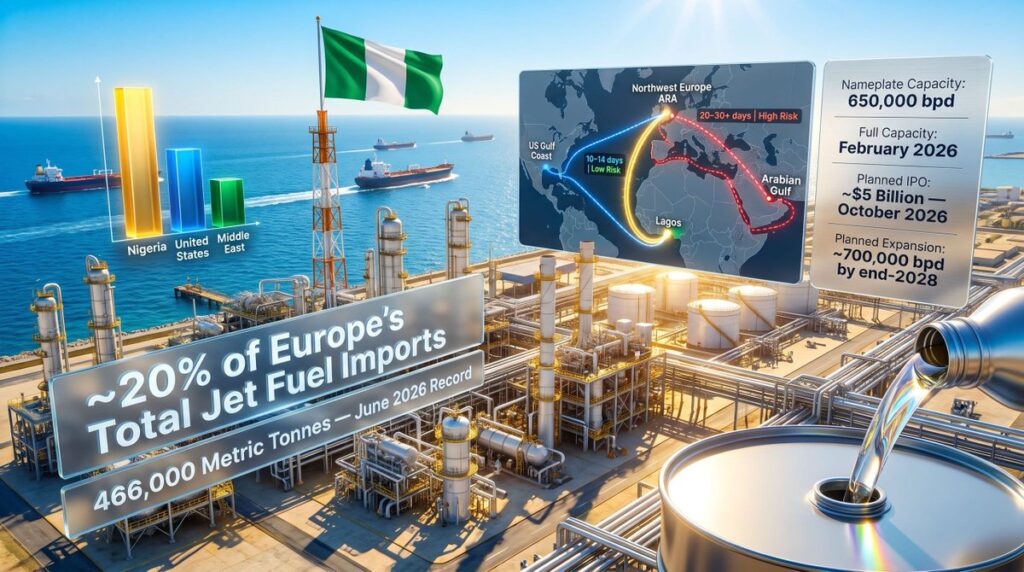
Nigeria has overtaken Qatar and Algeria to become Europe’s third-largest LNG supplier in the first quarter of 2026, with EU imports of Nigerian liquefied natural gas up 19% year-over-year, as the country advances roughly $30.5 billion in gas infrastructure projects aimed at further expanding exports. The push includes plans to supply Germany with 850,000 tonnes of natural gas annually, rising to 1.2 million tonnes, with first exports expected this year.
A proposed pipeline stretching between 5,600 and 6,900 kilometers along the West African coastline would eventually connect Nigeria’s gas reserves to Morocco before linking into existing European gas networks, with Nigerian President Bola Tinubu and Morocco’s King Mohammed VI expected to sign an intergovernmental agreement on the project in the fourth quarter of 2026. A seventh LNG production train is also expected to come online by the end of the year.
Why Nigeria Has an Edge Right Now
Nigerian LNG cargoes reach European ports in roughly 10 sailing days and avoid both the Strait of Hormuz chokepoint and the longer eastward routing that adds cost for Gulf state exporters, an advantage that’s become more relevant as Middle East shipping lanes face their own disruptions. That geographic edge is a real structural advantage, not just favorable timing.
The Catch
Nigeria has the gas reserves and the political will to become a much bigger European supplier, but not yet the pipeline infrastructure or consistent regulatory environment to meet a sudden jump in demand. Analysts covering the sector describe a gap between Nigeria’s stated ambitions and its current capacity to deliver on them quickly, meaning the country’s rise as a major European gas supplier is more likely to play out over several years than overnight.
Related from BeezLoop: 7 in 10 Americans Don't Want a Data Center Near Them, Qatar's $400 Million Jet Bill and Its Battered LNG Industry, Explained and "KC Luxury" Instagram Influencer Arrested in $27.7M Cocaine Bust.