
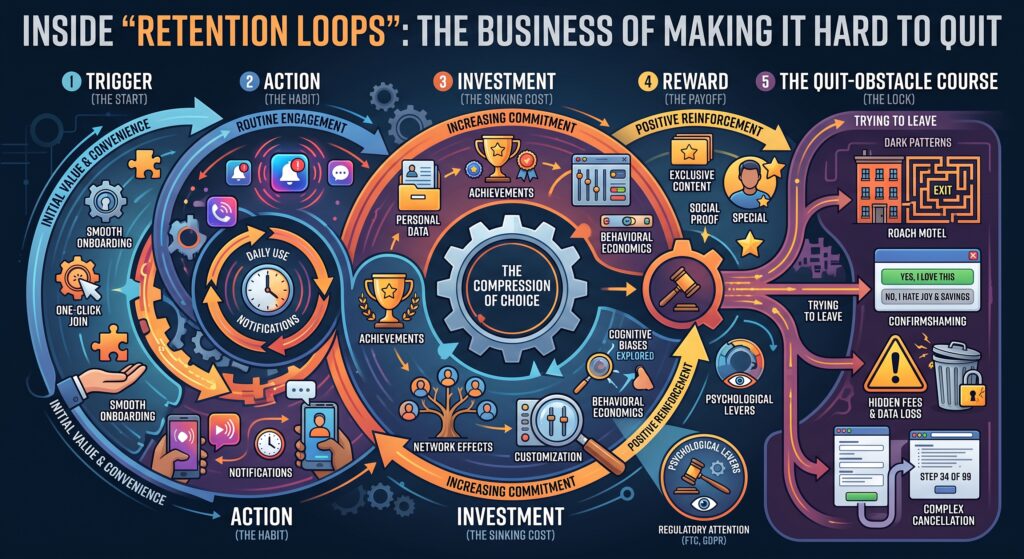
Anyone who’s tried to cancel a subscription, return a gym membership, or leave a hotel reservation recently has likely run into what researchers call a “retention loop”: a deliberately high-friction process designed to make canceling harder than signing up ever was. Recent examples that circulated widely include a traveler who says a hotel chain required an in-person visit to physically cancel a reservation, and workplace stories describing managers scheduling a departing employee’s most stressful meetings for their literal last hours on the job.
The Federal Trade Commission has taken direct aim at this pattern. Its “click-to-cancel” rule, finalized in 2024, requires that canceling a subscription be at least as easy as signing up for one, specifically targeting practices like requiring a phone call during limited hours or forcing a customer through multiple retention offers before completing a cancellation.
Why Companies Design It This Way
Every extra step between a customer deciding to leave and actually leaving buys the company more chances to talk them out of it, and even a modest reduction in cancellation rates can be worth real revenue at scale. It’s a rational business calculation even when it produces a genuinely miserable customer experience, which is exactly why regulators have started stepping in rather than leaving it to individual companies to self-correct.
What’s Changing
The FTC’s rule faced legal challenges from industry groups after it was finalized, and enforcement has been uneven as a result, but several states have separately passed their own cancellation-ease laws that don’t depend on the federal rule surviving in court. Consumers in the meantime have leaned on credit card chargebacks, state attorney general complaints, and public callouts on social media as workarounds when a company’s own cancellation process refuses to cooperate.
Related from BeezLoop: Two Charged in $15 Million Mortgage Scheme That Hit Over 3,000 Struggling Homeowners and FCC Cracks Down on Robocall Violators and Unveils a New Scorecard to Rate Carriers on….