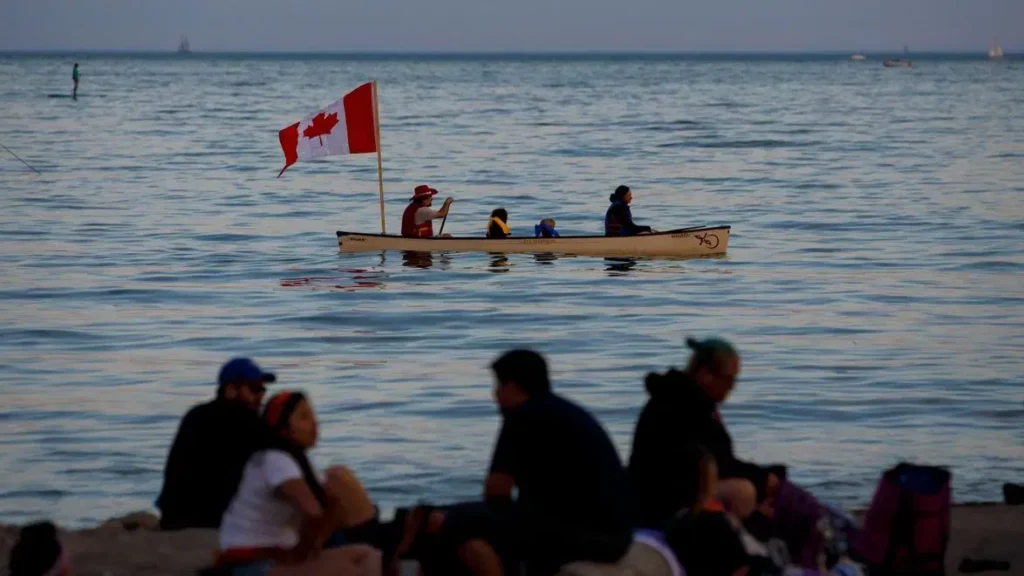
President Trump signed an executive order Thursday officially renaming Lake Ontario “Lake America” for U.S. federal purposes, effective immediately, escalating a trade fight with Canada that has already produced new 50% tariffs on billions of dollars of Canadian goods.
The order directs the Interior Department and the U.S. Board on Geographic Names to update official maps, the Geographic Names Information System, and federal databases and documents within 30 days. Trump said he was making the change because “Canada has been ripping us off for a long time on trade, very sadly,” tying the renaming directly to the collapsed trade talks.
What the Order Actually Changes
A U.S. president can unilaterally change how federal agencies refer to a geographic feature for domestic, official use, but has no authority to dictate what other countries, international bodies, or everyday mapmakers call it. U.S. federal agencies, USGS maps, and official government communications will now use “Lake America.” Canada, international organizations, commercial mapmakers, and the general public are expected to keep using “Ontario.” Documents and shipping, weather, and tourism materials that cross the border will likely end up carrying both names.

Canada’s Response
Canadian Prime Minister Mark Carney rejected the change, noting that the name Ontario comes from the Wendat word Ontari’io, meaning roughly “the lake is beautiful, the lake is big,” and predates both the Canadian Confederation and the U.S. Declaration of Independence by centuries. New York Gov. Kathy Hochul also rejected the rename. Roughly 52% to 53% of the lake’s surface sits on the Canadian side of the border.
The Trade Fight Behind It
The rename follows the collapse of U.S.-Canada trade talks in late August, after which the U.S. imposed 50% tariffs on about $20 billion worth of Canadian goods, including hockey sticks, building materials, liquor, and certain clothing categories, roughly 5% of total Canadian imports to the U.S. by value. Canada has said it will match those tariffs dollar-for-dollar starting September 8, covering steel, dairy, appliances, agricultural equipment, pulp, paper, and electronics.
What It Could Mean for Prices
The renaming itself costs little to implement, but it lands alongside tariffs that trade analysts expect to raise prices within weeks rather than months on goods that move across the U.S.-Canada border in both directions, including energy, lumber, steel, autos, and agricultural products. Businesses that rely on integrated North American supply chains have said the uncertainty created by the escalating dispute is already proving costly, separate from the tariffs themselves. Illinois Gov. JB Pritzker responded to the rename by sarcastically renaming Lake Michigan “Lake Illinois” and joking about annexing Green Bay, Wisconsin.
Related from BeezLoop: Trump Says Bombardier Jets Can No Longer Be Sold in the US Unless the Canadian Company…, Trump Announces 50% Tariffs on Canadian Autos and Steel Starting 2027 and Tariffs Have Cost Oregon Importers Nearly $3 Billion.