

If you tuned into the major financial news networks this week, you probably saw a sea of green charts and celebratory anchors praising the “resilient” stock market, as the S&P 500 climbed on the backs of big-money earnings beats from tech companies like CoreWeave and Super Micro. But if you walk out of the Wall Street trading rooms and look at the actual data released by the Bureau of Labor Statistics on August 12, 2026, you are hit with a cold, unyielding bucket of reality.
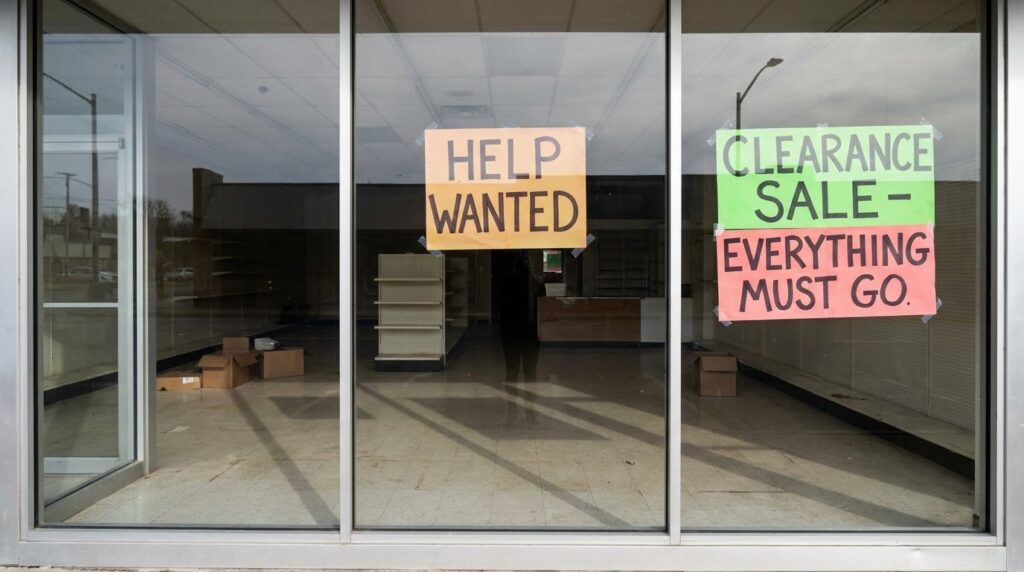
The BLS reported that total nonfarm payroll employment actually contracted by 23,000 in July 2026, completely wiping out the slow, monthly gains of the past year. Driven by sharp declines in local government education and retail trade, the job market is officially cooling off. At the exact same time, the Consumer Price Index (CPI) climbed yet again, pushing our annual inflation rate up to a painful 3.4%, a sharp spike from the 2.5% recorded just a month earlier in June.
Let’s apply some basic, working-class logic to these numbers, because the financial elite are trying very hard to ignore the elephant in the room: stagflation.
We are living in an economic system where jobs are actively drying up, yet the cost of basic survival, food, fuel, and healthcare, continues to climb. To make matters worse, the Federal Reserve is still locked in a lively, hawkish debate about implementing yet another interest rate hike in September, which would make borrowing money for a house, a car, or a small business even more expensive.
This is the brutal double-squeeze of the modern economy. The corporate stock market can keep hitting all-time highs because massive tech conglomerates are using AI automation to cut labor costs and boost their profit margins. But for the everyday working-class family whose personal savings have plunged to a historic four-year low of 2.7%, a green line on a Wall Street dashboard doesn’t pay the rent. The numbers don’t lie: our economy is slowing down, our money is buying less, and the corporate class is laughing all the way to the bank.