
New York City’s public school system, the largest in the country, announced this week it will bar students from prekindergarten through eighth grade from using generative artificial intelligence tools in the classroom, reversing course after a period of broader experimentation with AI in schools.
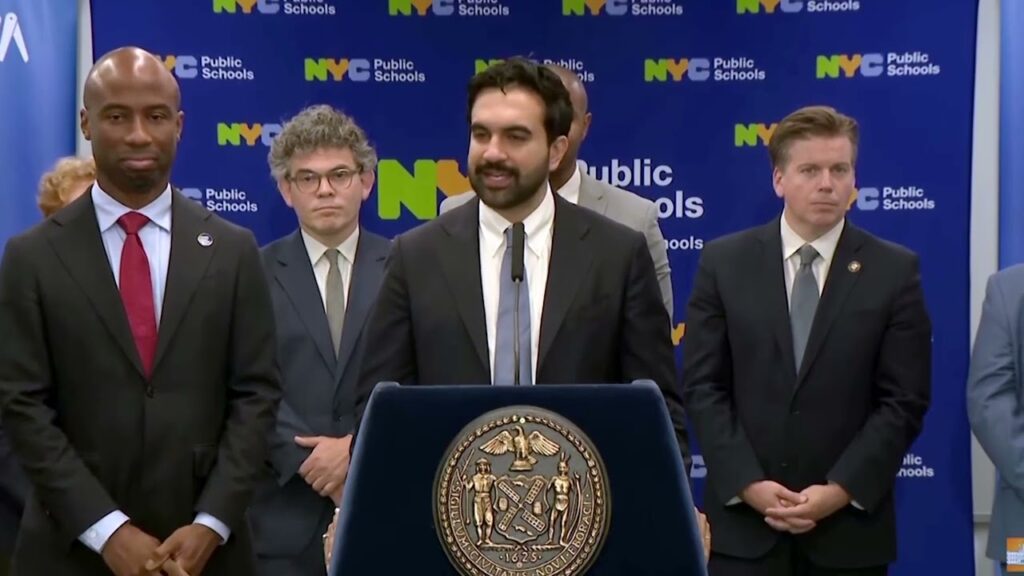
Mayor Zohran Mamdani and city education officials unveiled the one-year moratorium on Wednesday, September 2, saying it will apply to roughly 600,000 students, about two-thirds of the district’s total enrollment. The policy bars student-facing generative AI software as well as so-called companion chatbots, and city officials said it will force the discontinuation or disabling of AI components in more than 38 previously approved classroom programs that did not meet new safety and oversight standards.
What the policy does and doesn’t cover
The ban does not extend to high school students. Instead, the city says it will roll out twice-yearly AI literacy classes for public high schoolers, aiming to teach older students how generative tools work and their limitations rather than restricting their use outright. The policy also introduces new limits on screen time for the youngest students, from pre-K through second grade.

City Hall officials described the policy as the most expansive prohibition of its kind at a major American school system, framing it as a response to concerns about companion chatbots, data privacy and the unproven academic value of unsupervised generative AI use among younger children.
A reversal of an earlier embrace
The announcement marks a notable pivot for New York City schools, which under the prior administration had at different points both restricted and then loosened access to tools like ChatGPT in classrooms. City officials acknowledged the earlier approach had, in their words, not fully accounted for the risks the new policy is meant to address, while defending the decision to preserve AI literacy instruction for older students rather than banning the technology system-wide.
The policy takes effect for the 2026-27 school year, which is already underway, meaning schools and technology vendors will need to adjust access for younger students on a compressed timeline.
Source reporting: The Washington Post and CNN.
Related from BeezLoop: A Judge Blocked Mamdani’s Second-Home Tax Rollout, 'Moral Cowards': 77 Delegations Walked Out on Netanyahu and Netanyahu Made a Video About New York's Mayor.