
Buckingham Palace has a rule about books. It does not comment on them. On Sunday it commented on one, and suggested Diana’s brother is misremembering his own sister’s death because he is grieving.

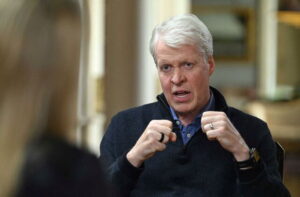
Charles Spencer’s answer, on Good Morning America: “It’s not every day you’re gaslit by a king.”
The claim
We wrote about the memoir this weekend. The line driving all of this is Spencer’s account of a conversation with Charles after Diana died in 1997.

Spencer says the man who is now King told him: “We’ll forget her soon enough!”
The statement
The Palace put out this:
While we do not comment on books as a matter of principle, His Majesty is mindful that the pain of fraternal grief can cloud reason, affect judgment and color memory.
Buckingham Palace
Read it twice. It does not say the conversation never happened. It does not say Spencer is lying. It says grief bends memory, and leaves you to finish the sentence.
The response
Spencer caught exactly that, and it is why he is angrier about the statement than about anything else.
“I was really upset with that because I thought it was very, not only condescending, but not straight,” he told ABC’s Maggie Rulli. He called it “astonishingly provocative and below the belt because it was essentially trying to say I’d lied without the king being able to deny what I’d said.”
The BeezLoop Take
The Palace made a choice here and it is worth naming. It broke its own policy to answer a book it says it does not answer, and the thing it produced is not a denial.
There is a version of this statement that would have settled it. “That conversation did not happen.” Six words. They did not write those words. They wrote about memory instead, which lets people conclude Spencer is wrong without anyone having to be on record saying so.
Spencer is not a neutral party either, and that matters. His book comes out Tuesday. He is doing morning television about it. A fight with the Palace is the best publicity a royal memoir can get, and he knows that better than anyone. He made the same point about the press when he compared coverage of Harry and Meghan to what happened to Diana.
So you have a man with a book to sell, describing a private conversation from twenty-nine years ago that nobody else heard. And an institution that answered him without actually answering. Neither one of them is handing you proof. What they are handing you is a choice about who you find more believable, and that says as much about the reader as it does about either man.
The question
If you genuinely did not say something, do you say so plainly, or do you talk about how grief affects memory? Readers can decide what that choice tells them. Just know the Palace almost never speaks at all, which means somebody decided this was worth the exception.