
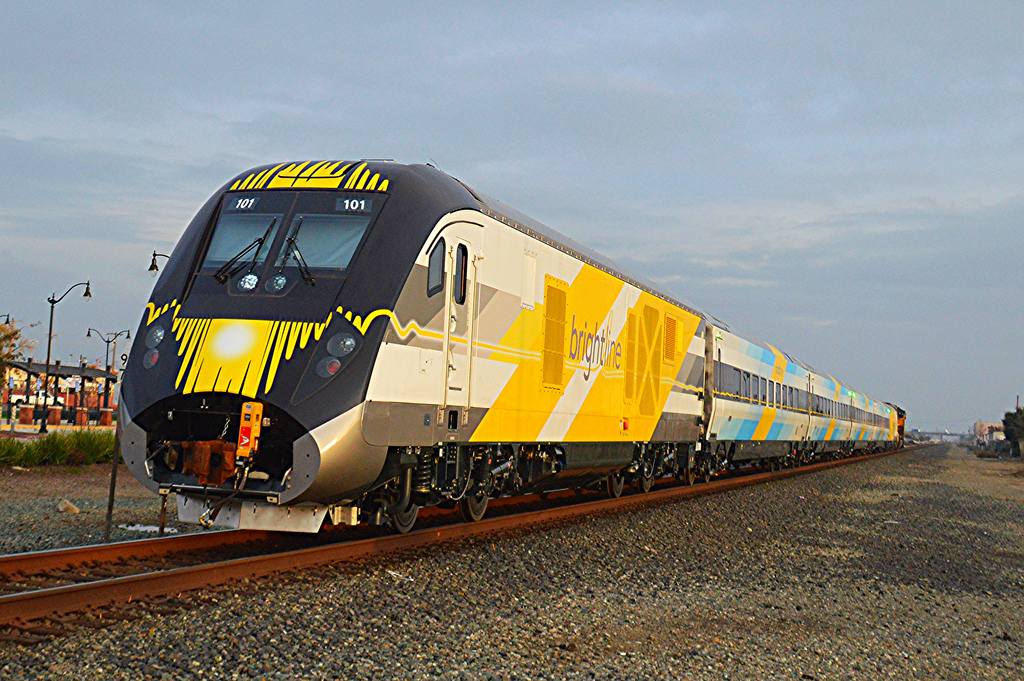
Brightline has reshaped travel along Florida’s east coast, cutting the drive between Miami and Orlando down to a train ride. It has also become, by a wide margin, the deadliest passenger rail line in the country per mile traveled, a reputation that federal safety investment is only beginning to dent.
An analysis by WLRN and the Miami Herald counted more than 180 deaths linked to Brightline trains since testing began in 2017, with the total surpassing 200 as of this year. The line’s death rate is roughly three times higher than Tri-Rail’s and nearly six times higher than Amtrak’s nationally. Recent fatalities this year include a pedestrian struck in Hallandale Beach in March, a scooter rider killed in Pompano Beach in February, and a man struck in Miami’s Wynwood neighborhood, also in February.
Investigations into the corridor have pointed to a specific combination of factors: “quiet zones” that limit how often trains sound their horns near crossings, and long stretches of track with little or no fencing separating rail from pedestrian areas, particularly through the densely populated Miami-to-West Palm Beach segment. That’s a contrast with the newer, grade-separated and fenced segment between Cocoa and Orlando, which has logged far fewer incidents.
There has been real, measurable movement on fixing it. A $25 million federal rail safety investment funded upgrades at 327 highway-rail grade crossings, 33 miles of new fencing, and additional signage and warning systems along the corridor. The U.S. Department of Transportation reported trespassing incidents and train-vehicle collisions along the corridor fell 30% year-over-year in the first quarter of 2026 following those upgrades. That’s real progress, but it’s progress from an unusually high baseline, and safety advocates argue the unfenced stretches through South Florida’s most populated areas still need more than incremental fixes.