

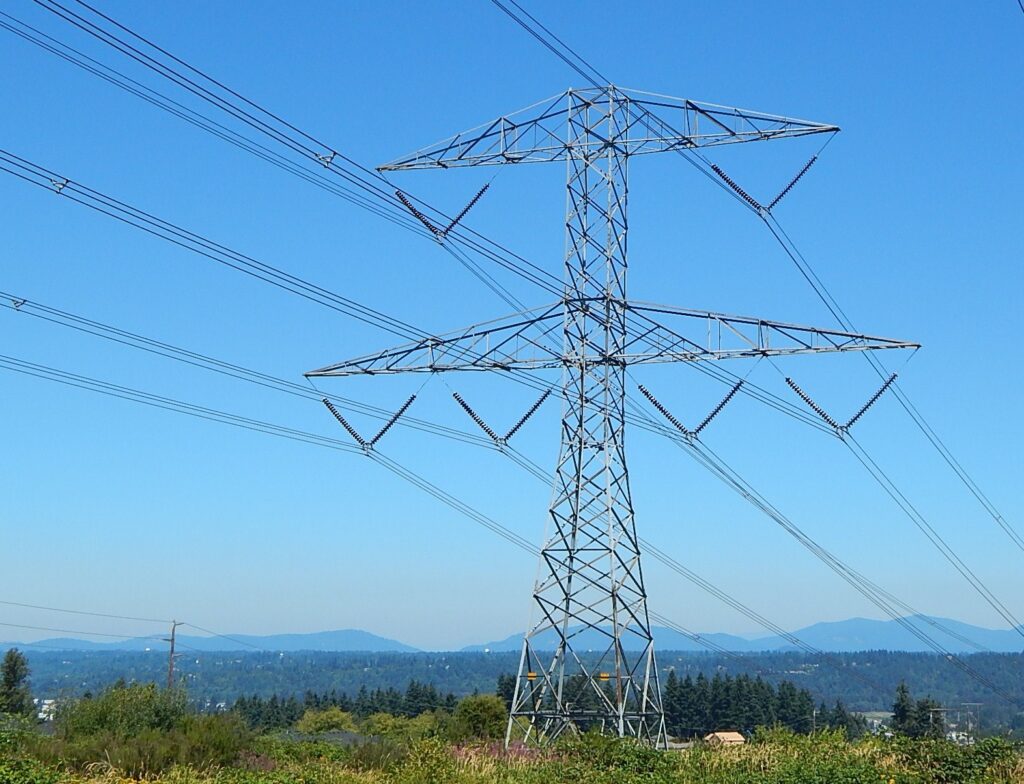
The Senate passed a bipartisan bill Thursday night that would speed up approval of power plants, transmission lines and other big projects, and make large new data centers pay for the grid upgrades they need, NBC News reported. The vote was 62-33. Supporters are selling it as a way to bring down electricity bills. Here’s how that’s supposed to work, and what’s still unclear.
The bill is the Bipartisan American Affordability and Jobs Act, S. 5653. It was written by Sens. Shelley Moore Capito (R-W.Va.), Sheldon Whitehouse (D-R.I.), Mike Lee (R-Utah) and Martin Heinrich (D-N.M.). It now goes to the House.
What does the Senate permitting bill do?
According to NBC, it would:

- Speed up environmental reviews with tighter deadlines.
- Accelerate electric transmission, the long-distance high-voltage lines that move power from where it’s made to where it’s used.
- Limit agencies’ power to revoke permits that have already been granted, so a project approved under one administration can’t easily be killed by the next.
- Make big data centers pay their way. New data centers of 20 megawatts or more would have to pay the full extra cost of the infrastructure built to serve them, according to the Bipartisan Policy Center.
- Cut chokepoints for approving and finishing projects.

Will the permitting bill lower my electric bill?
Maybe, eventually, and it depends on where you live. No one has put a dollar figure on it yet. Sen. Whitehouse said “Americans will start to get some relief quickly if this bill passes,” but didn’t say how much. Here’s the theory behind the claim:
- Data center costs: right now, when a utility builds new lines and substations for a giant data center, that cost can get spread across every customer’s bill. Whitehouse called it “data centers’ free ride.” The 20-megawatt rule is meant to send that bill to the tech company instead. This is the part most likely to show up on household bills, especially in data center hot spots.
- Cheaper power, sooner: new power plants and transmission lines can wait years for federal approvals. Faster permits mean more supply reaching the grid, which should ease prices over time.
- The catch: transmission lines take years to build even after approval, so faster permits don’t mean lower bills next month.
Your bill also depends on things this law doesn’t touch, like natural gas prices and state utility regulators. In New York and Florida, the state utility commissions still decide what costs utilities can pass on to customers.
Who opposes the bill, and what happens next?
Most Senate opposition came from Democrats. Some environmental groups and Native American tribal organizations objected to easing reviews and consultation rules they use to protect their land and water, NBC reported. Supporters on the left argue the trade is worth it. “This removes a lot of the obstacles that hamstrung [Joe] Biden’s climate investments,” said Adam Jentleson, a former Senate Democratic aide.
In the House, Majority Leader Steve Scalise (R-La.) said the bill has “a great chance” of reaching the president’s desk. Senate Majority Leader John Thune (R-S.D.) said the cleanest path is for the House to pass the Senate version as is, warning that if it comes back changed, “I can’t predict what happens.” No House vote is scheduled yet. Data centers’ strain on the grid isn’t new: Texas froze data center power hookups in September over the same problem.
The BeezLoop Take
The data center provision is the best idea in this bill and the one that matters most to regular households. It’s simple: if a tech company’s building needs a new substation, the tech company pays for it, not the family down the road.
The permitting changes are a bigger gamble. Faster reviews can mean cheaper power, or they can mean projects built over the objections of people who live next to them. Once this becomes law, who checks whether the shortcuts are cutting costs or just cutting corners?
Sources: NBC News · Congress.gov: S. 5653 · EPW GOP (video)