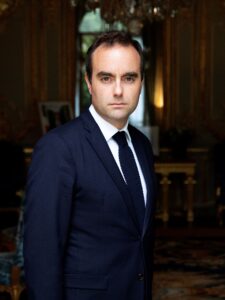

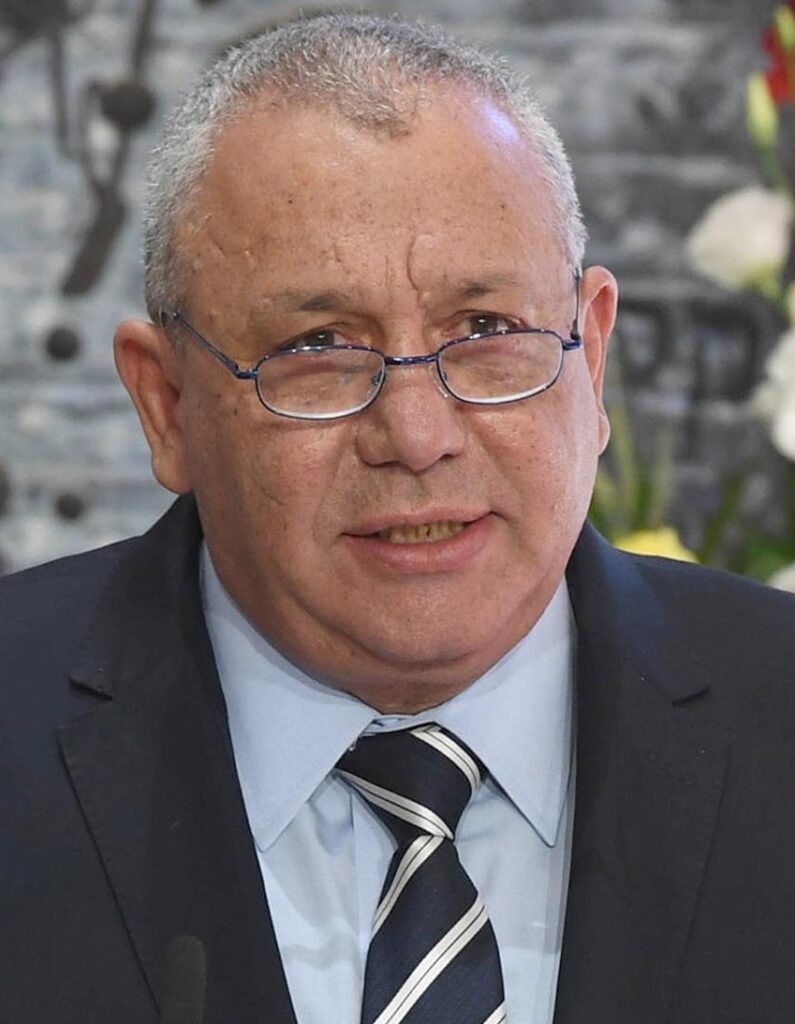
Someone other than Benjamin Netanyahu gets the first shot at forming Israel’s government. President Isaac Herzog announced Saturday evening that he’ll give the mandate to Gadi Eisenkot, a former army chief of staff who now leads the Yashar party. The handover is set for a ceremony at the President’s Residence today at 5 p.m. Israel time, the Times of Israel reported.
The numbers weren’t close. Eisenkot was recommended by 67 members of the 120-seat Knesset, a majority, while Netanyahu got 46. United Torah Judaism’s seven lawmakers recommended no one. But a recommendation isn’t a coalition, and that’s where Eisenkot’s problem starts.

Why does Eisenkot get the mandate if he can’t count to 61?
Because Herzog’s job is to pick the person with the best chance, and 67 is more than 46. Some of Eisenkot’s 67 came from Arab-led parties, which won a record 19 seats, Al Jazeera reported. Eisenkot has ruled out governing with them, and hawkish members of his own bloc oppose leaning on Ra’am or the Joint List even from outside the government.

Take the Arab-led parties out, and Eisenkot’s four-party alliance has 48 seats. Netanyahu’s bloc has 53. The cleanest path to 61 runs through the two ultra-Orthodox parties, United Torah Judaism and Shas, which together would give him exactly 61. That’s a razor-thin majority built on parties that sat in Netanyahu’s last government, and Eisenkot’s own condition, mandatory military, national or civil service for everyone, cuts straight at their biggest issue. Shas called reports that it wouldn’t block him “total fake news.” Avigdor Liberman, long the Haredi parties’ loudest critic, said Friday he’d accept “painful compromises” on enlistment to get a government without Netanyahu.
What is Netanyahu offering instead?
A “government of national unity,” on his terms. In a video Saturday, Netanyahu said it would have to include “all the parties of the national camp,” meaning his far-right and Haredi partners. “There is someone who wants, as soon as next week, to hastily swear in a government with terror supporters,” he said. “With a government like that, Israel simply won’t survive.” Eisenkot’s party answered that Likud is welcome to join, if it drops “the extremists.”
Eisenkot has said anyone who held major power on Oct. 7, 2023 should leave public life. On X he called for “a national emergency government” and wrote, “I will do everything to make us worthy.”
How long does Eisenkot have?
Twenty-eight days, and Herzog can add up to 14 more. If he fails, Herzog can hand the mandate to someone else, likely Netanyahu. If that fails too, a Knesset majority can back a third candidate. If nobody forms a government, Israel goes to yet another election within 90 days, with Netanyahu staying on as caretaker. There’s one more option: a minority government that wins a confidence vote with fewer than 61 seats, which the Joint List’s Ahmad Tibi says he expects, with outside support from Arab parties. We covered how the Oct. 27 vote left Netanyahu eight seats short and Trump’s endorsement before it.
The BeezLoop Take
Netanyahu’s “unity” offer is a demand that the winner hand the government back to the coalition voters just turned out. Calling a rival bloc that won a majority of recommendations dependent on “terror supporters” isn’t a negotiating position. It’s an attempt to make any government without him look illegitimate before it exists.
Eisenkot’s problem is real too. He won’t count on the Arab-led parties whose recommendations got him the mandate, and his path to 61 runs through ultra-Orthodox parties that oppose his central promise on military service. Something has to give.
The open question: does Eisenkot bend on Haredi enlistment to reach 61, or try a minority government that could fall the first time it’s tested?
Sources: Times of Israel · Al Jazeera · Al Jazeera English (video)