
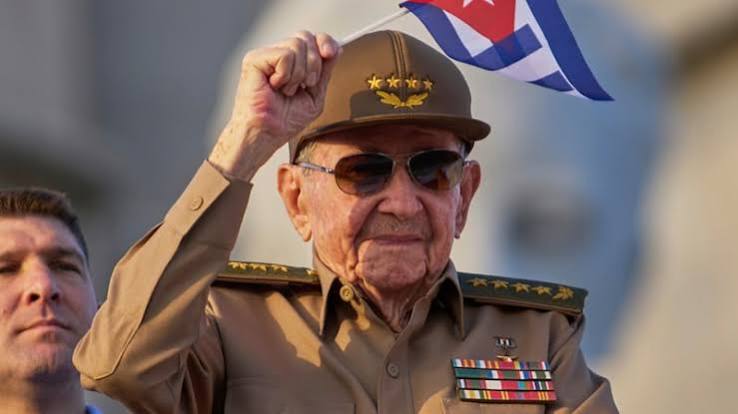
Florida has charged former Cuban leader Raúl Castro with conspiracy to commit first-degree murder over the 1996 shootdown of two Brothers to the Rescue planes, which killed four men flying out of South Florida. Attorney General James Uthmeier announced a state arrest warrant Monday at Florida International University. “The people of Miami have waited too long,” he said, WUSF reported.
Castro is 95 and lives in Cuba, so he’s very unlikely to see a Florida courtroom. Uthmeier admitted as much, but said the warrant will limit where Castro can travel, since countries with U.S. extradition agreements could hand him over. “We stand ready to prosecute the case,” he said, the AP reported.

What happened to the Brothers to the Rescue planes?
On Feb. 24, 1996, three unarmed Cessnas took off from Opa-Locka Airport. Brothers to the Rescue was a Miami exile group that flew over the Florida Straits looking for Cubans fleeing by raft. Cuban MiG fighter jets shot down two of the planes outside Cuba’s territorial waters, killing all four men aboard. The third plane made it home. Prosecutors say Castro, then Cuba’s defense minister, had spies infiltrate the group and ordered the attack.

Doesn’t Raúl Castro already face federal charges?
Yes. A federal indictment announced in May charged him with murder and destroying an aircraft, and the state case leans heavily on it. U.S. Attorney Jason Reding Quiñones said the federal and state cases can run side by side, since they’re separate governments. Cuban President Miguel Díaz-Canel said the charges have “no legal or practical basis whatsoever” and called them a political move to justify U.S. pressure on Cuba.
Is the Castro case about the election?
Uthmeier’s Democratic opponent says so. José Javier Rodríguez called it a “political distraction” from the Hope Florida and Alligator Alcatraz controversies, and noted it landed on the first day of early voting in Miami-Dade, home to the country’s largest Cuban American community.
The BeezLoop Take
The families of the four men killed in 1996 have waited 30 years for anyone to be held accountable, and a murder charge, even a symbolic one, says the U.S. hasn’t forgotten. That matters in Miami, and it should.
But it’s fair to notice the timing. A state charge that mostly copies a federal indictment from May, announced at a press conference on the first day of early voting, by an attorney general on the ballot, is also a campaign event. Both things can be true.
The open question: will Castro ever leave Cuba again, and does a charge he’ll likely never answer change anything for the victims’ families?
Also on BeezLoop: Cuban Miami helped elect Trump, and now Cubans are being deported in record numbers, and the Trump administration’s sanctions on Cuba’s ruling elite.
Sources: Associated Press, via WSLS · WUSF · CBS Miami (video)