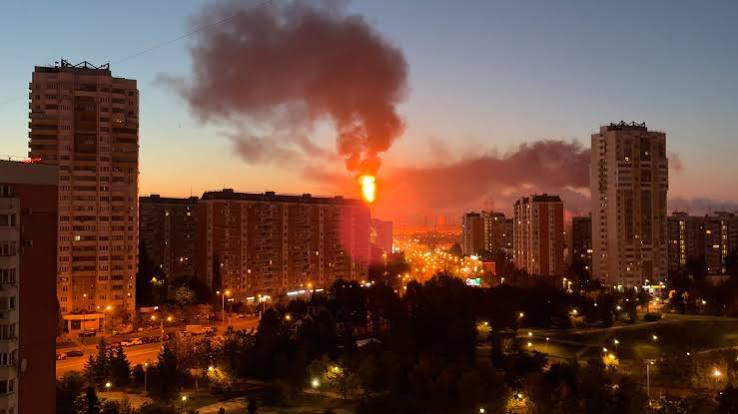
Ukraine launched more than 1,000 drones at Russia overnight, and Moscow’s mayor called it the largest attack the capital has ever taken. Two people were killed in the Moscow region. The main target was a refinery that supplies about 40% of the city’s fuel.

Mayor Sergei Sobyanin said 450 drones were shot down approaching Moscow. Several got through to the grounds of the Gazpromneft-Moscow Oil Refinery in the Kapotnya district, which caught fire. More than 1,600 drones have been downed across Russia since Saturday, by Russia’s own count.
Ukraine’s General Staff confirmed the refinery was the target. It’s one of the largest in the country by volume, and it covers roughly 70% of the Moscow region’s demand for petrol and aviation fuel.

The timing is the message
Sunday is the third and final day of Russia’s parliamentary elections, the first since the full-scale invasion began in 2022.
Sobyanin said the attack “was clearly planned with the aim of disrupting the elections.” He’s probably right about the timing, though that framing does useful work for the Kremlin too, since an election held under attack is an election nobody scrutinizes closely.
The vote is also being held in Ukrainian regions Russia annexed illegally, which is the first time that’s happened.
Why refineries
Ukraine has spent months hitting Russian energy infrastructure rather than troop positions, and the logic is economic.
Refineries are how crude becomes money and fuel. Hitting one doesn’t just dent a building, it takes petrol off the domestic market and squeezes the revenue that pays for the war. Russia can export crude. It can’t easily replace refining capacity, because the equipment is Western and sanctioned.
Kapotnya is also about 10 miles from the Kremlin. That’s the other point being made. We covered the drone that nearly hit Zelensky’s plane this month, and the Kushner and Witkoff trip to Kyiv after talks in Moscow.
The BeezLoop Take
We’d be careful with the casualty framing on both sides here. Russia reports two dead and a refinery fire. Ukraine reports a successful strike on a legitimate military-economic target. Both can be true, and neither side’s numbers are independently verified, ours included.
What’s clear is the shift in what this war looks like. A campaign that started with tank columns is now largely a contest over who can degrade the other’s energy system faster, fought with cheap drones against expensive infrastructure. That’s a war Ukraine can afford to keep fighting longer than most people assumed a year ago.
Where we’d push back on the triumphalism: Moscow has absorbed this before and kept going. A refinery fire is not a turning point, and treating every large strike as one is how three years of coverage has misled people about the pace of this thing.
What happens next
Watch Russian domestic fuel prices and any move to restrict petrol exports, which is what Moscow has done after previous refinery strikes. That’s the real measure of whether this one landed.
Sources: NPR · Al Jazeera · The Moscow Times · Ukrainska Pravda