
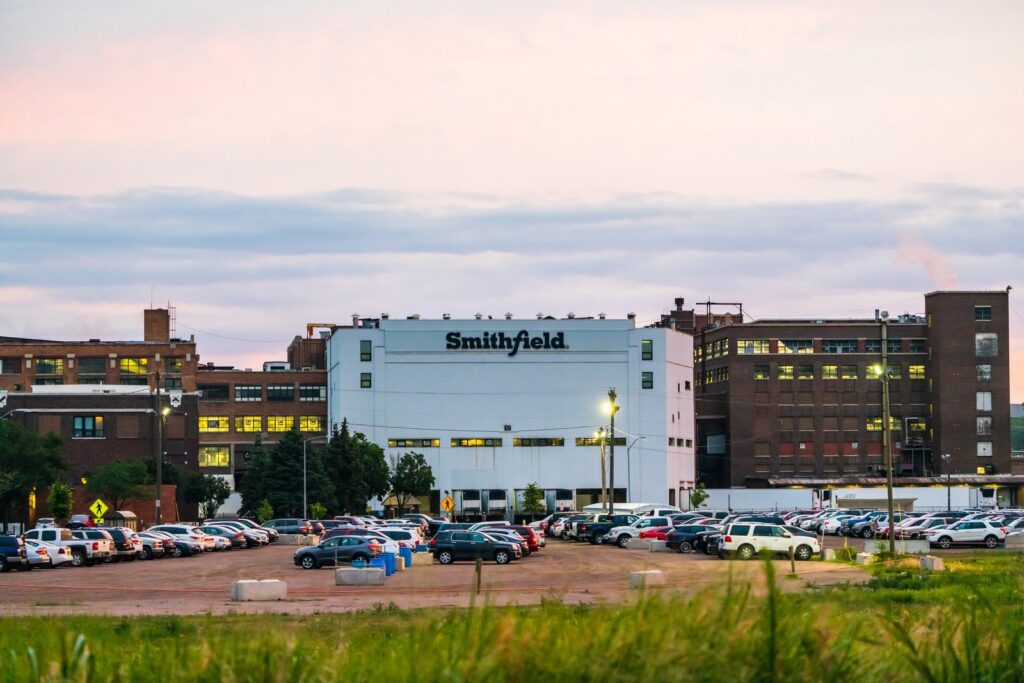
Around 100 workers walked out of the Smithfield Foods plant in Monmouth, Illinois after a coworker was killed in what employees described as a machine-related incident Monday morning, and management ran production anyway. OSHA and local authorities are investigating.

What happened that morning
Workers got a text around 5:30 a.m. announcing a late start. When they arrived at 7:30, they learned a colleague had died inside the plant. Employees described coworkers crying on the floor and others shouting at the plant manager: “Listen to your people! Why are we here? We shouldn’t be working!” One worker recalled the manager’s response as, “My door is always open. Come talk to me.”
Production was called to run. One employee told reporters, “I got sick to my stomach and I just didn’t feel right as a person being there,” and described the decision as showing “no respect” to the man who died, his family, or his coworkers. He called HR, left, and by his estimate at least 100 others did the same.

The disagreement is narrower than it looks, and it’s about the default
Smithfield says it was “deeply saddened,” is cooperating with investigators, and that workers were free to take the day off with no penalty. Workers say they were told to run production. Both of those can be true at once, and the gap between them is the whole story.
There is a real difference between a plant that closes for the day and a plant that stays open while telling people they may leave if they want. The first treats a death as an event that stops work. The second treats it as a personal matter for each employee to resolve, on a line where hourly pay is the reason most people are standing there. An hourly worker choosing to go home is choosing to lose the day’s wages, and doing so visibly, in front of a supervisor, hours after a colleague died. Calling that a free choice is technically accurate and practically hollow. The company’s position and the workers’ account aren’t really in conflict about the facts; they’re in conflict about whether the burden of that decision should have sat with management or with each individual on the floor.
What the investigation will and won’t settle
OSHA will determine whether a safety standard was violated and can issue citations and penalties. What it will not weigh is the decision to keep the line moving, because continuing production after a fatality is not itself a violation. That means the part of this that prompted a hundred people to walk out is the part no regulator is going to rule on. Meatpacking also sits persistently among the more dangerous industries in the country for amputations and machine-related injuries, which is the context a single incident report doesn’t capture.
One detail worth noting carefully: a worker said this was the fourth death at the Monmouth plant, with the previous three attributed to health-related causes rather than machinery. That is an employee’s account rather than a company or regulatory figure, and it hasn’t been independently confirmed. It matters because those are different categories of event, and lumping them together would overstate the case. The verified fact is narrower and bad enough on its own: a man went to work Monday and did not come home, and the line ran.