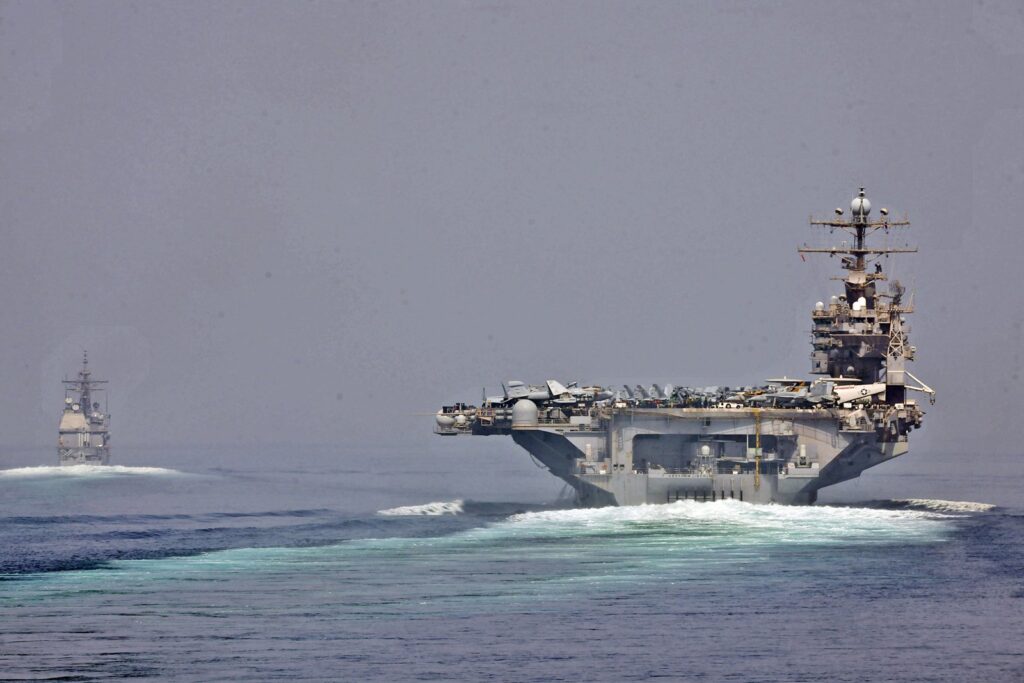
The Pentagon is quietly asking itself a question nobody wanted to ask out loud six months ago: is it worth staying? After Iranian missiles and drones battered more than 200 American facilities across the Gulf since the war with Iran opened in February 2026, the Department of War is now weighing a major pullback of US forces from the region, according to reporting first surfaced by the Washington Post and confirmed by multiple outlets covering the region.
Common sense says you don’t leave 40,000 troops sitting across nearly 20 sites in a 1,500-mile arc from Jordan to Oman if the war that justified putting them there is winding down and the bases keep getting hit. CENTCOM’s footprint was built for a different era, and the officials reviewing it are reportedly treating the moment as, in their own words, “a once-in-a-generation chance” to rethink why so much of the American military sits parked in the Gulf in the first place.
What actually got hit
This isn’t a hypothetical. Naval Support Activity Bahrain, the main US resupply hub in the Gulf, took extensive damage from Iranian strikes between late February and June, forcing the Navy to shift supply operations all the way to Diego Garcia, more than 2,200 miles away. That detail matters because it’s the same underlying problem now surfacing in the separate controversy over why the USS Abraham Lincoln went unresupplied for weeks.

The Department of War has already signaled it may not simply rebuild what got destroyed. That’s a bigger admission than it sounds like: rebuilding in place assumes the old posture was worth returning to. Not rebuilding says the opposite.
Who gets left holding the bag
Gulf allies who have leaned on the American security umbrella for decades are the ones with the most to lose if Washington actually shrinks its presence. A drawdown doesn’t just save money and get personnel out of the blast radius, it also tells regional partners to start planning for a Gulf where the US Navy isn’t parked outside their door around the clock. Whether that’s overdue realism or a gift to Tehran depends entirely on who you ask, and both arguments have merit.
What’s not in dispute is the math: keeping tens of thousands of troops and multiple carrier strike groups inside range of an adversary that has already proven it can hit them is a cost, not a given. The review reported by the Times of Israel and detailed further by Middle East Eye is the Pentagon finally doing that math out loud.
Related from BeezLoop: US Launches Five-Hour Wave of Retaliatory Airstrikes on Iran After Weekend Missile Exchange, Iran War Hits Six-Month Mark With 18 Dead, 759 Wounded and The Last American Troops Leave Iraq Tomorrow.