
NASA’s Nancy Grace Roman Space Telescope launched successfully Sunday at 7:26 a.m. EDT aboard a SpaceX Falcon Heavy rocket from Kennedy Space Center’s Launch Complex 39A, arriving roughly nine months ahead of its original schedule.
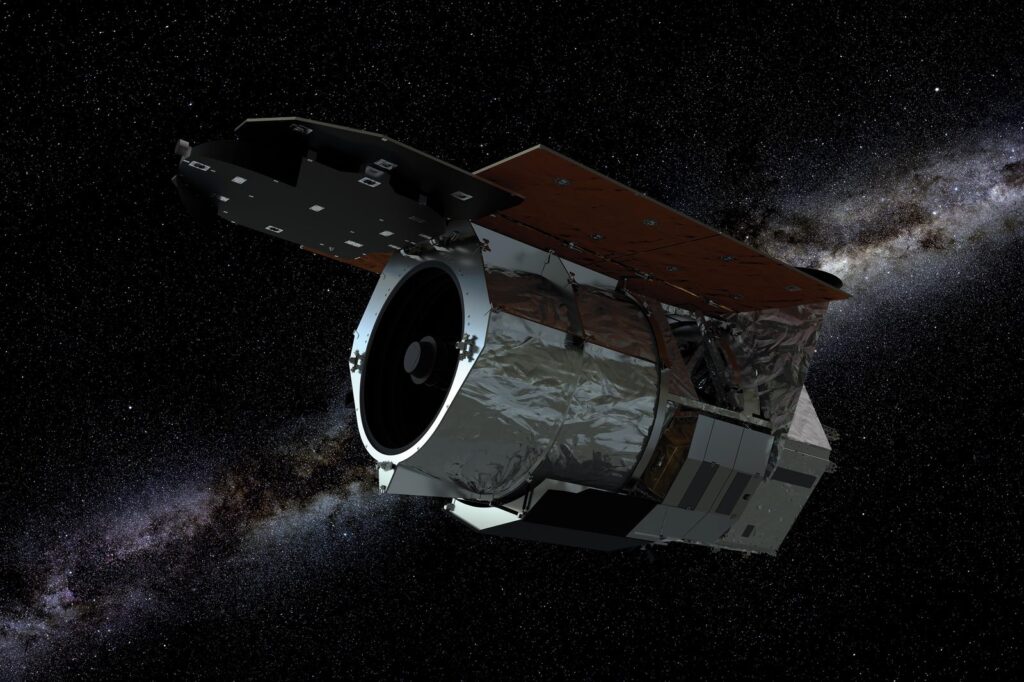
The telescope has already been encapsulated inside the Falcon Heavy’s payload fairing, with teams completing a flight readiness review and fueling ahead of launch. Roman is designed to survey vast swaths of the sky far faster than the Hubble or James Webb telescopes, using a wide field of view specifically built to study dark energy, search for exoplanets, and map large-scale cosmic structure.
Why Roman Is Different From Hubble and Webb
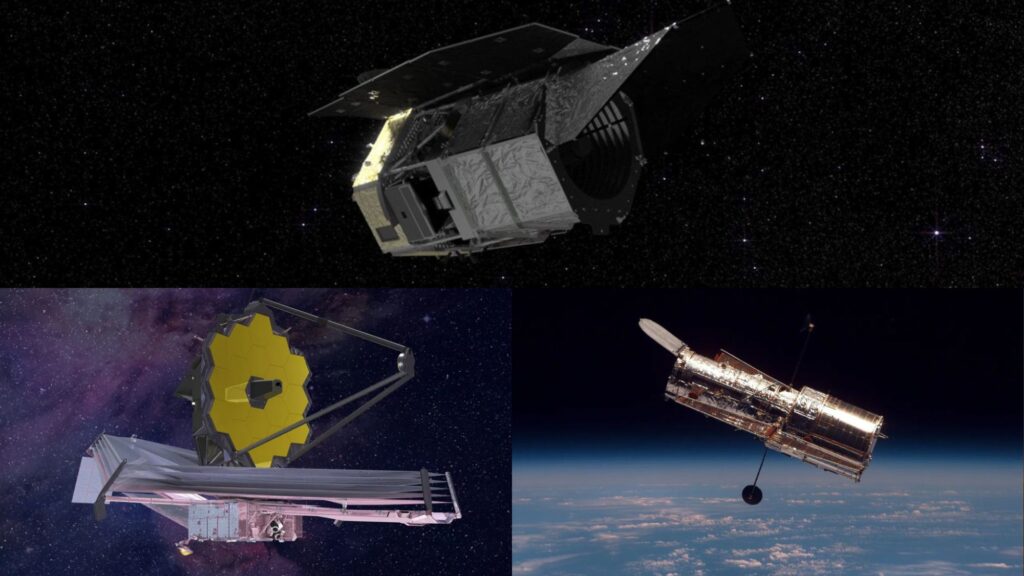
Hubble and Webb are built for extremely detailed, close-up observations of individual objects, while Roman trades some of that per-target detail for a field of view roughly 100 times larger, letting it survey huge regions of sky in a fraction of the time either predecessor would need. That design is specifically aimed at large statistical surveys, cataloging billions of galaxies and thousands of exoplanets, rather than the deep, targeted imaging Hubble and Webb specialize in.

What Happens After Launch
Once in orbit, Roman will travel to a gravitationally stable point about a million miles from Earth called the second Lagrange point, the same general region where Webb operates, before beginning a multi-month commissioning process to calibrate its instruments. Its primary science mission is expected to run at least five years, focused on dark energy, dark matter, and exoplanet detection at a scale no prior space telescope has attempted.
Trump Calls In to the Post-Launch Briefing
During NASA’s post-launch press conference, NASA Administrator Jared Isaacman’s phone rang mid-briefing. It was President Trump, calling to congratulate the team, according to Space.com. Isaacman stepped away to take the call, then returned and put the president on speakerphone in front of reporters. “I just want to thank everybody and congratulate you,” Trump said, praising the launch and Elon Musk’s SpaceX for the Falcon Heavy flight. NASA anticipates releasing Roman’s first images by early 2027.
Related from BeezLoop: 96% Lunar Eclipse Turns Moon Copper-Red in Rare Sturgeon Moon Show, NASA's Rescue Mission for the Falling Swift Space Telescope Has Failed and NASA's Jared Isaacman Announces MAX POWER Expo as Agency Cuts Legacy Contracts.