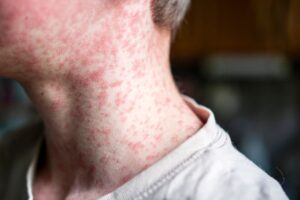


Alpha-gal syndrome, a red-meat allergy triggered by the bite of the Lone Star tick, is surging on Martha’s Vineyard and across Massachusetts’ Cape and Islands region. Martha’s Vineyard Hospital ran just nine Alpha-gal tests in 2020; last year that number jumped to 1,632 tests, with 724 coming back positive.
The condition works differently from a typical food allergy. A Lone Star tick bite introduces a sugar molecule called alpha-gal into the bloodstream, and in some people the immune system starts treating that molecule, which is also found in red meat and sometimes dairy, as a threat. Reactions can range from hives to anaphylaxis, often showing up hours after eating rather than immediately, which makes the condition harder to connect to its actual cause.
Why Massachusetts Is Taking This Seriously Now
On March 19, 2026, the Massachusetts Department of Public Health made new Alpha-gal diagnoses and positive antibody tests officially reportable to public health authorities, joining 17 other states plus New York City and the Choctaw Nation that already track the condition. Lone Star ticks are active on Martha’s Vineyard as early as mid-March through October, and cases have started showing up in people with no direct connection to the island, suggesting the tick’s range is expanding across the broader Northeast.
What This Means If You Live There or Visit
There’s no cure for Alpha-gal syndrome once it develops, and the only real treatment is avoiding red meat and, in some cases, dairy indefinitely. Tick checks after time outdoors, permethrin-treated clothing, and prompt tick removal remain the main lines of defense, since the syndrome depends entirely on being bitten by an infected Lone Star tick in the first place.
Related from BeezLoop: The CDC Says One Person Died of Measles This Year, Pennsylvania's Measles Outbreak Hits 693 Cases as CDC Disputes Death Toll and US Measles Cases Top 3,290 in 2026, the Most in Three Decades, as Elimination Status Faces….