

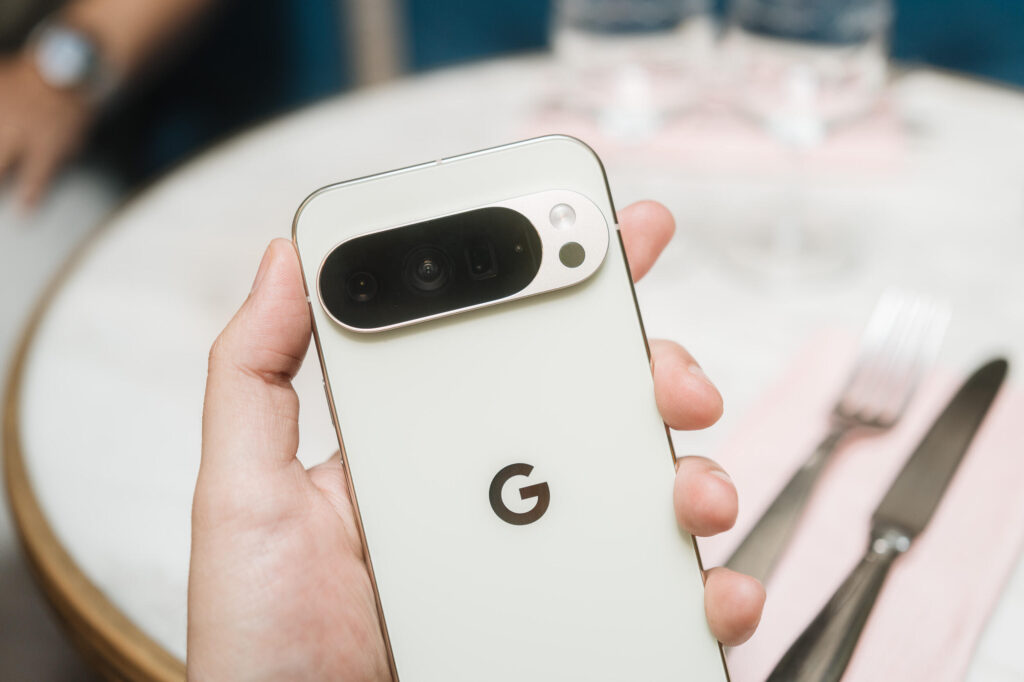
On Wednesday, August 12, 2026, Google will host its annual “Made by Google” hardware event in New York City. The stage is set, the press invites are out, and the tech media is buzzing with anticipation. Comedian and former Daily Show host Trevor Noah is set to take the stage as master of ceremonies, accompanied by a star-studded roster of celebrity promotional guests, including Golden State Warriors point guard Stephen Curry, Call Her Daddy podcast host Alex Cooper, Indian cricket superstar Shubman Gill, and Japanese actress Ayami Nakajo.
If you read the mainstream tech blogs, they’ll tell you this represents the pinnacle of modern, cultural lifestyle integration, a seamless blending of cutting-edge technology and global stardom.
But let’s apply some independent, common-sense logic to this Hollywood-style spectacles.

In the early days of the smartphone era, a tech keynote was a highly technical, slightly nerdy affair. It was hosted by software engineers and product managers wearing faded jeans and wire-rimmed glasses, standing in front of a projector screen to explain actual, jaw-dropping technical breakthroughs. They showed us how capacitive multi-touch worked, how high-resolution screens were manufactured, and how new operating systems could run desk-class applications.
Today? Tech hardware has stagnated so heavily that the annual smartphone release cycle is a game of microscopic, incremental tweaks.
The upcoming Pixel 11 is, by all credible accounts, virtually identical to last year’s Pixel 10. It features slightly thinner bezels, a slightly upgraded Tensor G6 chip, and a new LED “Pixel Glow” notification light on the back. That’s it.
But there is one massive, non-incremental change coming this year: a major price hike.
According to leaked retail data, Google is completely dropping the entry-level 128GB storage configuration. If you want to buy a base-model Pixel 11 this fall, you are forced to step up to the 256GB model, which comes with a hefty starting price of $899, a stealthy $114 price hike over last year’s base model.
And that is exactly why Google needs Trevor Noah, Stephen Curry, and a multi-million-dollar celebrity smoke screen.
When your actual product is a microscopic side-grade, and you are asking consumers to cough up almost nine hundred dollars of their hard-earned money in a brutal economy where the personal savings rate has hit a historic four-year low of 2.7%, you cannot rely on the hardware to sell itself. You cannot stand on stage and explain a 2% faster processor or a new notification light and expect people to open their wallets.
So instead, you throw a party. You hire a beloved, fast-talking comedian to make jokes. You put an NBA MVP on stage to flash his signature smile. You turn a boring, highly corporate product release into a glamorous cultural event. You use lifestyle branding to distract the consumer from the fact that they are paying a premium price for a phone they already own.
It is a high-stakes, corporate-staged illusion. The tech giants want us to treat our smartphones not as utility tools for communication, but as trendy fashion accessories and status symbols. They want you to believe that buying an $899 Pixel 11 makes you part of the same elite, hyper-connected world as Stephen Curry and Alex Cooper.
But here’s a reality check: when the celebrity lights dim, and the New York stage is packed up, you are still the one holding the bill. Stephen Curry isn’t going to help you pay your monthly cellular subscription, and Trevor Noah isn’t going to cover your household utility bills.
It’s time to look past the celebrity screens. If your current phone still sends texts, makes calls, and loads web pages, keep it in your pocket. Do not let a star-studded marketing machine pressure you into subsidizing a trillion-dollar monopoly’s profit margins. True common sense means knowing when you’re being sold a spectacle, and choosing to keep your money where it belongs.





[…] The unknowns. Nobody knows how this hinge holds up in year three, because year three has not happened. Every foldable buyer is volunteering for that experiment. Phone launches lean hard on the pitch, which we got into when Google put Trevor Noah and Steph Curry behind an $899 handset. […]