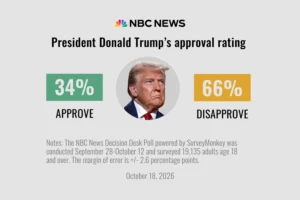

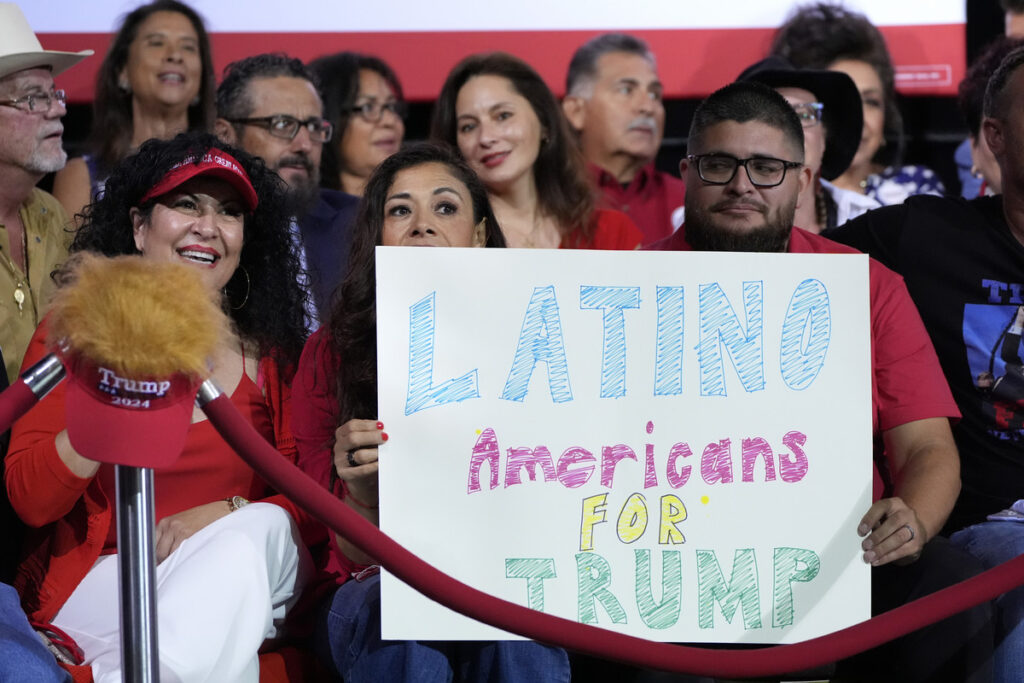
President Trump’s approval rating among Hispanic voters climbed over the summer, according to Economist/YouGov polling, rising to 36 percent in the August 21-28 survey from just 23 percent in the May 22-26 poll, a 13-point increase over three months. The August number is also up 5 points from 31 percent in the July 25-27 survey, suggesting the improvement held rather than being a one-poll blip.
Even with the gain, a majority of Hispanic voters still disapprove of Trump’s job performance. The same August Economist/YouGov survey put disapproval at 59 percent, down from 65 percent in July and 63 percent in June, meaning the shift is a narrowing of a wide gap rather than anything close to a reversal.
A Conflicting Data Point Worth Weighing
Not every recent poll tells the same story. Equis Research, which focuses specifically on Latino voters, found in its summer 2026 economy-focused survey that Trump’s approval among Latinos actually decreased, the first meaningful drop in Equis polling since last summer. The firm put his net approval at -31 (31 percent approve, 63 percent disapprove) in its May reading, down from -25 in March. Equis also found that among Latinos who voted for Trump in 2024, a third now say they regret or are disappointed by that vote, up from 28 percent in March, with the economy and cost of living cited as one of the top reasons.

The two pollsters use different methodologies and sampling approaches, and Equis’s survey ran earlier in the summer than the Economist/YouGov numbers showing the later climb, so the two data sets are not strictly measuring the same moment. But they point in opposite directions on the same underlying question, whether Hispanic voters are warming to Trump or souring on him, and that disagreement is worth sitting with rather than picking whichever number is more convenient.
What both pollsters agree on is that cost of living remains the dominant concern shaping how Hispanic and Latino voters view the administration. Any read of a single topline approval number, in either direction, is incomplete without that context.
Sources: Newsweek, Yahoo News and the Equis Research summer 2026 economy poll.
Related from BeezLoop: Trump's Approval Rating Falls to a New Record Low of 33% in Financial Times Poll, With…, Border Security Money Is Paying for Trump’s Ads and The Supreme Court Let the Voter Purge Database Run.