

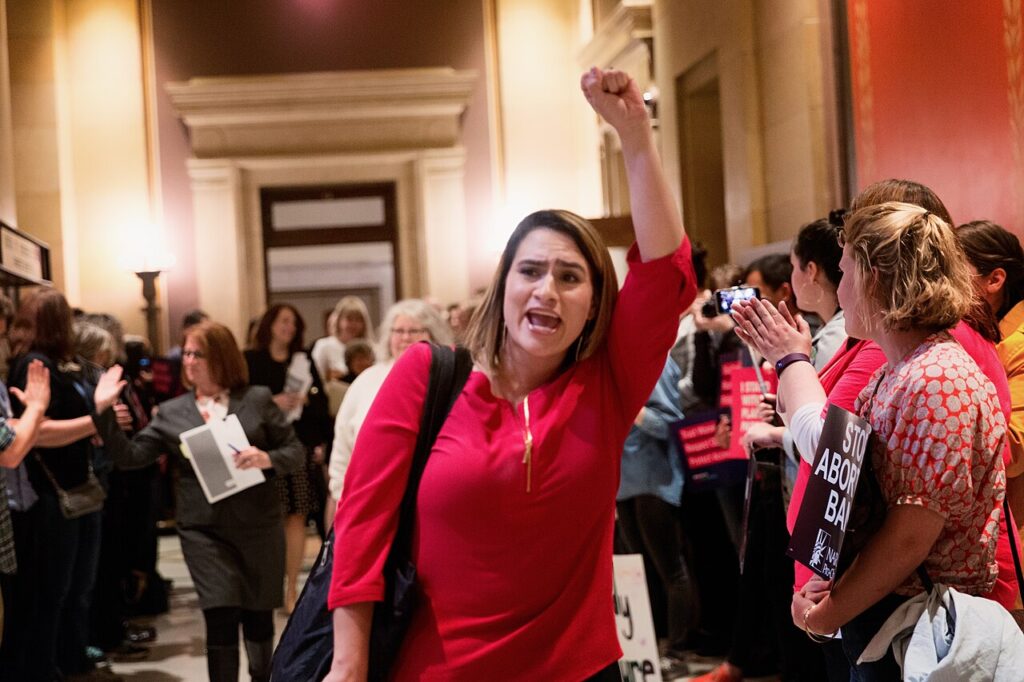
Peggy Flanagan just beat a well-funded moderate by running against money itself. The result is being read as a signal well outside Minnesota’s borders.
Minnesota Lieutenant Governor Peggy Flanagan won her state’s Democratic Senate primary on August 11, and if the margin surprised you, you weren’t the only one. Her opponent, Rep. Angie Craig, had the institutional backing you’d expect from a sitting member of Congress. Flanagan had something else: an argument that resonated louder than a bigger campaign account, and a crowd at First Avenue in downtown Minneapolis that heard her say it out loud.
“For months now I have been telling you this campaign is about the many versus the money. Well guess what? The many just won.”

, Peggy Flanagan, victory speech, Aug. 11, 2026
That’s not just a good soundbite. It’s the whole race in one sentence, and it’s why people well outside Minnesota are paying attention to a Senate primary in a state that isn’t usually a swing-state headline.
What actually happened here
Flanagan is running to succeed retiring Sen. Tina Smith, who endorsed her, along with Senators Bernie Sanders and Elizabeth Warren. That’s a progressive who’s who, and it put Flanagan squarely on one side of a fight that’s been playing out across the country all year: the party’s progressive wing versus its more centrist establishment. Craig, a moderate with a strong fundraising operation, was supposed to be the safer bet. She wasn’t the one who won.
Ask yourself why that keeps happening this cycle. Minnesota is the latest in a string of primaries where the candidate running against the party’s own money and machine has out-performed the one running with it. That’s not an accident, and it’s not just a Minnesota story.
Why this specific race carries extra weight
If Flanagan wins in November, she would become the first Native American woman elected to the United States Senate. That alone would make this a historic result, not just a competitive one. She’s a citizen of the White Earth Band of Ojibwe, and her run has drawn attention from Native communities and organizers well beyond Minnesota who see this seat as something bigger than one state’s representation.
Her general election opponent is set: Republican Michele Tafoya, a former national sports broadcaster who beat out former NBA player Royce White and former Navy SEAL Adam Schwarze to win the GOP primary. That’s an unusually high-profile matchup for a state that doesn’t always get this kind of national attention in a Senate race, and it means the fall campaign is going to draw money and media from well outside Minnesota’s borders.
What to actually watch between now and November
Three things. First, whether Flanagan’s “many versus the money” message travels beyond primary voters and lands with the broader general electorate, which tends to be more moderate than a primary crowd. Second, how much outside spending pours into a race that’s suddenly a lot more interesting than anyone expected six months ago. Third, whether this becomes a template other progressive candidates borrow in next year’s primaries, or a one-state story that doesn’t generalize.
Elections like this get treated as tea leaves the moment the results come in, sometimes fairly, sometimes not. But when a well-funded incumbent-adjacent candidate loses to someone running explicitly against the party’s own donor class, it’s worth asking what that tells you about where actual voters are, not just where campaign strategists assumed they’d be.
Quick Answers
Q: Who won the Minnesota Democratic Senate primary?
A: Lt. Gov. Peggy Flanagan, who defeated Rep. Angie Craig on August 11, 2026, running as the progressive candidate in the race to succeed retiring Sen. Tina Smith.
Q: Who will Flanagan face in the general election?
A: Republican Michele Tafoya, a former sports broadcaster who won the GOP primary over former NBA player Royce White and former Navy SEAL Adam Schwarze.
Q: Why is this race historic?
A: If elected in November, Flanagan would become the first Native American woman to serve in the United States Senate.