

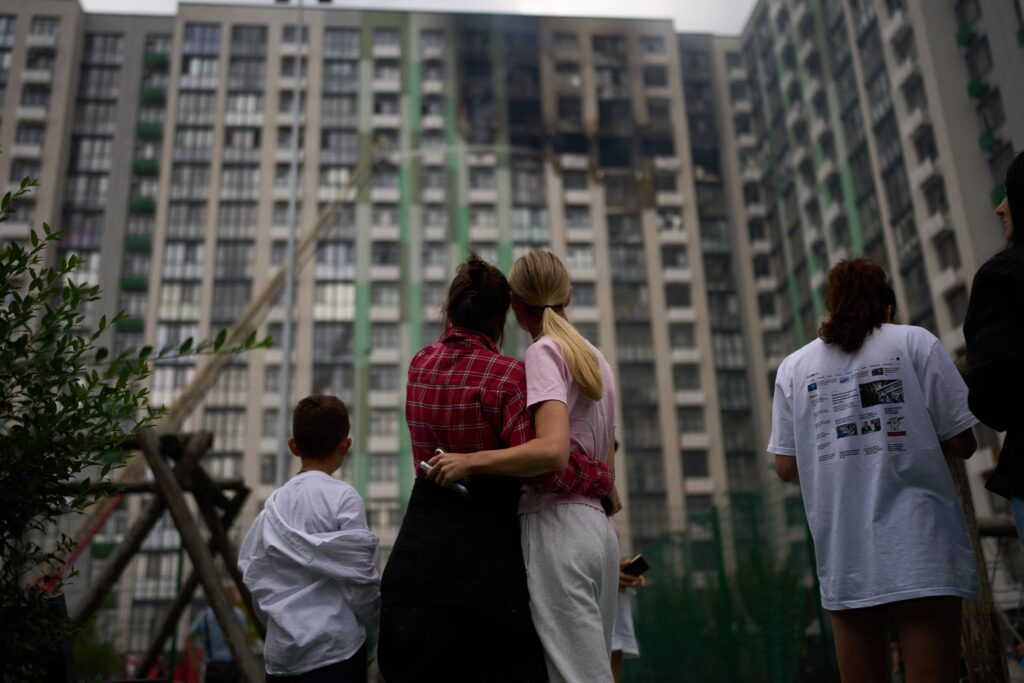
Russia has changed how it hits Kyiv. Instead of the mostly-nighttime drone and missile barrages that have defined much of the war, attacks are now landing across both day and night hours, using fast, jet-powered drones that give residents far less warning and far less predictable timing than the strikes they’d grown used to.
Air-raid sirens are now interrupting the ordinary rhythm of the city at hours that used to be safe by comparison. Commutes, grocery runs, school hours, even weddings and funerals have been cut short by alerts, according to reporting from the ground in Kyiv. Ukrainian officials say the shift is deliberate: sustained aerial pressure at unpredictable hours wears down civilian morale and stretches air defenses thinner than a single nightly wave ever could.
Why the Timing Change Matters
Nighttime strikes, as brutal as they’ve been, at least let people plan around them. Shelter routines, sleep schedules, and air defense crews could all orient around the expectation that the worst hours came after dark. Spreading attacks across daylight hours too removes that predictability entirely, forcing constant readiness rather than periodic vigilance. That’s a harder thing to sustain over weeks and months, for both residents and the defenders trying to intercept incoming drones before they land.

The jet-powered drones themselves are part of what’s changed. They move faster than the propeller-driven Shahed-style drones Russia has leaned on earlier in the war, cutting down the window Ukrainian air defense has to detect, track, and shoot them down before impact. Faster drones arriving at less predictable hours adds up to a meaningfully harder defensive problem than the nightly pattern Kyiv had spent months adapting to.
The Toll on Daily Life
What’s striking in the reporting isn’t just the tactical shift, it’s how thoroughly it’s seeped into ordinary life. A wedding interrupted by a siren, a funeral paused mid-service, a school day broken up by a scramble for shelter. These are the kinds of disruptions that don’t show up in casualty counts but accumulate into a different kind of exhaustion, one Ukrainian officials believe Moscow is counting on. Nearly four years into the war, the message behind the tactic seems less about any single strike and more about proving that no hour of the day is safe.
Related from BeezLoop: Ukraine Hit Moscow With Over 1,000 Drones, Russian Drone Nearly Struck Zelensky's Plane During Moldova Takeoff, Norwegian PM Says and Moscow Airports Halt Flights a Second Straight Night After Zelensky Warns Russian Airspace….