
A senator asked the woman nominated to run the Food and Drug Administration a simple question: is it possible for the president to be wrong about something? She would not answer it.
What happened
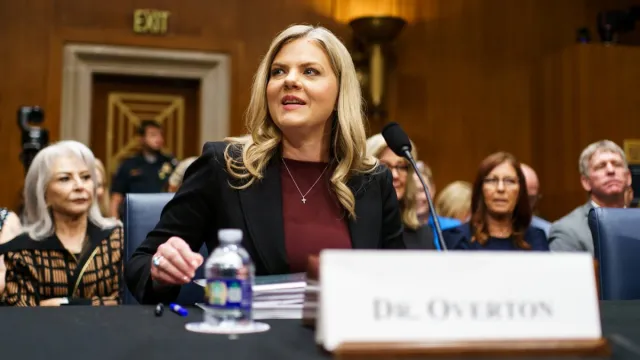
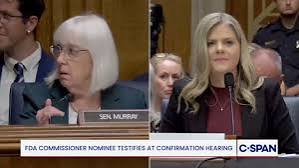
Dr. Heidi Overton appeared before the Senate Health, Education, Labor and Pensions Committee for her confirmation hearing to lead the FDA.
Sen. Maggie Hassan of New Hampshire asked whether Trump could ever be wrong. Overton’s answer did not contain a yes or a no.

Senator, as I’ve shared here before, I’ve had the privilege of working for the president for over a year and a half, and have had robust discussions with him along with all of his advisers.
Dr. Heidi Overton, FDA commissioner nominee
Hassan asked again. Overton said it is the president who sets the policy directions. Hassan kept coming back to it. Overton kept not answering.
The specific claims she would not address
This was not an abstract loyalty question. Hassan tied it to two statements with medical content.
- Trump saying the MMR vaccine might be lethal.
- Trump warning, without evidence, that Tylenol could cause autism.
Both are false. Both are the kind of claim the FDA exists to adjudicate. Overton would not say the president was wrong about either.
She also sidestepped questions on abortion pill access and vaccines more broadly.
Hassan’s summary, posted afterward, was blunt.
President Trump’s nominees are so scared of him that they can’t say that he would EVER be wrong about something. That’s disqualifying.
Sen. Maggie Hassan, D-N.H.
What the FDA actually does
Worth stating, because the job is bigger than most people realize.
The agency regulates food, prescription and over-the-counter drugs, vaccines, blood supply, medical devices, cosmetics and tobacco. That is roughly a fifth of every dollar Americans spend.
The commissioner decides which drugs reach the market, what warnings appear on the label, and when a product gets pulled. Those decisions are supposed to follow evidence. The entire structure assumes the person in the chair will say no when the science says no.
That includes saying no to a president. It is close to the only thing the job requires that cannot be delegated.
The BeezLoop Take
Give the honest version of her position first. A nominee at a confirmation hearing is in a genuinely bad spot. Contradict the president on television and the nomination is finished before the vote. Every nominee of every administration ducks questions, and pretending this is unique to this one would be dishonest.
But there is ducking and there is what happened here. She was not asked to denounce a policy. She was asked whether a human being is capable of being wrong. The correct answer, the one that costs nothing, is that everyone is sometimes wrong including me. That she could not produce it, across repeated attempts, tells you she calculated that even the abstract admission was too dangerous. That calculation is the disqualifying part, not the answer.
The MMR and Tylenol examples are what elevate this from theater to consequence. A parent deciding whether to vaccinate a toddler is weighing a real decision, and the president said the vaccine might be lethal. That is false, and correcting it is not a political act, it is the literal function of the office she is applying for. An FDA commissioner who will not contradict a false medical claim from the White House has no mechanism left for contradicting a false medical claim from a drug company either.
This is where we part company with the reflexive read. The problem is not that she is a Republican or that the administration is entitled to nominate people who share its priorities. It is. Elections have consequences and staffing is one of them. The problem is that the FDA is one of a small number of agencies whose entire value comes from its willingness to deliver unwelcome news, and a nominee who cannot practice that in a hearing room will not discover the capacity later under real pressure.
Senators from both parties should want an answer to this. A future Democratic president will also make medical claims that are wrong, and the country will need an FDA that says so. The precedent being set here is not about Trump. It is about whether the job still has a spine attached to it.
The question
If the person running the FDA cannot say a president is capable of being wrong, who corrects the record when a false medical claim comes from the White House? And is there any answer to Hassan’s question that would have cost Overton the nomination?
Related: the CDC is currently at odds with Pennsylvania over how many people died of measles, and health insurers want 15% more next year.