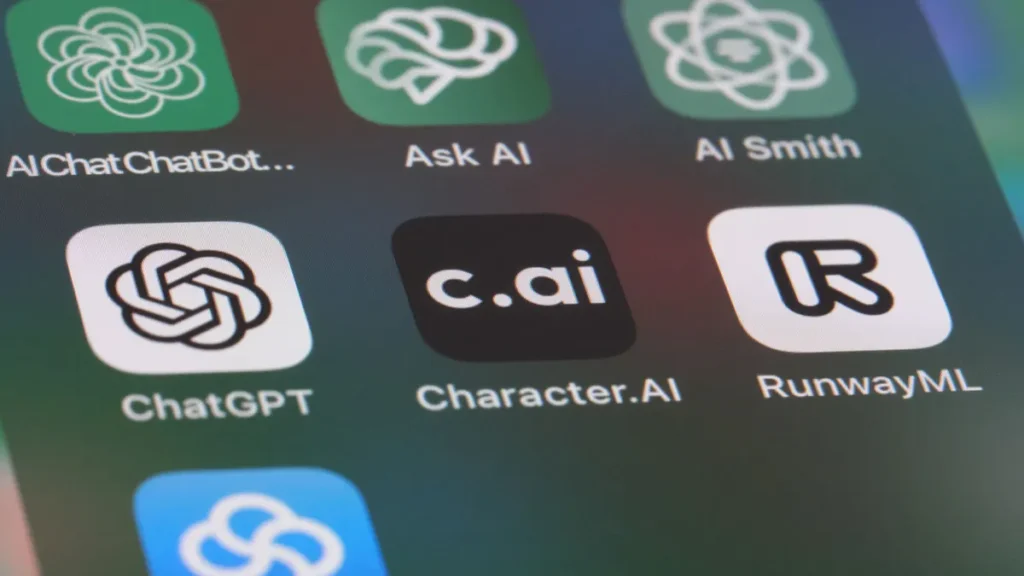
AI companion apps are one of the fastest-growing categories in tech. The loneliness they’re supposed to solve is also getting worse. A closer look at what’s actually happening when millions of people choose a chatbot over a person.
Fifty million people worldwide spent this year’s Valentine’s Day evening with an AI companion instead of a person. Not fifty million downloads over a decade, fifty million people, actively using the app, on one specific night built around romantic connection. Whatever you think that says about modern loneliness, it’s not a fringe behavior anymore. It’s mainstream enough to be a market.
How fast is this actually growing?
Fast enough that the month-over-month numbers look more like a viral app than a niche product. Comparing February 2026 to January 2026 alone: downloads up 250%, subscription purchases up 180%, daily active users up 40%, time spent in app up 60%. The broader AI companion market was already valued at nearly $38 billion in 2025, before this most recent growth spurt. This isn’t a slow cultural shift. It’s a rapid one, happening in real time, and most people over a certain age have no idea it’s occurring at this scale.

Why is this happening now, specifically?
Because the thing it’s supposed to fix is genuinely getting worse. The World Health Organization estimates one in six people worldwide are affected by loneliness, linked to roughly 100 deaths every hour globally when you account for its health effects. The U.S. Surgeon General formally declared it an epidemic. In the U.S., 61% of adults report feeling lonely, and Gen Z, the generation that grew up most online, reports the highest rates of anyone, with more than 60% saying they feel alone. An AI companion that’s available at 2 a.m., never judges, and never gets tired of you is, on paper, solving a real and growing problem.
The AI companion market was valued at $37.73 billion in 2025, with usage up sharply again in early 2026.
, Industry market research, 2026
Does it actually work, though?
This is where it gets uncomfortable for an industry built on the premise that it does. A rigorous 2026 study directly compared two weeks of daily chatbot conversation against two weeks of ordinary human peer conversation. The chatbot group showed no lasting improvement in loneliness. The human conversation group did. Separately, Stanford researchers found AI companions may actually worsen the problem for the users who are most vulnerable to begin with, the people most likely to substitute the app for the harder, slower work of building real relationships.
So is this just a scam preying on lonely people?
Not exactly, and it’s worth resisting the easy version of that take. Most people using these apps aren’t being tricked. They know it’s software. The appeal is closer to why people watch comfort television or replay the same video game, it’s a genuinely low-effort source of something that resembles connection, on a night when the alternative is nothing at all. The problem isn’t that people are choosing it. The problem is what happens when it stops being an occasional supplement and becomes the primary substitute, because the data increasingly suggests it doesn’t actually build the skills or provide the benefits that real relationships do.
What’s the actual takeaway here?
That an app can imitate the shape of connection without delivering what connection is actually for. Companionship isn’t just conversation, it’s also friction: someone who disagrees with you, forgets to text back, needs something from you in return. That friction is inconvenient, and it’s also apparently the part doing most of the psychological work. A chatbot that’s perfectly agreeable around the clock removes the inconvenience and, according to the research so far, removes the benefit right along with it.
Quick Answers
Q. How many people use AI companion apps?
A. On Valentine’s Day 2026 alone, an estimated 50 million people worldwide used an AI companion app. The broader market was valued at $37.73 billion in 2025 and has grown sharply since.
Q. Do AI companions actually reduce loneliness?
A. Limited evidence so far. A 2026 study comparing chatbot use to human conversation found no lasting improvement in loneliness from chatbots, while human interaction did help. Some research suggests AI companions may worsen loneliness for vulnerable users.
Q. How widespread is the loneliness epidemic these apps are targeting?
A. The WHO estimates 1 in 6 people worldwide are affected by loneliness. In the U.S., 61% of adults report feeling lonely, with Gen Z reporting the highest rates of any generation.