
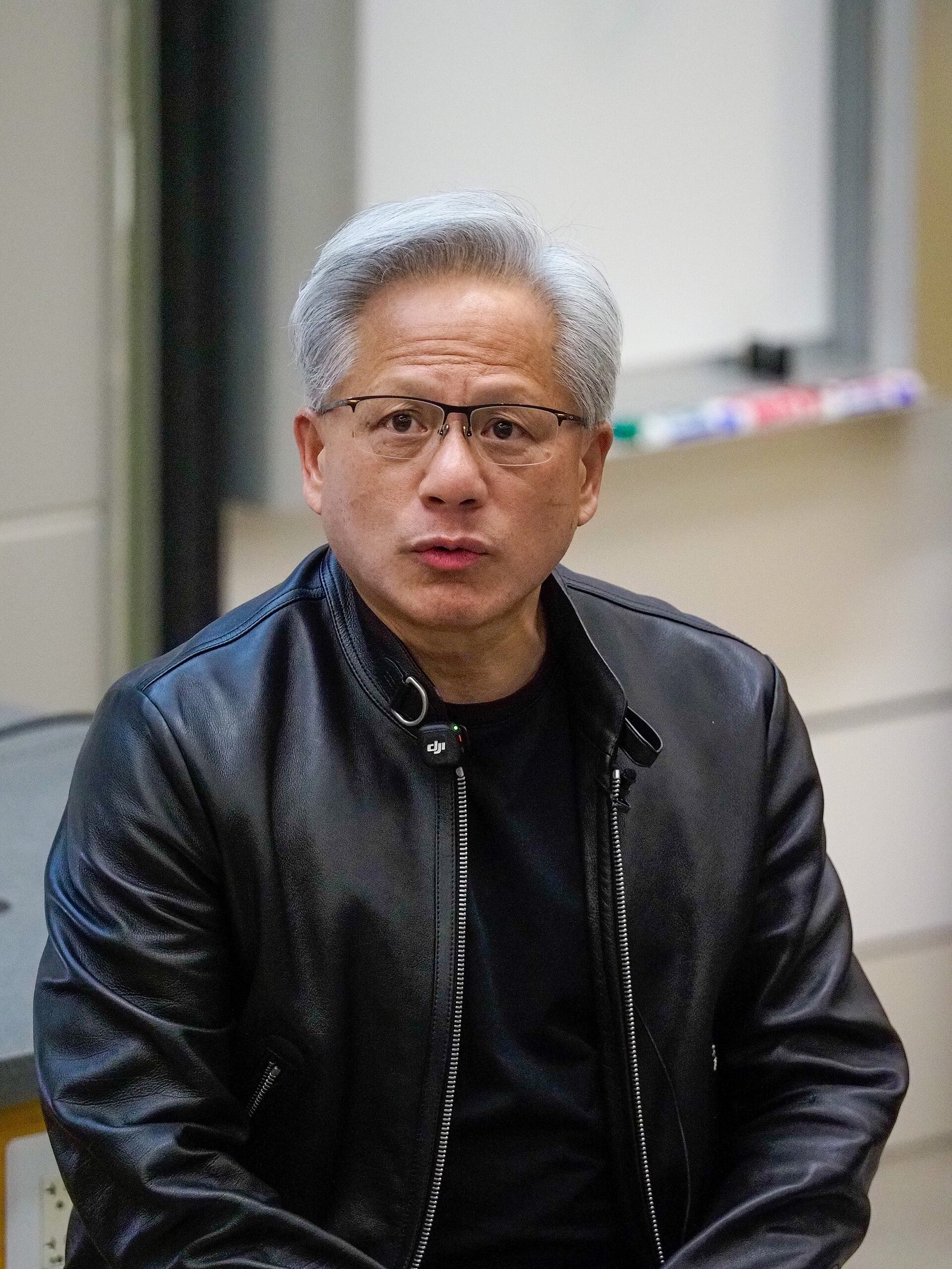
President Trump says a pardon for Nvidia CEO Jensen Huang is “always an option, I guess, but I don’t think it’ll be necessary.” He told the New York Post that on Tuesday, according to Newsmax. Huang hasn’t been charged with anything. And on the same day, Attorney General Todd Blanche wouldn’t say whether Huang had ever been investigated at all.
This is opinion. But you don’t have to take our word for why it’s strange. Just line up what each official said this week.
Why is Jensen Huang in trouble?
It started Oct. 29, when The New York Times, citing U.S. intelligence officials, reported that Huang had been in a relationship with Alice Huang (no relation), an executive at Megaspeed, a Singapore company that bought Nvidia chips. Officials suspected she’d been recruited by Chinese intelligence. Beijing called the report a smear. Huang admitted the affair, resigned on Nov. 12, and then got his job back 11 days later.

The legal question is about chips, not romance. The Justice Department and Commerce Department said on Nov. 17 that DOJ is leading a criminal investigation into Megaspeed, which Commerce has been looking at since 2024 over suspected smuggling of AI chips to China. Nvidia stopped selling to Megaspeed in June 2025. The criminal probe officially targets the company, not Huang.

What did Todd Blanche say about investigating Huang?
Not much. Asked at a Justice Department news conference Tuesday whether Huang had been investigated, Blanche answered, “What does that mean, ‘Had Huang been investigated’? For what?” He added, “What I said last week is that we were looking into it,” and that the FBI “looks into things all the time,” which “doesn’t necessarily become a criminal investigation,” Al Jazeera reported. He also called Nvidia “a good corporate citizen” and said, “I’m not going to get into communications I have with the president,” per CNBC.
Here’s the problem. The day before, Trump said “we’ve done a very thorough investigation” and Huang “did nothing wrong” but “had bad judgment.” Vice President JD Vance said Wednesday, “We were told that he was under no investigation,” and “I don’t think he needs a pardon at all,” Yahoo News reported. So the president says there was a thorough investigation, the vice president says there wasn’t one, and the attorney general won’t say either way.
Why does a pardon for someone who wasn’t charged matter?
Because a pardon only matters if there’s a crime to forgive. Floating one now tells everyone in the case, from prosecutors to witnesses, how the boss wants it to end. It also lands after the White House leaned on the company. Trump says he called into Nvidia’s board meeting and “convinced” directors to bring Huang back, and Nvidia’s own release says the board “received input from senior levels of the United States government” before reinstating him. Asia Times reports Trump’s investment accounts hold hundreds of thousands of Nvidia shares. Nvidia stock jumped 31% after the reinstatement.
Rep. Jamie Raskin, the top Democrat on House Judiciary, said the attorney general “turns a blind eye to alleged espionage, circumvention of export laws, and rampant corruption,” in a statement. Republican committee chairs on Foreign Affairs, Intelligence and China say they’re still “committed to getting answers,” TechCrunch reported. Huang and Nvidia’s top lawyer sit for interviews with three House committees on Dec. 1, and Senate Banking holds a public hearing on export controls Dec. 3.
The BeezLoop Take
Maybe Huang did nothing illegal. Nobody has charged him, and he deserves the same presumption as anyone. But the way to show that is a clean investigation with a clear answer, not a president who owns the stock, lobbied the board and now muses about a pardon before anyone knows if there’s a case. Chips getting to China is a national security question, and it shouldn’t be settled by who’s friendly with the White House.
If the Justice Department did investigate and cleared Huang, why won’t the attorney general just say so?