
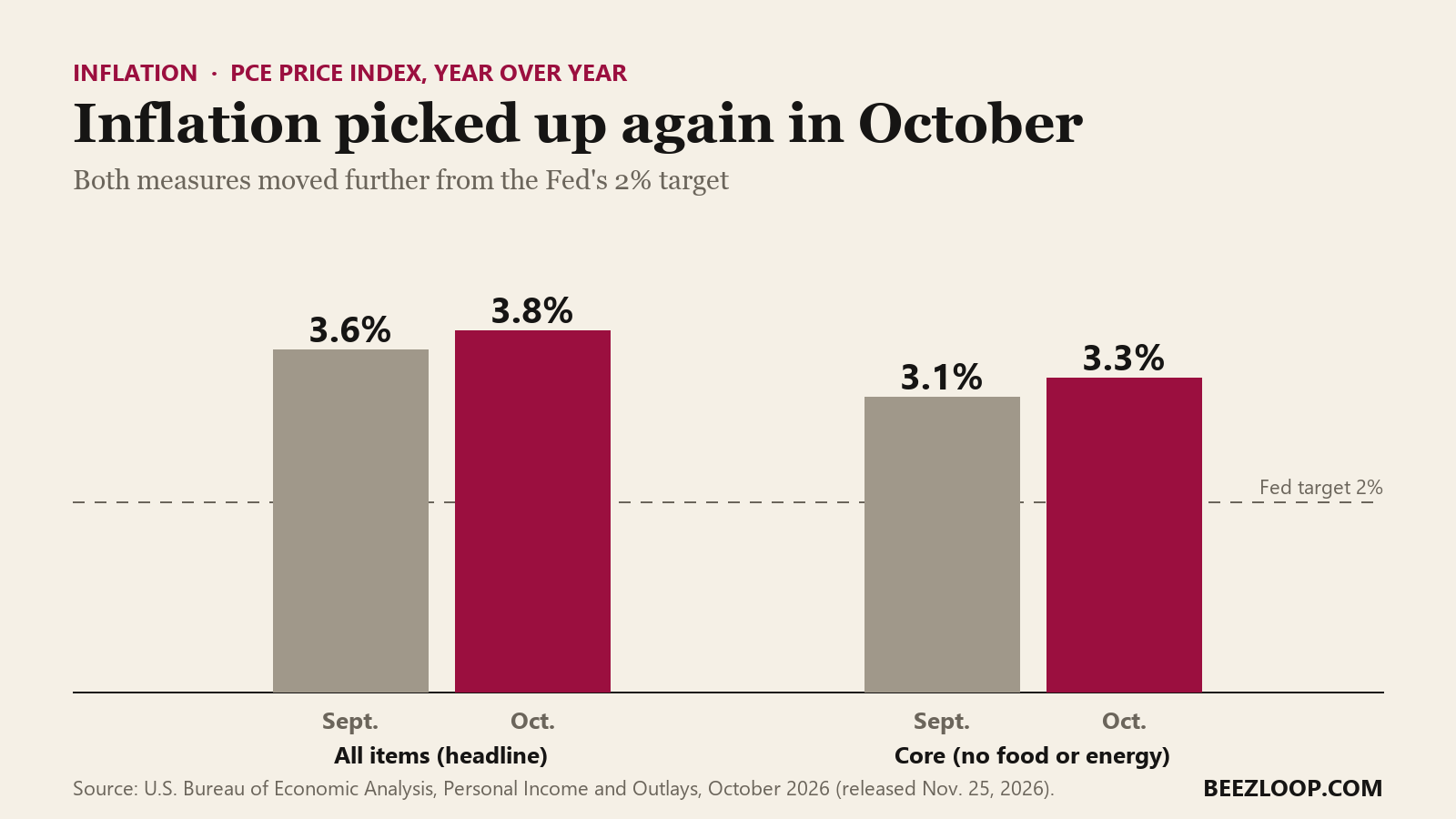
Inflation picked up again in October. The Federal Reserve’s preferred gauge, the PCE price index, rose 3.8% from a year earlier, up from 3.6% in September, and core prices, which leave out food and energy, rose 3.3%, up from 3.1%, the Bureau of Economic Analysis reported Wednesday. Prices rose 0.3% in October alone on both measures.
It’s the last big inflation report before the Fed’s Dec. 9 decision, and it moves in the wrong direction for anyone hoping the central bank stops raising rates.
What did the October inflation report show?
- Headline inflation: 3.8% over the past year, 0.3% for the month.
- Core inflation: 3.3% over the past year, 0.3% for the month. Forecasters had expected about 3.2%.
- Income: personal income jumped 0.7%, or $201.8 billion, and after-tax income rose 0.8%. Adjusted for inflation, take-home income rose 0.5%.
- Spending: up 0.3% in dollars, but flat once inflation is taken out. People spent more and got about the same amount of stuff.
- Saving: the saving rate rose to 4.1% from 3.8%, so households socked away more of their pay.
What does higher inflation mean for my money?
Your dollar keeps buying a little less. At 3.8% a year, something that cost $100 last October costs about $104 now. October’s jump in income helped, and real take-home pay actually grew, but September had gone the other way, falling 0.3% after inflation. That’s why so many families feel squeezed even when paychecks rise: prices keep chasing them. Health insurance is one example; workers’ share of premiums jumped 9% this year.

The flat real spending number is worth watching. It suggests people are spending more just to keep up, not buying more, which is what a slowdown can look like before it shows up in jobs.
Will the Fed raise interest rates in December?
It’s on the table. The Fed is raising rates, not cutting them, this year. It hiked a quarter point in September and held its target at 3.75% to 4% on Oct. 28, when two officials, Lisa Cook and Beth Hammack, voted for another hike, according to the Fed’s statement. A core inflation number above forecasts makes that case stronger heading into the Dec. 8 to 9 meeting.
Higher rates would push up what you pay on credit cards, car loans and new home equity lines, while savings accounts would pay a bit more. October’s consumer prices rose 0.4% and wholesale prices rose 6.5% over the year, so this report fits a pattern.
The BeezLoop Take
Every inflation report this month points the same way: prices aren’t cooling, and the Fed is likely to keep pushing rates up. October’s pay bump is real good news, but one month of income gains doesn’t undo a year of 3.8% inflation, and a hike in December would hit borrowers right before the holidays. Washington keeps arguing about who caused this, while families just keep paying it.
If inflation is still near 4% heading into 2027, how many more rate hikes can households carrying credit card debt absorb?