
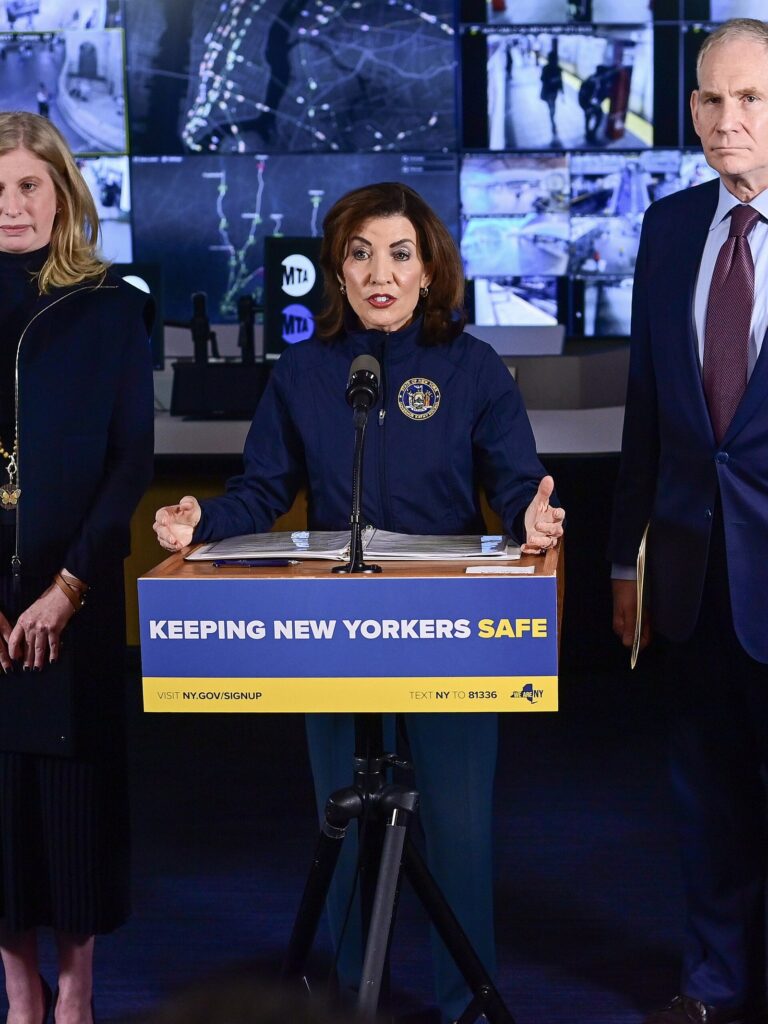
Shootings in New York City and the state’s 28 GIVE police departments fell 13% in the first 10 months of 2026 compared with the same stretch last year, Gov. Kathy Hochul’s office announced Friday. In the city, shooting incidents, shooting victims and murders all hit their lowest levels in recorded history for that period.
“Record-low gun violence is something New Yorkers can be proud of,” Hochul said. Here’s what the numbers actually show, and what they don’t.
How much has gun violence dropped in New York City?
From January through October 2026, compared with the same months of 2025, according to the state:

- Shooting incidents: down 10.4%
- Shooting victims: down 13%
- Murders: down 13.7%
All three are the lowest on record for the first 10 months of a year, the state says. Last year, the NYPD recorded 688 shooting incidents, already the fewest on record at the time.

Which New York cities saw the biggest drops?
Outside the city, the state’s GIVE program funds 28 police departments in 21 counties that together account for about 90% of violent gun crime outside New York City. Among them:
- Rochester: shootings with injuries down 23%
- Suffolk County: down 11%
- Syracuse: down 5%
- 13 GIVE communities, including Mount Vernon, Newburgh, Schenectady and Utica, had no gun homicides at all through October.
The state’s longer view is more dramatic. Compared with 2021, the recent peak, the governor’s office says shooting victims are down 63%, from 2,900 to 1,083, and people killed by gunfire are down 66%, from 464 to 158.
What’s behind the decline?
The state credits programs it pays for: about $36 million for GIVE this year, street outreach workers through the SNUG program, Project RISE, community-led safety work in the Bronx, and hospital-based screening and safe-storage efforts. Hochul says she’s put more than $1 billion into gun violence prevention since taking office.
Those programs likely help, but they’re not the whole story. Gun violence spiked across the country during the pandemic and has been falling in much of the country since, so New York’s drop is part of a wider trend. The state’s release also compares this year with the 2021 peak, which makes the long-term percentages look bigger than a comparison with pre-pandemic years would.
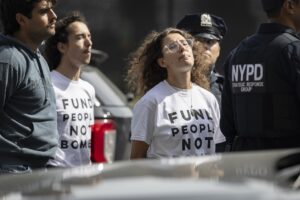
For New Yorkers, the shift shows up in daily life. Fewer shootings mean fewer people hurt in neighborhoods like the South Bronx and East New York that carried the worst of the spike. It’s also part of the backdrop for Mayor Zohran Mamdani’s public safety changes, from disbanding the NYPD Strategic Response Group to his plan to close Rikers Island by 2032.
The BeezLoop Take
These are real numbers and good news, especially for the neighborhoods that bore the brunt of the 2020 and 2021 surge. Fewer funerals is the point, whoever gets the credit.
But a governor’s press release will always choose the friendliest comparison. The fairer question is how New York compares with the national trend and with 2019. Will the state publish that comparison, so New Yorkers can see how much of this its programs actually earned?
Sources: Office of Gov. Kathy Hochul