
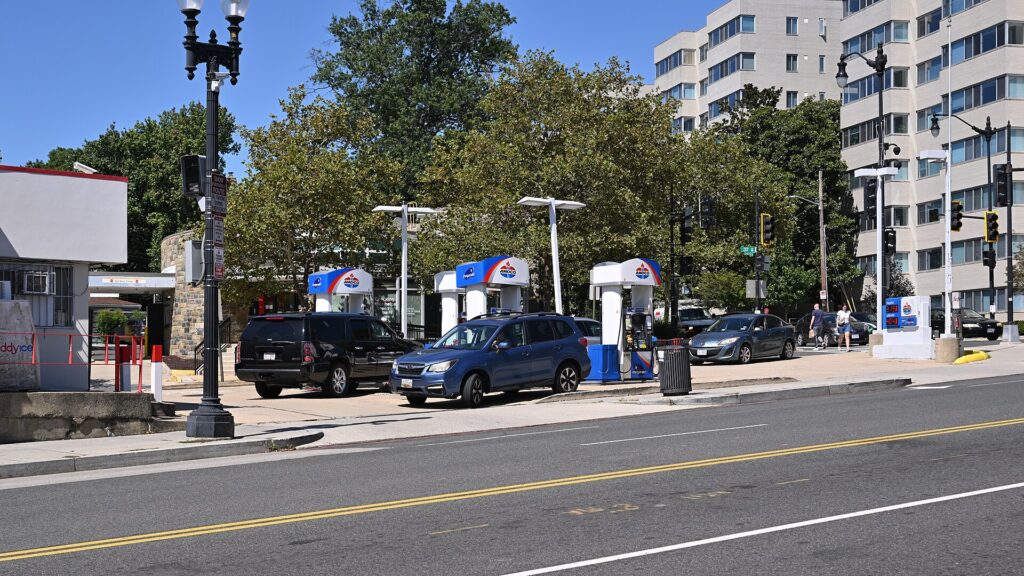
Gas is back under $4 a gallon. The national average for regular was $3.94 on Wednesday, according to AAA, down from $4.12 a week ago and $4.36 a month ago. It’s the first time the average has been below $4 since mid-July.
Don’t celebrate too hard. A year ago, the same gallon cost $3.07. You’re still paying about 87 cents more than you were last November, and diesel is at $6.13, up from $3.75 a year ago. That diesel price is baked into the cost of nearly everything that moves by truck.

Why are gas prices falling?
Three things at once. Oil got cheaper: crude futures fell 13% last week, and Brent, the global benchmark, had its biggest one-week drop since April 2020, Newsweek reported. Demand drops after summer. And stations have switched to winter-blend gasoline, which costs less to make.

“The biggest factor is the switch to winter gasoline,” said Patrick De Haan, an analyst at GasBuddy. He added, “it’s fall, and prices tend to drop in the fall.” Prices are still well above where they were before the Iran war began on Feb. 28, and talks to end it are stuck.
Where is gas cheapest and most expensive?
It depends a lot on where you live. As of Tuesday, the cheapest states were North Carolina at $3.23, Texas and Georgia at $3.45 and South Carolina at $3.49. The most expensive were California at $5.71, Hawaii at $5.63 and Nevada at $5.04.
Will gas keep getting cheaper before Thanksgiving?
Probably, a little. De Haan says some stations in at least 14 states could fall below $3 by Thanksgiving, though he added, “maybe don’t hold your breath.” One forecast cited by Newsweek, from Fuel Price Atlas, has the national average at $3.86 on Dec. 1 and $3.72 on Jan. 1, as long as nothing new goes wrong in the Middle East.
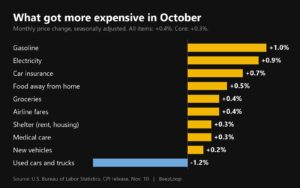
That’s the catch. Tanker attacks in the Gulf are still running high. And cheaper gas hasn’t shown up in the rest of your budget yet: prices overall rose 0.4% in October, with gas still up sharply from a year ago.
The BeezLoop Take
Under $4 feels like relief because of where we’ve been, not because it’s cheap. A gallon costs almost 30% more than it did a year ago, and diesel costs about 64% more. Those are the numbers that drive what you pay for groceries.
Most of this drop is seasonal. It happens most years whether or not anyone in Washington does anything. The part that isn’t seasonal depends on a war nobody has ended.
The open question: is this the start of a real slide back toward $3, or a fall dip that reverses the next time a tanker gets hit?
Sources: AAA · Newsweek · ABC News (video)