
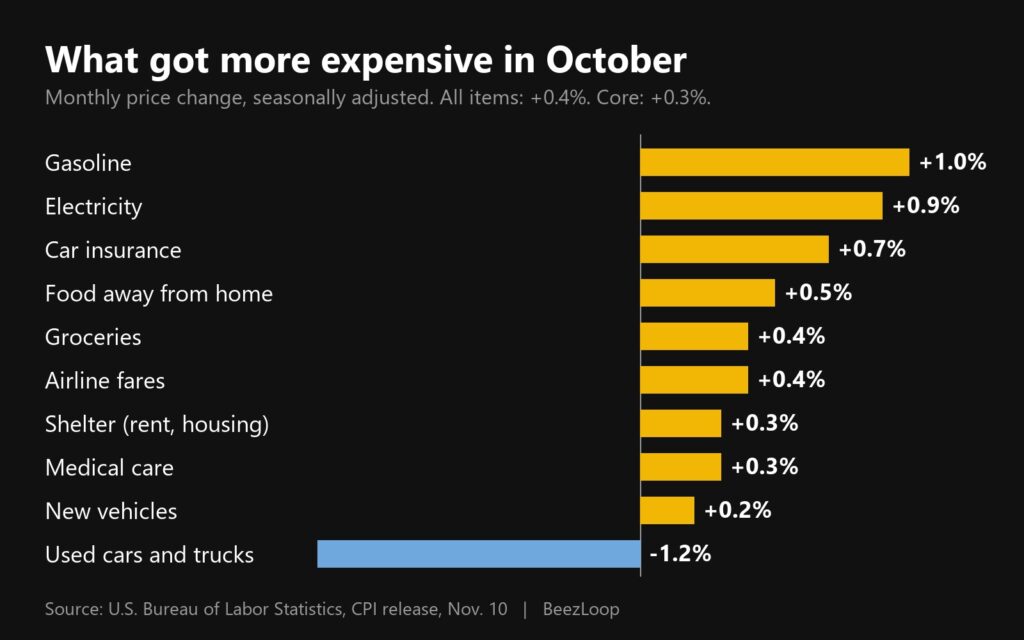
Prices rose faster than expected in October. The Consumer Price Index climbed 0.4% from September, the Bureau of Labor Statistics said Tuesday morning, above the 0.3% economists expected. Core prices, which leave out food and energy, rose 0.3% for the third month in a row. Groceries, restaurant meals, electricity and car insurance all went up.
There’s one strange thing about this report: it has no yearly inflation number. The government didn’t collect price data in October 2025 because of the funding lapse, so BLS says it “cannot publish 12-month percent changes” for most categories this month. A few did make it through, and they’re telling. Gasoline is up 37.4% from a year ago. Used cars and trucks are down 3.3%.
What got more expensive in October?
Food rose 0.5% for the month. Groceries were up 0.4%, with beef up 0.9% and snacks up 1.0%, and food away from home rose 0.5%. Full-service restaurant meals jumped 0.7%. If you’ve noticed the check getting bigger at your usual spot, that’s not your imagination.

Energy rose 0.7%. Electricity was up 0.9% on a seasonally adjusted basis and gasoline 1.0%, though before that adjustment pump prices actually dipped 0.7% in October. Car insurance rose another 0.7%. Shelter, the biggest piece of most budgets, rose 0.3%, with rent up 0.2%. The one real break was used cars and trucks, down 1.2% for the month.

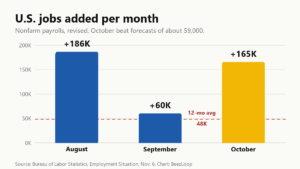
This lands the same week as a strong labor market: the U.S. added 165,000 jobs in October. Strong hiring plus hot prices is the mix that makes the Federal Reserve nervous.
Will the Fed raise interest rates in December?
Markets now think it’s very likely. As of Tuesday morning, traders put the odds of a quarter-point rate hike in December at about 84%, and the odds of a bigger half-point hike at 15%, up from zero the day before, according to Yahoo Finance. Fed Governor Christopher Waller said in a speech in London, before the report came out, “I believe a 50 basis point hike in the policy rate should be considered at the December meeting.”
Bond yields jumped right after the release. The 10-year Treasury yield rose to about 4.93%, and that’s the rate mortgage lenders watch. If you’re shopping for a house or a car loan, expect borrowing costs to stay high or climb. Much of the energy pressure traces back to the Iran war and the shipping fight over the Strait of Hormuz, which we covered in Rubio’s rejection of Iran’s peace offer.
The BeezLoop Take
The core number is what should worry people. Gas spikes come and go, but core prices rising 0.3% three months running means inflation is settling into rent, insurance, restaurant meals and services. That’s the stuff you can’t avoid by driving less.
And a rate hike is a blunt tool here. It won’t make oil cheaper or end a war. It will make your mortgage, car loan and credit card more expensive. Working people get squeezed from both sides.
The open question: does the Fed hike by a quarter point in December, or go for the half point Waller is pushing, and who in Washington takes the blame for prices when it does?
Sources: U.S. Bureau of Labor Statistics, October CPI release · Yahoo Finance markets live coverage · Bloomberg Television (video)