


Last month President Trump signed a law to squeeze the money Russia uses to fight its war in Ukraine. On Friday he put it on hold. In an executive order posted late Friday, Trump waived the new sanctions package, telling Congress the pause is “in the national interest,” without saying how, the Associated Press reported. He had until Oct. 18 to either enforce it or waive it.
The law is named for the late Sen. Lindsey Graham, the South Carolina Republican who died in July. It passed both chambers by big margins, including 86-11 in the Senate. Its biggest stick: up to 100% tariffs on the top five buyers of Russian oil and gas, which could include China and India.

Why did Trump waive the Russia sanctions?
The White House hasn’t explained it publicly. It sent Congress the unclassified report the law requires before a waiver, but didn’t release its reasoning. The timing lines up with two things. A week ago, Trump announced a deal for Russia to send more than 300,000 tons of diesel right away and 500,000 more in November to bring fuel prices down. Diesel is up almost 70% since the Iran war began in February, NBC News reported. Trump has also blamed Ukraine’s drone strikes on Russian oil sites for pushing prices higher.

Moscow was thrilled. “The Trump administration’s suspension of the Graham Act is an important and truly historic moment,” Kremlin envoy Kirill Dmitriev wrote, the Irish Examiner reported.
What are lawmakers and Ukraine saying?
Ukrainian President Volodymyr Zelenskyy said lifting the sanctions was “wrong” and “only helps the Russians.” The pushback at home crossed party lines:
- Sen. Thom Tillis, R-N.C.: “beyond irresponsible.”
- Sen. John Cornyn, R-Texas: “Lindsey would be appalled.”
- Rep. Don Bacon, R-Neb.: the president “is prolonging the war, not ending it.”
- Sen. Richard Blumenthal, D-Conn.: a “craven, cowardly action.”
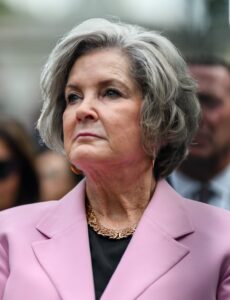
Darline Graham, the senator’s sister, who was appointed to finish his term, was gentler. The law “gives the president tools that he can use if he so chooses,” she said during a debate, and how to use them is “up to him.”

Does this lower gas prices?
That’s the bet, and it’s a short-term one. More Russian diesel on the world market could ease prices a little. But the main thing driving fuel costs is the Iran war, which pushed U.S. oil toward $99 a barrel this week. Fewer sanctions also means more money for the Kremlin. Zelenskyy warned that with the diesel deal, cash “will start flowing back into Russia.”
The BeezLoop Take
Congress passed this with huge bipartisan majorities, Trump signed it, and then he waived it two days before it took effect without telling anyone why. If the reason is gas prices before an election, voters should hear that from the president, not piece it together from a diesel deal and a Kremlin envoy’s victory lap.
There’s a real tradeoff between cheaper fuel now and pressure on Russia. Reasonable people can weigh it differently. But a law that took months of work shouldn’t vanish by executive order with no public explanation, and Republicans like Tillis and Cornyn are right to say so.
The open question: will Congress do anything to force the sanctions back on, or does the waiver quietly become permanent?
Also on BeezLoop: Trump’s ‘energy ceasefire’ and the Russian diesel deal, and Trump saying it’s time for Ukraine to get a new president.
Sources: Associated Press, via ABC News · NBC News · Irish Examiner · BBC News (video)



[…] On policy, this week moved in Russia’s direction. Trump waived a sanctions law that passed the Senate 86-11, two days before it took effect, and gave no public reason beyond “the national interest.” A week earlier, he announced a deal for Russian diesel to ease fuel prices. Kremlin envoy Kirill Dmitriev cheered. We covered the sanctions waiver in detail here. […]