
On Wednesday morning, a Russian cruise missile hit a five-story apartment building in Pryluky, Ukraine, and killed at least 20 people. Five were children; three of them were 1 year old. The same day, Gaza marked three years since the war began, with people still being killed almost daily under a ceasefire that turns one year old on Saturday.
If you missed both, you’re not alone. A lot of Americans have stopped following either war, and a lot of TV news has moved on with them. Here’s what’s still happening, and why it fell off the radar.

What is happening in Gaza now?
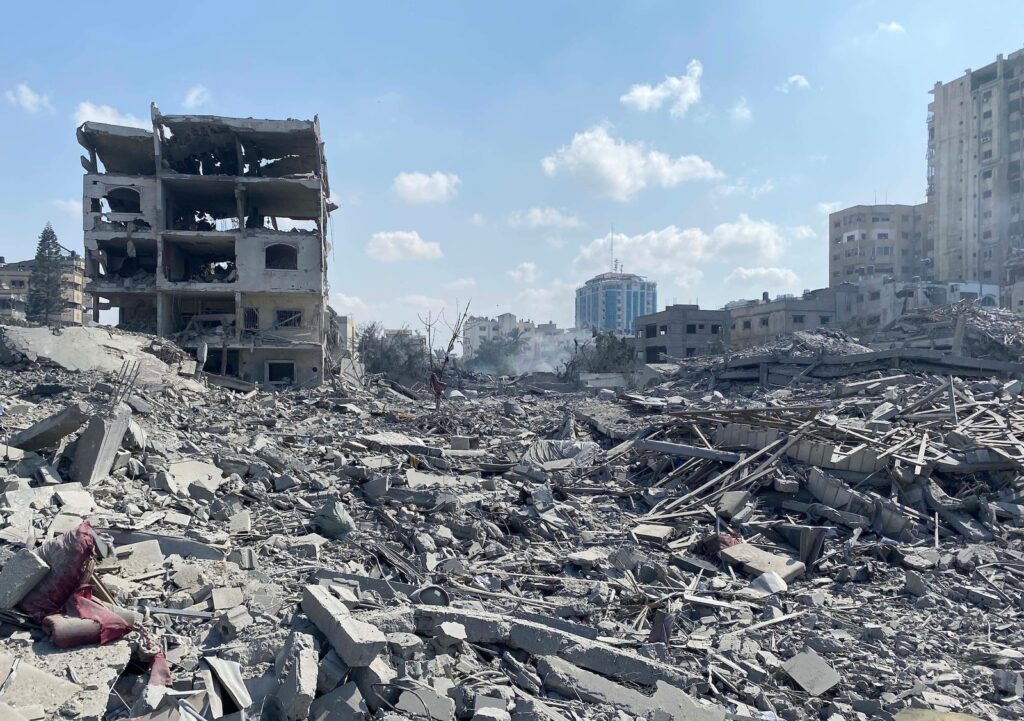
The ceasefire that took effect on October 10, 2025, stopped the full-scale war, but not the killing. Gaza’s Health Ministry, which operates under Hamas, counted 1,431 people killed and more than 5,000 injured since the ceasefire as of late September, the UN humanitarian office reported. Al Jazeera’s analysis found Israeli attacks on 325 of the past 361 days. The ministry’s overall toll from three years of war is more than 74,000 Palestinians, including at least 21,000 children.

The aid picture is getting worse, not better. The UN says hot-meal production and monthly food parcels “will shrink significantly from October onwards due to funding shortfalls.” About 279,000 people are living in 400 flood-prone displacement sites as winter rains approach. Al Jazeera reports 82% of structures are destroyed and, citing the UN, 1.98 million people, about 90% of the population, displaced, Al Jazeera reported.
What is happening in Ukraine now?
Russia is escalating. In the overnight barrage that hit Pryluky, it launched 130 drones and 48 cruise missiles plus ballistic missiles at cities across Ukraine, Al Jazeera reported. A 75-year-old Pryluky resident named Ivashchenko told the Kyiv Independent: “It’s the 21st century. Is there really no one who can stop this one clown?”
Moscow has promised to intensify strikes on Kyiv and other cities, and Ukraine has stepped up drone attacks on Russian oil refineries. President Zelenskyy says the U.S. has proposed new three-way peace talks by the end of October, and Ukraine has said yes, CNBC reported.

Why is the media covering Gaza and Ukraine less?
Part of it is how news works. Coverage spikes when a war starts and fades as it drags on, even when the death toll doesn’t. A ceasefire, even one that isn’t holding, gives editors permission to move on. And this year, the U.S. conflict with Iran, a hurricane and the midterms have crowded the front page and the cable rundown.
It’s not that the wars vanished from all news. One analysis of 14.7 million articles found coverage of Israel stayed unusually high through August, the Jerusalem Post reported. What changed is attention: what leads the evening news, what trends in your feed, what people actually click on. Wars with no new “turn” lose that fight.
The BeezLoop Take
Tuning out is human. Nobody can carry two wars in their head every day. But news organizations aren’t supposed to work like a feed. A missile that kills three 1-year-olds in their apartment is news whether or not it’s the war’s first week, and so is a ceasefire under which more than 1,400 people have been killed.
There’s also a cost to American indifference. U.S. weapons and U.S. diplomacy shape both wars. When voters stop paying attention, politicians stop feeling any pressure to fix anything, and the people living under the bombs pay for it.
The open question: if the peace talks this month fail, will anyone here notice?
Also on BeezLoop: Mamdani’s October 7 statement got him booed from both sides, and Fox News’s Ukraine crew was told to stay inside Kyiv.
Sources: UN OCHA situation report, Oct. 2 · Al Jazeera (Gaza in numbers) · Kyiv Independent (Pryluky) · Al Jazeera (Oct. 7 strikes) · CNBC (peace talks) · Jerusalem Post (media coverage analysis) · Al Jazeera English (video)