

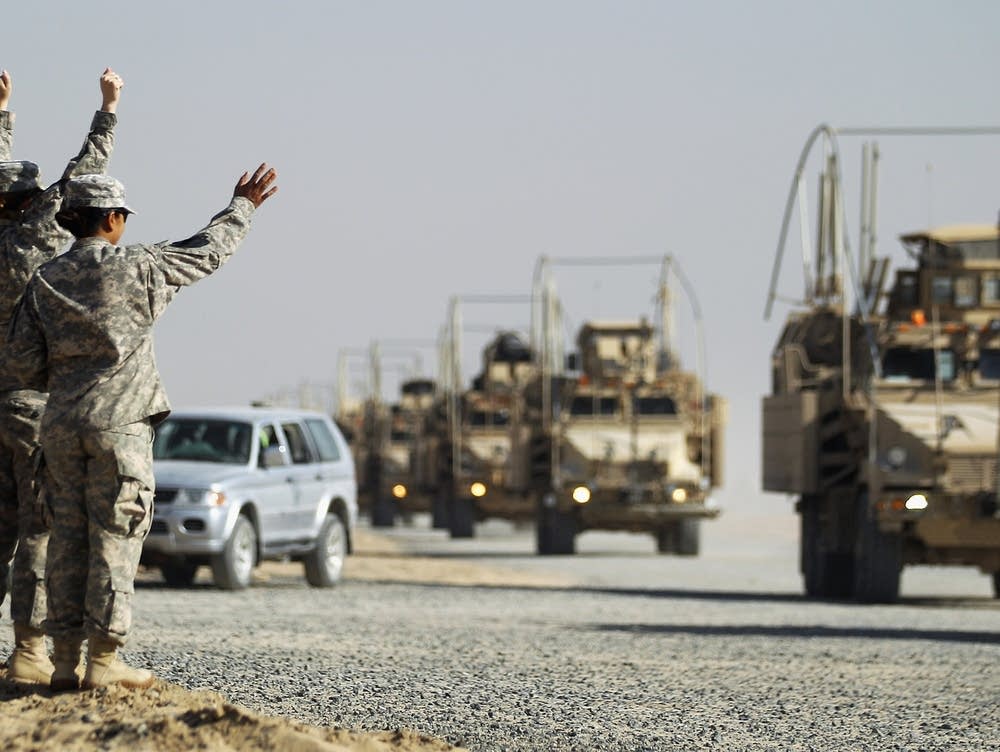
Tomorrow is the deadline. The last American troops leave Iraq, ending a military presence that began with the 2003 invasion and outlasted four presidents. Roughly 4,600 Americans died there. Nobody agrees on how many Iraqis did.

What is happening
The mission of the US-led anti-ISIS coalition, Operation Inherent Resolve, ends September 30. The remaining hundreds of American troops, most of them in the Kurdistan region, are to be out by then.
Iraqi Prime Minister Ali al-Zaidi, who took office in May and at 41 is the youngest in the country’s history, has called the deadline fixed and final.

It does not mean the relationship ends. Iraq is moving to bilateral security arrangements with the US, NATO and others: intelligence sharing, arms sales, training through the US Military Group-Iraq, and over-the-horizon support flown from Jordan and Gulf bases.
Two different wars, one exit
Worth separating, because people conflate them constantly.
- 2003: the US-led invasion that removed Saddam Hussein. Combat forces left in 2011.
- 2014: US forces returned at the invitation of the Iraqi government, after ISIS seized large parts of Iraq and northeast Syria.
- 2026: the second mission ends.
What closes tomorrow is the anti-ISIS deployment. What it closes out, in the longer sense, is 23 years of American soldiers being stationed in Iraq.
The bill
These numbers deserve to be stated plainly rather than rounded into a sentence about sacrifice.
- About 4,600 US military deaths.
- About 32,000 Americans wounded.
- Direct US costs commonly estimated at $1.7 to $2 trillion, with veterans’ care and interest pushing long-run estimates far higher.
- Documented Iraqi civilian deaths of roughly 134,000 to 209,000, with survey-based estimates ranging into the hundreds of thousands more. The range is that wide because nobody was reliably counting.
What the experts are worried about
The Defense Intelligence Agency assessed as of mid-2026 that ISIS in Iraq almost certainly remains severely degraded. The concerns are about what fills the space.
- ISIS sleeper cells, degraded but not gone.
- Iranian-backed militias, with at least three hardline groups showing no intention of disarming.
- The Kurds, who lose an external security guarantee in both Iraq and Syria.
- A power vacuum Iran is positioned to exploit.
That last one is not abstract this month, with the US and Iran in an open standoff over Hormuz and the Senate having failed by one vote to require congressional authorization for a war with Iran.
The BeezLoop Take
Leaving is right, and it is right for the reason that gets the least airtime: the Iraqi government asked. A deployment that continues after the host country sets a final date stops being a partnership and becomes something else. Whatever anyone thinks of the strategic consequences, an ally saying the mission is over and the US honoring that is how this is supposed to work.
The timing is genuinely bad, and pretending otherwise would be dishonest. American forces are leaving Iraq in the same month the US is in an armed standoff with Iran, with Iranian-backed militias inside Iraq that have not disarmed and have spent years attacking those same American positions. The strongest argument against the withdrawal is not that the mission was unfinished. It is that the exit was scheduled before this confrontation and is being executed during it.
What should be resisted is the framing already forming in Washington, that anything bad that happens in Iraq after Wednesday is caused by the withdrawal. The 2011 version of that argument was used to explain ISIS, and it papered over eight years of decisions that produced a hollow Iraqi army and a sectarian government. Iraq’s vulnerabilities in 2026 are not created by troops leaving. They were built during the years the troops were there.
The number worth carrying is 4,600, and the honest thing to say about it is that the country those Americans died in is now asking the survivors to go, and is planning its security around Washington being a supplier rather than a presence. That is either a successful handoff or a long way to arrive at where things started, depending on what happens next, and anyone who tells you today which one it is has decided in advance.
And the Iraqi figure should not be a footnote. A range of 134,000 to 209,000 documented civilian deaths, with credible estimates far above it, is not a statistical quibble. It is an admission that the war killed so many people, so chaotically, that the counting was never done.
The question
Is this a handoff or a retreat, and how long until anyone can tell the difference? And with Iranian-backed militias still armed inside Iraq during a US-Iran standoff, what is the plan if they move?
Sources: Al Jazeera · The Washington Post · Atlantic Council expert analysis · The National