

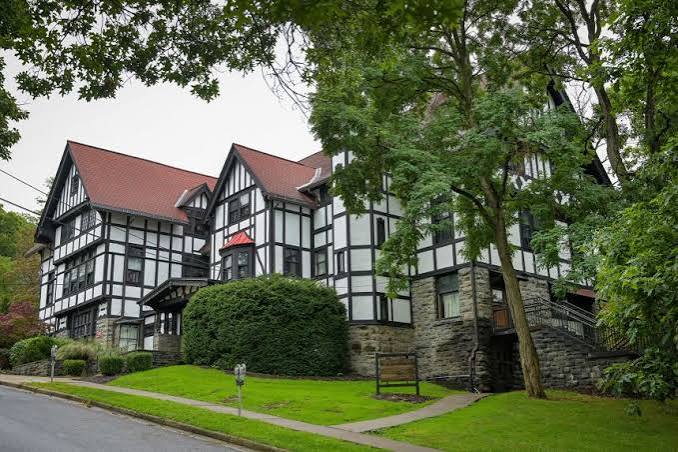
A woman says seven Cornell fraternity members drugged and raped her in 2024. The university investigated, expelled some students and shut the chapter. No one was ever criminally charged. On Monday, two years later and two weeks after she sued, the district attorney reopened the case.

What is alleged
The plaintiff, identified in the filing as Jane Doe, was 20 at the time. Her civil complaint was filed September 16 against seven then-members of Cornell’s Chi Phi chapter and against the university itself.
She alleges that in October 2024 she was pressured into taking ketamine, marijuana and alcohol, became fully incapacitated, and was assaulted over a period of hours inside the fraternity house.

Her attorney, Thomas P. Giuffra, says there is a group chat.
They were given the group chat inviting the members of the fraternity to rape my client.
Thomas P. Giuffra, attorney for the plaintiff
Giuffra also says Snapchat evidence was turned over to authorities in 2024 and never followed up on, and that nobody with the right training ever contacted his client. These are allegations. No one has been criminally charged, and the seven men have not been publicly identified.
What the lawsuit says about the punishments
Update. Further reporting on the complaint has added detail that sharpens the gap between the two processes.
- The lawsuit says the assault was coordinated through a Snapchat group called Chi Phi Actives, and that at about 1:42 a.m. one defendant messaged the group inviting brothers upstairs to join.
- She alleges she was pressured into taking ketamine, along with marijuana and alcohol, and assaulted over several hours into October 20.
- The Xi chapter and the named defendants were placed on temporary suspension on November 8, 2024, and the chapter was later suspended indefinitely.
- Cornell’s Title IX office held at least 12 hearings as part of a formal investigation in May 2025.
- The lawsuit claims some of the accused were disciplined with essays.
Cornell disputes the characterization, saying any suggestion it did not impose consequential punishments is false.
Why there were no charges in 2024
District Attorney Matthew Van Houten has given a specific answer, and it deserves to be stated rather than skipped.
He says the accuser’s initial sworn statement to campus police did not allege gang rape or drugging. He also says he was never contacted by her attorney about the case, and that he reached out himself only recently.
Seeking justice sometimes requires us to reconsider or reopen cases when we are provided with additional evidence.
Tompkins County District Attorney Matthew Van Houten
He will now take the evidence to a grand jury.
What the university did, and what it will not release
Cornell ran its own disciplinary process in 2024 using trained faculty and staff. It expelled some students and suspended others. The on-campus Chi Phi chapter was closed that year and remains barred.
The university will not say how many students, or who, or what each of them was found to have done. It cites federal student privacy law.
Cornell also pushed back sharply on how this is being characterized.
Any suggestion that the University did not impose consequential punishments for those involved is false. A continuation of the false narrative that there were minimal consequences in this case is irresponsible, will make survivors feel less safe and supported, and will perpetuate the underreporting of sexual assault.
Cornell University
The university says it supports reopening the criminal investigation. Chi Phi’s national organization did not respond to reporters.
The gap this exposes
Set the two processes side by side and the problem is visible without anyone having to be the villain.
- A university process concluded something happened and removed students over it.
- A criminal process produced no charges at all.
- The records explaining the first are legally walled off from the prosecutor who would run the second.
Van Houten’s office does not have Cornell’s Title IX file. He is asking the plaintiff’s attorney to hand over the documents, because that is a faster route than the one through the university.
The BeezLoop Take
The most uncomfortable fact here is that both institutional accounts can be true at once. Cornell can have run a real process that expelled people, and the DA can be right that the first sworn statement did not describe what the lawsuit now describes. Neither of those is a lie, and neither of them adds up to a criminal case being handled properly.
What the structure produced is a system where the fact-finding that actually happened is the one with no power to punish anybody outside a campus, and the process with the power to imprison people never got the file. A university can determine that students committed serious misconduct, expel them, and then cite federal privacy law when a prosecutor asks what it found. That is not Cornell being uniquely evasive. It is FERPA working exactly as written, in a situation nobody drafting it was thinking about.
We would be careful about the reflex to read the 2024 non-prosecution as proof of a cover-up. Van Houten’s stated reason is checkable and specific, and initial statements to police in sexual assault cases are frequently incomplete for reasons that have nothing to do with truthfulness. That is a well-documented pattern, and it argues for investigators trained to work with it, which is precisely what Giuffra says was missing. The failure he is describing is not a conspiracy. It is a county that handled a serious allegation with whoever happened to be available.
The part that should not be lost is the timing, and it is the reason to be skeptical of everyone’s institutional self-assessment here. This case did not reopen because new investigators found something. It reopened twelve days after a civil complaint and a wave of national coverage. If the additional evidence existed to justify a grand jury this week, the question is what would have surfaced it absent a lawyer and a news cycle. For almost everyone this happens to, there is no lawsuit and no coverage.
And a caution, because it matters more than the argument: seven people have been accused in public of an extremely serious crime and none of them has been charged with anything. A grand jury may fix that or may not. Either way, the standard does not move because a story is upsetting.
The question
If a university can find that students committed sexual misconduct and then withhold that finding from prosecutors, what is the campus process actually for? And why did this case need a civil lawsuit before a grand jury ever saw it?
Related: two Ole Miss students were found dead with kratom at both scenes, and fourteen were charged in a cocaine ring tied to Penn State fraternities.
Sources: PBS NewsHour · ABC News · CBS News · The Washington Post