
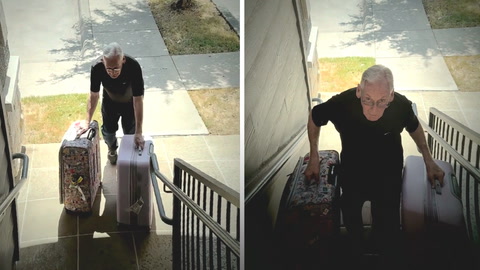
Don Johnson is 81 and drives lost luggage from the airport to people’s homes. He started three years ago and has put more than 200,000 miles on his car. He does it because his wife Josephine has pancreatic cancer.
Strangers raised him $745,000. He is not getting any of it.
Why it was pulled
The campaign was organized by a woman who identified herself only as Erin, a neighbor.

She is not a neighbor. She is Amy Johnson, their daughter.
GoFundMe got a tip on September 25 questioning her identity. On a recorded call the company asked her directly whether Don and Josephine were her parents. She said they were.
Her explanation is not complicated and it is not obviously malicious: she believed the story would land harder coming from a stranger moved by a neighbor’s situation than from a daughter asking for money.
GoFundMe’s Trust and Safety team found factual misrepresentations violating the terms of service. The campaign came down. Every donor was refunded.
What GoFundMe says the rule is
Their position is that misrepresenting an organizer’s identity or relationship to the beneficiary breaks the terms regardless of intent, because it takes away a donor’s ability to know who they are giving to.
That is the whole argument in one sentence, and it is worth understanding before deciding whether the company was wrong.
What the family says
Amy Johnson posted to TikTok that the campaign had collected more than $700,000 and that her parents would not see it because the money was being refunded over what she called a technicality.
The BeezLoop Take
GoFundMe is right on the rule and it is a genuinely awful outcome. Both of those are true and anybody insisting on only one is arguing past the problem.
The rule exists because crowdfunding fraud is real and the most effective version is exactly this: a sympathetic third party who appears to have no stake. A platform that lets organizers invent an identity when the cause seems deserving has no way to refuse when the cause is fake, because the whole judgment turns on believing a story it cannot verify. Regardless of intent is not corporate coldness, it is the only line that holds.
And the daughter’s instinct was right about human behavior, which is what makes this sad rather than simple. People do give more readily to a stranger vouching for a neighbor than to a family asking for itself. She read the internet correctly and broke the rule that makes the internet usable. The word technicality is doing a lot of work in her TikTok, though. She was asked directly and confirmed it. That is not a paperwork error.
What nobody involved can fix is the reason any of this existed. An 81-year-old man is driving suitcases around Texas with 200,000 miles on his car because his wife has pancreatic cancer and the bills are beyond them. That is the actual story. The fundraiser, the pseudonym, the refunds, the platform policy are all downstream of a country where a couple in their eighties finances cancer treatment through gig work and the kindness of strangers.
We have written about health insurers seeking 15% more for 2027 and households already stretched past the point of absorbing anything. GoFundMe is not a charity sector. It is the visible part of a gap, and the fact that $745,000 materialized in days for one couple tells you how many people recognize themselves in it.
The question
Was GoFundMe right to enforce a rule that cost a dying woman $745,000? And what does it say that the most efficient way to pay for American cancer treatment is a viral video?
Sources: Newsweek · NewsNation · Fox News · Benzinga