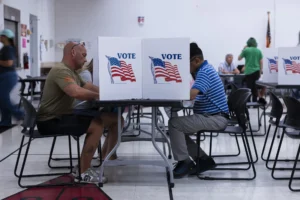

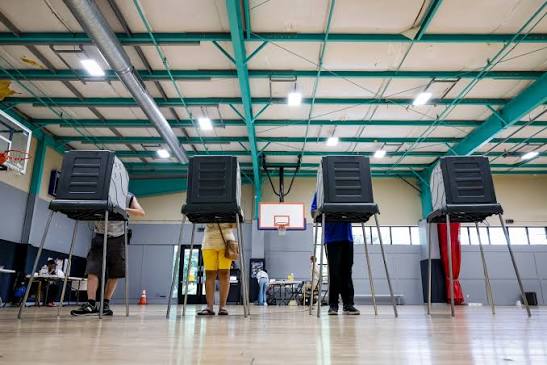
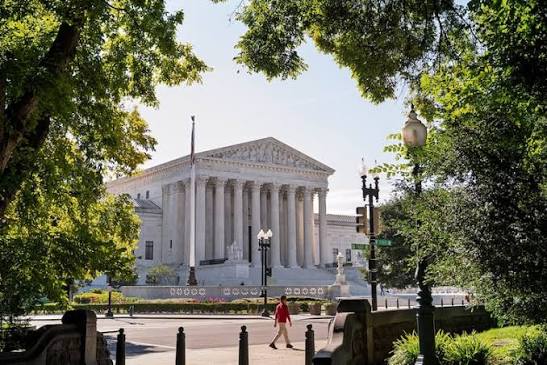
The Supreme Court ruled Thursday, 6 to 3, that the administration can go on using a federal database to check state voter rolls for noncitizens. Five weeks before the midterms, that is the ballgame for this election.
What SAVE is
Systematic Alien Verification for Entitlements. It is a Department of Homeland Security system that states and localities can query to check someone’s citizenship or immigration status.
It was built to verify eligibility for public benefits. The administration overhauled it and opened it to election officials checking registered voters.

What the Court did, and did not do
This is important and gets flattened in most coverage.
The Court did not rule that the revamped SAVE system is lawful. It lifted a lower court’s block for now, while the case continues. That is an emergency posture, not a final judgment.
The practical effect is the same either way. The system is in use through the November election.
Justices Sotomayor, Kagan and Jackson dissented.
What the judge below had found
US District Judge Sparkle Sooknanan had blocked it in language that is unusually blunt for a district opinion. She found that the administration
knowingly trampled on the privacy rights of American citizens in a manner that threatens the sacred right to vote.
US District Judge Sparkle Sooknanan
That finding is what the Supreme Court set aside for the duration of the litigation.
The accuracy problem
The objection is not philosophical. It is about whether the data is right.
The groups that sued say the revised system has already produced wrongful matches, with people incorrectly flagged as noncitizens and removed from rolls. The core issue is that SAVE records can be out of date, so someone who has since been naturalized can still show up in the system as a noncitizen.
There are roughly 25 million naturalized citizens in the United States. Every one of them appears in immigration records at some point in their life.
It is worth noting what the system is hunting for. Voting by noncitizens in federal elections has been studied repeatedly and found to be extremely rare.
The BeezLoop Take
Keeping accurate voter rolls is legitimate and states should do it. Dead people and people who moved two states ago should come off the list, noncitizens should not be registered, and an administration that wants better verification tools is not doing something inherently sinister. Anyone arguing otherwise is not being serious.
The problem is which direction the errors run. A system built on immigration records will flag naturalized citizens, because naturalized citizens are in immigration records. Get it wrong on a dead voter and you have cleaned the roll. Get it wrong on a naturalized citizen and you have taken the vote from someone who went through years of process to earn it. Those two errors are not equivalent and the system treats them as though they are.
The timing is the part that should bother people across the spectrum. The Court did not find the program lawful. It let it run while the case is argued, and the case will not be resolved before November 3. That means whatever the eventual ruling says, the operational question for this election is already decided, and any citizen wrongly purged has a remedy that arrives after the votes are counted.
Sooknanan’s language deserves attention because district judges do not usually write like that. Knowingly trampled is a finding about intent, not sloppiness. The Supreme Court did not say she was wrong; it said the government can proceed anyway while the appeal runs. Those are very different things and the coverage keeps blending them.
This also does not sit alone. The Justice Department is sending more than 1,000 monitors to polling places, the RNC is training machine-focused monitors in at least 22 states, and now a purge tool with known false positives is cleared for use. Each of those is defensible on its own. Together they are an enormous amount of new machinery aimed at a problem every serious study has found to be vanishingly rare, in the weeks before an election. That is worth saying plainly whichever party is doing it.
The question
If a naturalized citizen is wrongly purged in October, what is their remedy before November 3? And when a court lets a program run without ruling it lawful, who bears the cost of being right too late?
Related: the DOJ election monitor buildout, and the government-funded ad running weeks before the midterms.
Sources: NPR · CBS News · NBC News · PBS NewsHour · CNBC