

Opinion
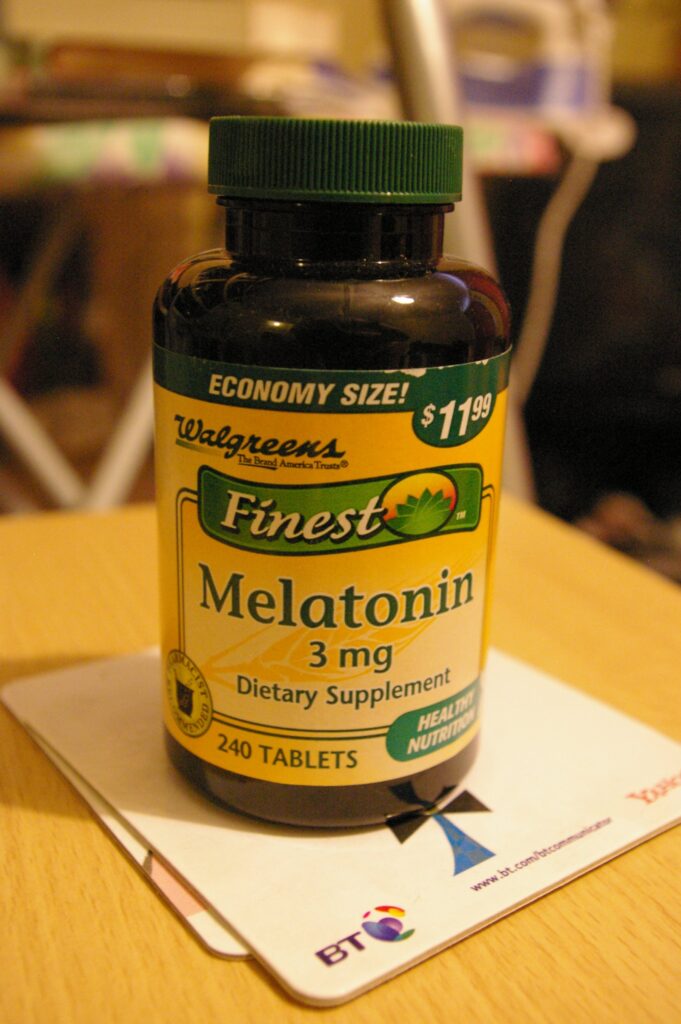
“Melatonin linked to 90% higher risk of heart failure.” That headline is accurate. It is also close to useless, and if you stopped taking melatonin because of it, you were misled by a true statement. This is the most common way health coverage goes wrong, and it is worth learning to spot, because you will see it again this week.

The two numbers
The study looked at 130,000 adults with chronic insomnia. Over five years, 4.6% of long-term melatonin users developed heart failure, against 2.7% of non-users.

Written as an absolute difference, that is 1.9 percentage points. Written as a relative increase, it is roughly 90%. Identical data. One framing sounds like a minor signal worth asking a doctor about; the other sounds like a reason to throw the bottle away tonight. Newsrooms almost always choose the second, because 90% is a headline and 1.9 points is not.
The number that actually answers your question is the first one. Relative risk describes the size of the gap between two groups. It tells you nothing about your odds. On this study’s own figures, more than 95% of long-term melatonin users did not develop heart failure.
Why relative risk is not a lie
It is the right tool for researchers. If you are trying to detect whether an effect exists at all, the ratio between groups is exactly what you want, and a 90% difference is a strong signal worth investigating. The problem is not the statistic. It is that a measure built to answer “is something happening here” gets printed as an answer to “what should I do tonight,” and those are different questions.
The trick for reading any of these
Ask one question: what were the two actual percentages? If a story gives you a relative figure and never the underlying rates, it has not given you enough to act on, and that is a flaw in the coverage rather than something you failed to understand. A doubling of a rare risk is usually still a rare risk. A 10% rise in a common one can matter enormously. You cannot tell which you are looking at from the ratio alone, which is precisely why the ratio alone should not be enough to change your behavior.
The second question worth asking is whether the study could show cause at all. The melatonin research was observational, and everyone in it had chronic insomnia, which independently raises cardiac risk. People who take melatonin for over a year are, almost by definition, people whose sleep never improved. Separating the supplement from the condition that kept them reaching for it is genuinely hard, and the study does not claim to have done it.
The same problem in the other direction
This cuts both ways, which is why it is a reporting failure and not a bias. A trial this month found a ketogenic diet cut liver fat 67% against roughly 45% for comparison diets, and reversed prediabetes in about half of participants. Impressive framing. Then you find the sample: 55 enrolled, 42 completed, short duration. That is enough to detect a large effect, nowhere near enough to settle a debate, and the percentages do the persuading while the sample size sits in paragraph nine.
What we are actually asking for
Not less health coverage. More arithmetic in it. Give people both percentages, the sample size, and whether the design can support a causal claim, and most readers will reach a sensible conclusion on their own. We would rather publish a duller headline that leaves someone able to make a decision than a technically accurate one that makes them act on a number that was never about them.
The honest counterargument is that nobody clicks “small increase in absolute risk observed in people who already had insomnia,” and a story nobody reads helps no one. That tension is real and we do not think it fully resolves. But it is worth being explicit that the tradeoff exists, rather than pretending the 90% version was simply the more informative choice.