
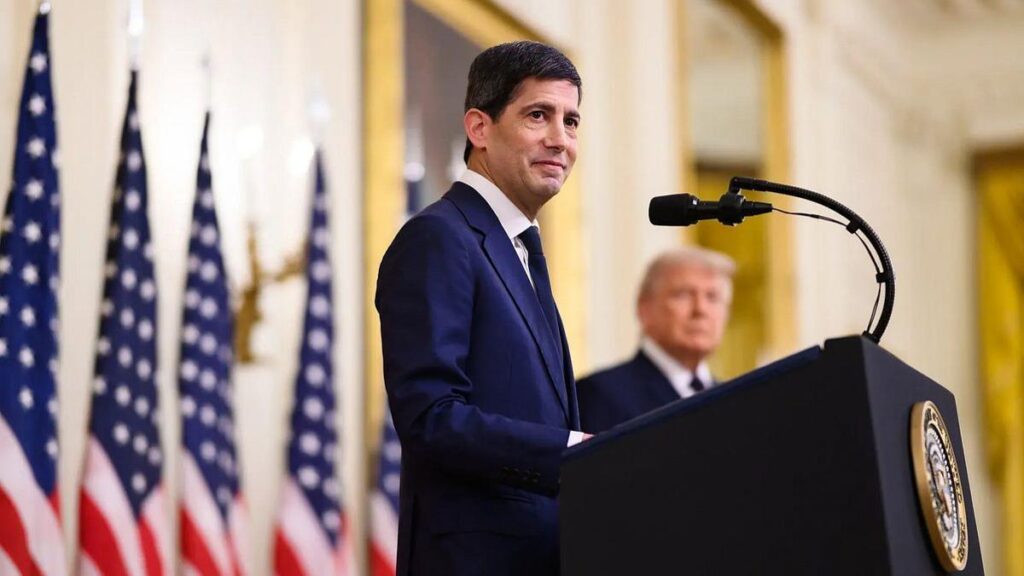
The Federal Reserve meets Wednesday for a rate decision markets now expect to go one way: prediction markets and futures pricing have hike odds running 60% to 80% heading into the meeting, a sharp shift from just weeks ago when the Fed was expected to hold steady or even cut. New Fed Chair Kevin Warsh could raise the federal funds rate a quarter point, from its current 3.50%-3.75% range to 3.75%-4.00%.
Why is a hike suddenly on the table?
Two things shifted the outlook, according to J.P. Morgan strategists. First, the ongoing conflict around the Strait of Hormuz has kept oil supply disruptions running longer than expected, and Brent crude’s climb past $100 a barrel this month is exactly the kind of energy shock that feeds into broader inflation. Second, the Fed’s own July meeting left markets uneasy: policymakers held rates steady that month, but three committee members dissented in favor of a hike, and that split created real doubt about how seriously the Fed will fight inflation going forward. Strategists describe a September hike less as the start of an aggressive tightening cycle and more as a “measured move” meant to reinforce the Fed’s credibility after that July uncertainty.
What would a quarter-point hike actually cost you?
It depends entirely on what kind of debt or savings you’re carrying. A quarter-point hike doesn’t touch the rate on a mortgage you already have — existing fixed-rate loans don’t move — but it does nudge new mortgage quotes higher; on a $400,000, 30-year loan, a move from roughly 6.71% to 6.96% adds about $67 a month in principal and interest. Credit cards and other variable-rate debt react faster and more directly, since most card rates are pegged to the prime rate, which typically sits about 3 percentage points above the federal funds rate — so a Fed hike shows up in your card’s APR within a billing cycle or two. Savers come out ahead: banks tend to raise yields on high-yield savings accounts, money market accounts, and CDs when the Fed moves rates up, meaning the same hike that makes your credit card balance more expensive can make your savings account pay a little more.
What happens Wednesday?
The Fed announces its decision at 2 p.m. Eastern on September 16, followed by Warsh’s press conference at 2:30 p.m., where he’s expected to explain the committee’s reasoning regardless of which way the vote goes. A hike is now the more likely outcome, but it isn’t locked in — the odds have already swung once, from roughly 62% hike probability in early August down to 30-40% after a weak jobs report, then back up toward 60-80% following Warsh’s Jackson Hole comments. That volatility means Wednesday’s press conference will carry real weight in setting expectations for the Fed’s next meeting, not just this one.
Sources: Chase · Yahoo Finance / CME FedWatch · Federal Reserve · Bankrate · Yahoo Finance