

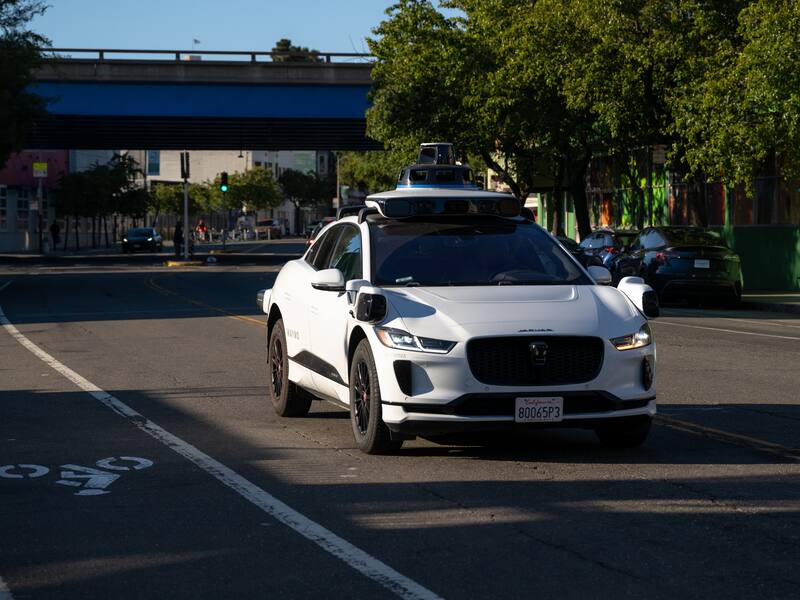
A driverless Waymo robotaxi pulled itself over and alerted San Francisco police early Thursday, September 3, after monitoring staff spotted what turned out to be a loaded, unserialized “ghost gun” inside the cabin. Officers arrived to find two juvenile passengers, a boy and a girl, and recovered the AR-style rifle along with suspected marijuana and mace spray.

How did a driverless car know there was a gun inside it?
Waymo’s terms of service flatly ban weapons of any kind in its vehicles, and the company backs that rule with interior sensors and camera feeds monitored by human safety staff, not just onboard software making the call alone. Around 4 a.m. in the 800 block of 40th Avenue in San Francisco’s Outer Richmond neighborhood, that monitoring team flagged a violation involving a firearm. Waymo initiated a controlled remote stop, alerted 911 dispatchers directly, and passed along real-time GPS coordinates so officers knew exactly where to find the vehicle.
What did police find when they searched the car?
San Francisco police conducted what they described as a high-risk vehicle stop, removing both juvenile passengers from the back seat without incident. A search turned up a loaded AR-style rifle with no manufacturer serial number — a “ghost gun,” built or finished from unserialized parts specifically to evade tracing — along with suspected marijuana and mace spray. Both minors were booked into the Juvenile Justice Center on charges related to illegal firearm possession; police withheld their names and exact ages, citing juvenile privacy rules.
Has a Waymo done this before?
Yes, though the last comparable case was far less serious. In July 2026, Waymo alerted San Mateo police after monitoring staff saw two 15-year-olds drinking and apparently firing a weapon from inside a moving vehicle — it turned out to be an Orbeez gun, a toy that fires water-filled gel pellets, painted black enough to look real on camera. That incident and this one both hinge on the same tradeoff: continuous interior monitoring is what let Waymo catch a real weapon this time, but it also means every ride is being watched by a person, not just a self-driving system, which raises its own questions about passenger privacy in a vehicle with no driver to notice — or not notice — what’s happening in the back seat.
Sources: San Francisco Chronicle · Hoodline · SFist · Tom’s Hardware · ABC7 San Francisco