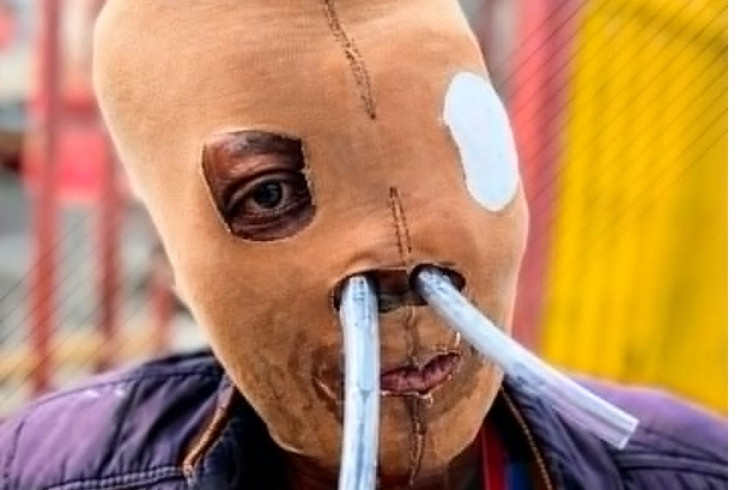
A 58-year-old woman in Bogotá, Colombia, has formally requested to proceed with euthanasia after living for 26 years with severe, unrelenting pain caused by an acid attack. María Consuelo Córdoba was attacked by the man who was her husband at the time during an argument in 2000. She has since undergone more than 80 surgeries and says the pain has never gone away.
Córdoba’s healthcare provider (EPS) has confirmed she has held legal authorization to proceed with euthanasia for four years under Colombia’s right-to-die framework, one of the most permissive in Latin America. Colombia decriminalized euthanasia in 1997 and has since expanded eligibility beyond terminal illness to include cases of intense, prolonged suffering. Whether and when she goes through with the procedure remains entirely her own decision. As of this reporting, she has not done so.
Reporting from ColombiaOne and IBTimes UK details the scope of what Córdoba has endured: dozens of reconstructive operations, ongoing breathing difficulty that requires a tube, and a face permanently altered by burns that acid attacks inflict on skin and underlying tissue. She has described the past 26 years as a continuous search for relief that medicine has been unable to provide.


Acid attacks, sometimes called vitriolage, are a form of violence disproportionately committed against women by intimate partners or former partners, and Colombia has recorded hundreds of cases over the past two decades. Survivors frequently face not only the physical aftermath but years of costly reconstructive care, and advocacy groups in the country have pushed for stronger penalties and more consistent victim support since a spate of high-profile attacks drew national attention in the 2010s.
Colombia’s Constitutional Court first allowed euthanasia for terminally ill patients in a 1997 ruling, and the Ministry of Health issued regulations permitting the practice starting in 2015. In 2021, the court extended eligibility to patients experiencing intense suffering from an incurable condition, even without a terminal prognosis, which is the category under which Córdoba’s request falls.
Her EPS has said publicly that its role is to ensure she is treated with, in the provider’s words, respect, humanity and dignity, whatever she ultimately decides. Colombian right-to-die advocates have pointed to her case as an illustration of how the law is meant to function: authorization granted, and the timing left entirely to the patient.
This is a developing story and BeezLoop News will update it if Córdoba’s status changes. Read the full original reporting at ColombiaOne and IBTimes UK.
Related from BeezLoop: Victoria Police Charge Man With Murder After Woman Found Dead in Ferntree Gully, A License Plate Reader Found J.R. Smith and Opinion: The Justice System Punishes What It Can Prove, Not What Happened to You.