
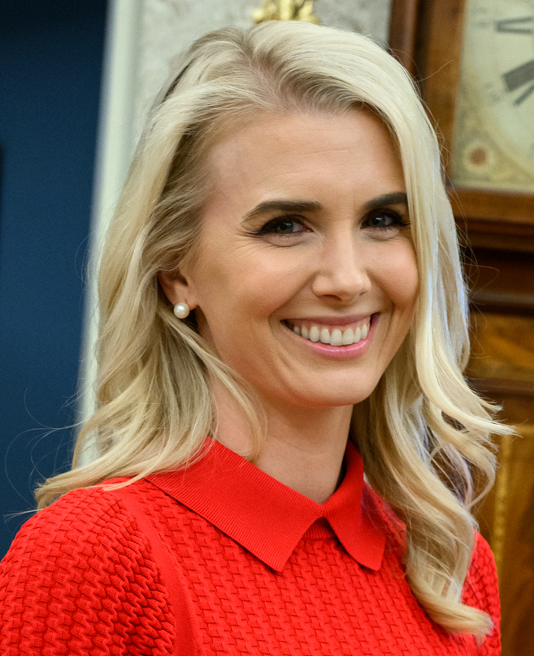
Trump biographer Michael Wolff has published letters written by Natalie Harp, President Trump’s 35-year-old executive assistant, describing a level of personal devotion that’s drawn wide attention this week. Written around a May 2023 golf trip to Trump’s courses in Turnberry and Aberdeen, Scotland, and Doonbeg, Ireland, the letters include lines like “You are all that matters to me” and describe Harp as Trump’s “Guardian and Protector.” In one apology letter, she writes she’s sorry “if I was an embarrassment walking the course in Scotland,” a reference to video that circulated of her sprinting to keep pace with Trump’s golf cart, and says the stress of the trip led her to forget to eat and sleep. Wolff says the letters were discovered by staff among Harp’s piles of printouts and photographed, then circulated among campaign aides who grew concerned about her closeness to the president; CNN has reported on the letters but says it hasn’t independently verified that Harp wrote or sent them.
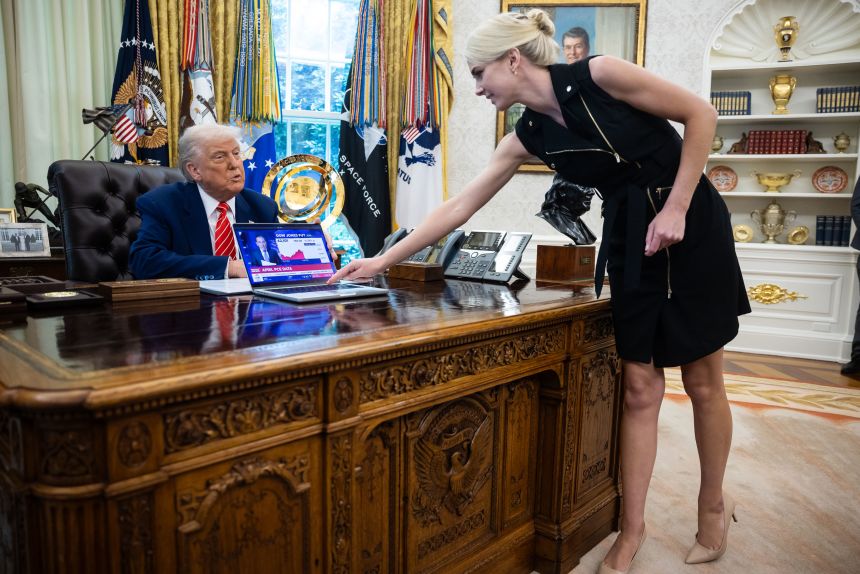
Harp, a former One America News anchor now serving as Trump’s executive assistant, has earned two nicknames in Washington: “Human Printer,” for her habit of hand-delivering printed positive news coverage to Trump throughout the day, and “Binkie,” a term NYT reporter Maggie Haberman used on air to describe her as Trump’s “comfort blanket.” In October 2023, when there wasn’t room for her in the vehicle taking Trump to a New York court appearance, Harp reportedly rode in the trunk of the SUV rather than be left behind.
What’s Confirmed Versus What’s Alleged
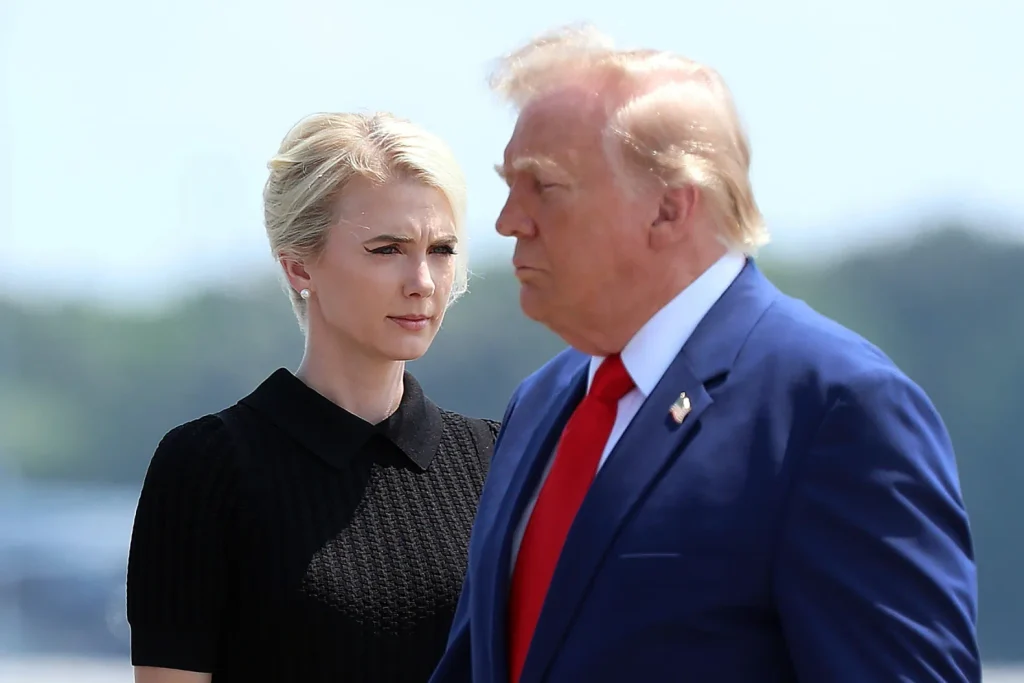
It’s worth separating two different claims here. That Harp holds an unusually close, constant role at Trump’s side, printing news for him, traveling with him, riding in a car trunk to stay near him, is documented by multiple independent outlets and isn’t seriously disputed. Whether these specific letters are authentic, exactly as Wolff presents them, is a narrower claim resting on his account of how he obtained them, and CNN’s explicit caveat that it hasn’t independently verified authorship is worth taking seriously rather than glossing over.

Why the Role Itself Is the Real Story
Regardless of the letters’ exact provenance, the broader pattern they’re being cited to illustrate is real and documented elsewhere: a president surrounded by a curated stream of favorable coverage, delivered by an aide whose job is explicitly to manage his emotional state. A White House information environment built around keeping a leader comfortable rather than informed isn’t a new concern specific to this administration, but the scale and visibility of Harp’s role, an aide sprinting across a golf course and riding in a car trunk rather than fall out of proximity, makes an unusually concrete, visible example of what that dynamic looks like in practice.
Watch: Harp’s Letters and What They Reveal
What do you think? Does an aide this singularly focused on managing a leader’s mood raise real concerns about what information reaches the Oval Office, or is this an overblown reaction to one person’s work style? Let us know your thoughts in the comments on BeezLoop.com!
Related from BeezLoop: CNN Says an Aide Showed Trump a Chart and He Banned Three Newsrooms, The White House Cut CNN From Air Force One and The White House Said It Was Banning Three Newsrooms.