
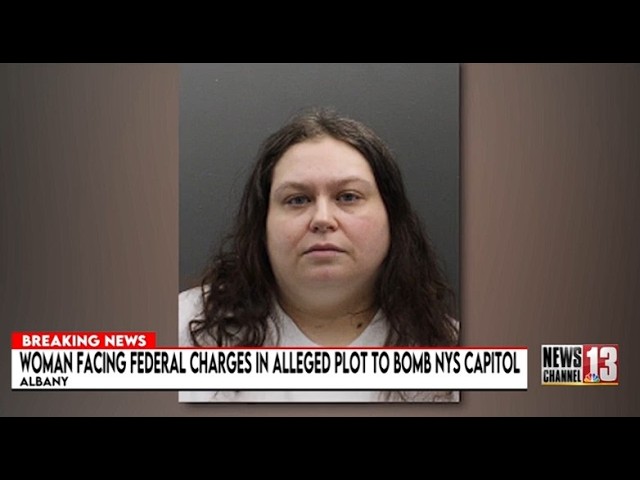
Federal prosecutors say an Albany woman spent weeks planning to bomb the New York State Capitol and kill state senators while they were in session. Jessica Bowie, 35, was arrested Wednesday by the FBI’s Joint Terrorism Task Force and charged Thursday with attempting to provide material support to ISIS, according to a criminal complaint unsealed at a news conference led by First Assistant U.S. Attorney John A. Sarcone III and FBI Special Agent in Charge Craig Tremaroli.
According to the complaint, Bowie converted to Islam roughly five years ago and became radicalized online, eventually swearing allegiance to ISIS in recorded audio in both English and Arabic. From July 16 through August 17, she allegedly communicated with someone she believed was an ISIS facilitator, who was in fact a confidential FBI source. Investigators say she visited the Capitol, which sits less than two miles from her home, five separate times between July 21 and August 9, photographing the building from multiple vantage points. She allegedly told the informant she planned to disguise the bomb inside a food-delivery bag to get close to the building undetected, then flee to Syria. Prosecutors say she told the source, “I want to destroy as much of the building as possible and kill the senators while they are meeting.” She was arrested this week after purchasing what she believed was an explosive device.
What “Allegedly” Is Carrying in This Story
Every detail here comes from a criminal complaint, a document written entirely by the prosecution to justify an arrest, built on the account of a paid or cooperating FBI source posing as a terrorist recruiter. That doesn’t make the allegations false. Sting operations like this one have a long, largely successful track record of intercepting real plots before anyone gets hurt, and the specificity here, five surveillance trips to a real building, a documented purchase, recorded statements, is not the kind of thing complaints usually fabricate. But it does mean the full picture, including exactly how much of this plan existed before an informant was in the conversation, will only get tested once Bowie’s case actually goes to trial.

The Part That Should Worry Elected Officials More Than the Public
A private citizen scouting a state capitol building for an attack aimed specifically at legislators in session is a different threat profile than a plot aimed at civilians. It’s a direct attempt to intimidate or eliminate elected government through violence, which is the textbook definition of the crime she’s charged with, and it lands in a year where threats against state and federal lawmakers have already been rising across the country. Capitol security in most state buildings still assumes the primary threat comes from large-scale organized attacks, not a single radicalized individual doing methodical reconnaissance over several weeks. This case is likely to get cited in exactly that security conversation going forward.
How This Sting Actually Worked
The timeline in the complaint matters here, because it directly addresses the entrapment question rather than leaving it open. Bowie had already sworn allegiance to ISIS in her own recorded audio, in English and Arabic, before any FBI source entered the conversation on July 16. She began physically visiting and photographing the Capitol on July 21, on her own, and made five separate surveillance trips through August 9, again without direction from the informant. Predisposition, meaning the target already had the intent and was taking independent steps toward it before law enforcement got involved, is the legal line that separates a lawful sting from entrapment, and on the facts laid out in the complaint, Bowie’s own actions supply that predisposition.
Where the FBI’s involvement gets more active, and more legally interesting, is what happened after that point. The complaint says Bowie directed agents to a Home Depot on August 5, where she accepted $200 and bought a bin of nails, and later paid the source $150 for a gun and a $200 “donation” toward the bomb. That means federal money and a fake explosive device were part of the operation’s final stages, a standard tool in these stings, used specifically because it lets investigators control the moment of arrest before any real device exists. It’s also the exact detail defense attorneys in cases like this one typically build their arguments around, not to claim the plot was invented, but to argue the government’s late-stage involvement should count for something at sentencing or trial. That’s a legitimate legal argument. It’s a different claim than saying the FBI built this plot from nothing, which the documented timeline of Bowie’s own pre-informant actions doesn’t support.
Bowie remains in federal custody. If convicted, she faces up to 20 years in prison.
What do you think? Do sting operations like this one prevent real attacks, or does relying on an informant to help move the plan forward raise real questions about how the case will hold up in court? Let us know your thoughts in the comments on BeezLoop.com!
Related from BeezLoop: New FBI Files: Butler Gunman Practiced a 100-Yard Shot the Day Before Attacking Trump, Kash Patel Grilled Over FBI Rule Dropping Bestiality as an Automatic Disqualifier and DOJ Deports Afghan Woman in First-Ever Use of the Alien Terrorist Removal Court.