
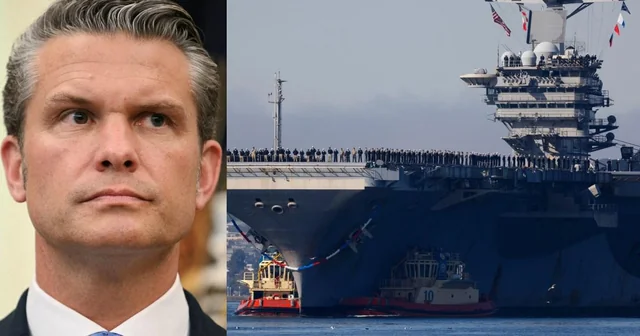
The USS Abraham Lincoln’s ongoing supply problems in the Gulf trace back to a single event the Pentagon didn’t publicize at the time: Iranian missile and drone strikes on Naval Support Activity Bahrain, the Navy’s main regional logistics hub, between late February and June. The damage was severe enough that the Navy had to shift its resupply operations to Diego Garcia, a base more than 3,500 kilometers away, turning what had been a short supply run into a long, exposed one.
That relocation has had real consequences for the roughly 5,000 sailors and Marines aboard the Lincoln. By mid-August, the carrier had approached nine months on deployment, more than 200 days without normal liberty, alongside reports of water contamination and other habitability problems that outside observers have linked directly to the strained supply chain.
What the “Coverup” Claim Actually Is
Reporting from MS NOW and other outlets has accused Defense Secretary Pete Hegseth of knowing about the Bahrain base’s destruction and choosing not to disclose it publicly, across multiple press conferences where the topic could have come up. That’s a serious allegation, and it’s important to be precise about what’s actually been established: journalists reporting on this have not produced documentary proof that Hegseth deliberately concealed the strike. What’s confirmed is that the Pentagon didn’t proactively announce the base’s destruction, and that the resulting supply relocation to Diego Garcia is what’s actually driving conditions aboard the Lincoln. Whether that silence was a deliberate coverup or just standard operational security is the part still in dispute.

Sen. Richard Blumenthal has already sent a letter to Acting Navy Secretary Hung Cao and to Hegseth demanding a formal inquiry into conditions aboard the ship. That’s a concrete step toward getting an actual answer, separate from the competing narratives currently circulating.
Why the Logistics Story Matters More Than the Politics
Strip away the question of who knew what and when, and there’s a genuinely significant military story here: a modern U.S. carrier strike group’s operational tempo was measurably degraded by a strike on a fixed, land-based logistics hub, the kind of target that’s historically been treated as a soft, defensible rear-area asset rather than something that determines whether a carrier can be resupplied on schedule. That’s the part worth tracking regardless of how the Hegseth disclosure question eventually gets resolved.
What do you think? Does it matter whether the Pentagon’s silence was a deliberate coverup versus standard secrecy, or is the actual supply crisis the bigger story either way? Let us know your thoughts in the comments on BeezLoop.com!
Related from BeezLoop: Sailors Attempt to Jump From USS Abraham Lincoln After Record 260-Day Deployment, Trump on the USS Lincoln's Nine-Month Deployment: "Not Nearly Long Enough" and The 250-Day Trap: Why Navy Sailors Are Jumping Off the USS Abraham Lincoln.